 English
 Lietuvių
 Latviešu
 Eesti
 Polski
 Русский
 Українська
 Deutsch
 Nederlands
 Čeština
 Slovenčina
 Svenska
 Norsk
 Dansk
 Suomi


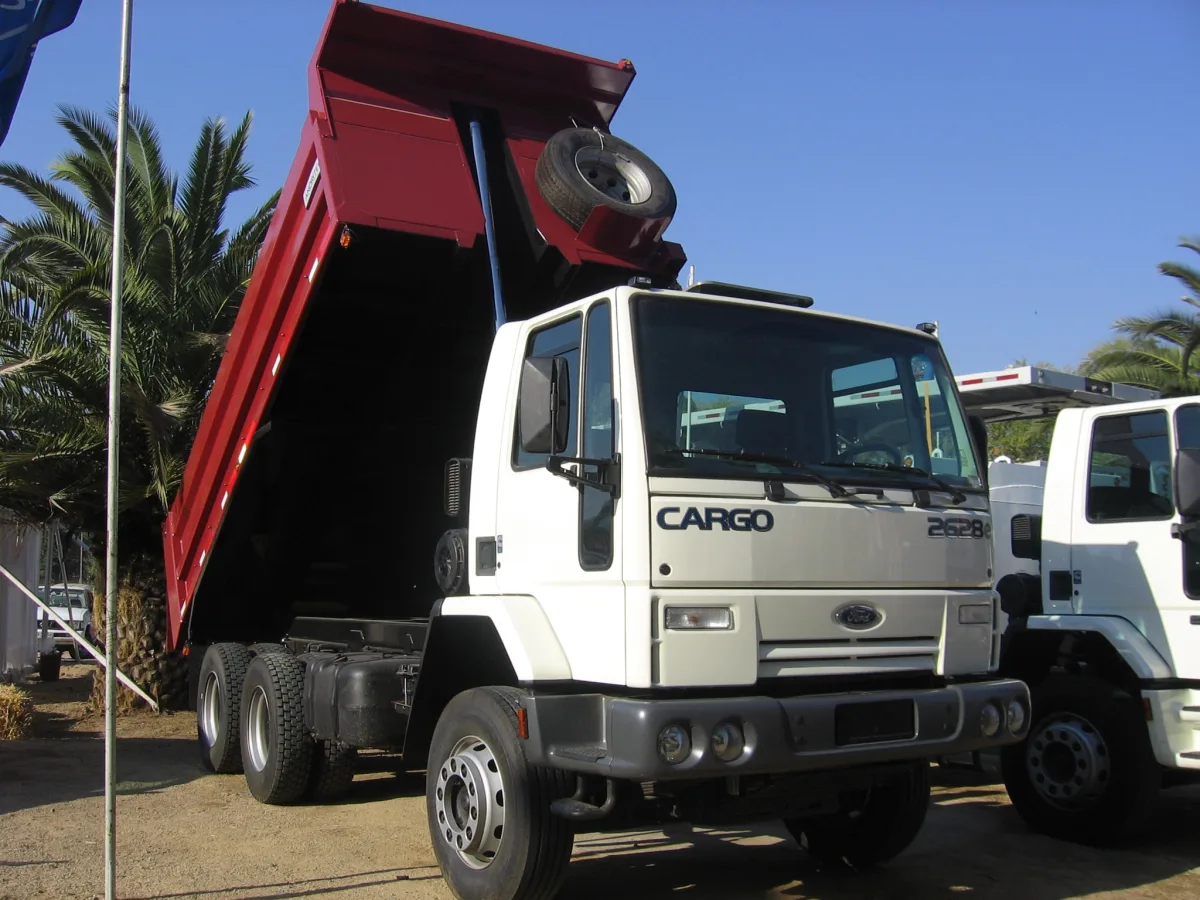
Ford Cargo: a medium-duty truck, generations and what to check
Ford Cargo — a medium-duty truck, produced since 1981 in various countries. We look at the generations, purpose, engines, and what's important to check when buying a used Cargo.






Cargo in brief
Ford Cargo — a series of medium-duty trucks, first introduced in 1981. It was manufactured in Great Britain, later in other countries, and eventually in Turkey and Brazil, where it remained for several decades.
Cargo is used as a van, flatbed truck, box truck, refrigerated truck, refuse truck, or tractor unit. Due to the breadth of generations and variants on the used market, it's crucial to clearly define which specific Cargo you're after.
Generations — what sets them apart
Early Cargo trucks (from 1981) — basic, mechanical trucks with a simple cabin and classic design. They often turn up as collector's items or examples of vintage commercial vehicles.
Later Cargo trucks, especially those made in Turkey and Brazil, feature more modern cabs, more powerful engines, and various axle configurations. Many of them are sold as construction box trucks, flatbed trucks, or tractor units.
When buying a used Cargo, it's important to verify where it was manufactured and which generation it belongs to, as this affects parts availability and repair costs.
Engines and transmissions
Cargo engines — diesel, varying in capacity and power, depending on the country of manufacture and year. Some versions use Cummins engines, others — Ford's own designs.
Gearboxes are usually manual with several gears. Before buying, check which specific engine and gearbox combination is fitted — this affects both parts availability and ease of repair.
What to check when buying a used Cargo
First, assess the cabin and chassis for signs of corrosion — this is a common issue with older trucks. Check the cabin floor, seams, chassis mounts, and body condition.
Check the engine: it should start without prolonged cranking, not smoke, and not make unusual noises. Inspect the clutch, gearbox, and brakes, and in the case of a tipper — the hydraulic lifting mechanism.
For older versions, check the availability of spare parts in advance, especially if the truck was manufactured outside Europe. Verify the history and documents, and check the permitted weight and driver's license category.


Trim levels and versions
Trim levels and versions vary by market and year; below are the most commonly encountered versions.
Savivartis
All generationsFor construction and municipal services.
- Hydraulic tailgate lift
- Often — three axles
- Check the hydraulics and chassis
Borto platforma
All generationsA versatile choice for loads.
- Removable sides
- Often — a canopy
- Often — a lift platform
Furgonas
All generationsEnclosed body for carrying goods
- Enclosed cargo space
- Often — rear doors
- Ideal for local deliveries
Vilkikas
All generationsDesigned for towing semi-trailers
- Mostly 4x2 or 6x4
- Day or sleeper cab
- Ideal for regional deliveries
Važiuoklė su kabina
All generationsBase for special bodies
- Open rear section
- Body mounted separately
- Often — municipal equipment
Version comparison
| Savivartis | Borto platforma | Furgonas | |
|---|---|---|---|
| Who it's for | Build | Versatile tasks | Goods transportation |
| Axle configuration | Often 6x4 or 4x2 | Mostly 4x2 | Mostly 4x2 |
| What to check in particular | Hydraulics and suspension | Condition of sides and platform | Body corrosion |
| Usage intensity | High | Average | Average |
| Price in the used market (relatively) | € | € | € |
The Cargo is a solid choice due to its simple construction and affordable price, but it's crucial to check the condition of the frame and cab, as well as the availability of parts. Opt for newer versions only if they have a clear history.
Pros
- Affordable price in the used market
- Simple construction
- Wide range of cab options
- Robust chassis
Cons
- Corrosion can be a significant issue in older versions
- Part availability depends on the country of manufacture
- Fewer driver aids than in newer trucks
Frequently asked questions
Where is the Ford Cargo built?
The Ford Cargo is built in Great Britain, later also in Turkey and Brazil. The country of manufacture affects both the specification and part availability.
Is the Ford Cargo reliable?
A simple construction often allows for repairs at a lower cost, but reliability greatly depends on age, maintenance, and the condition of the cab.
How does the Cargo differ from the F-Max?
The F-Max is a next-generation long-haul tractor (from 2018), while the Cargo is a medium-weight truck more suited to distribution and construction.
Updated 2026-10-21 · Trim levels and equipment vary by market and model year — check the equipment of the specific car. · Translated automatically


