 English
 Lietuvių
 Latviešu
 Eesti
 Polski
 Русский
 Українська
 Deutsch
 Nederlands
 Čeština
 Slovenčina
 Svenska
 Norsk
 Dansk
 Suomi


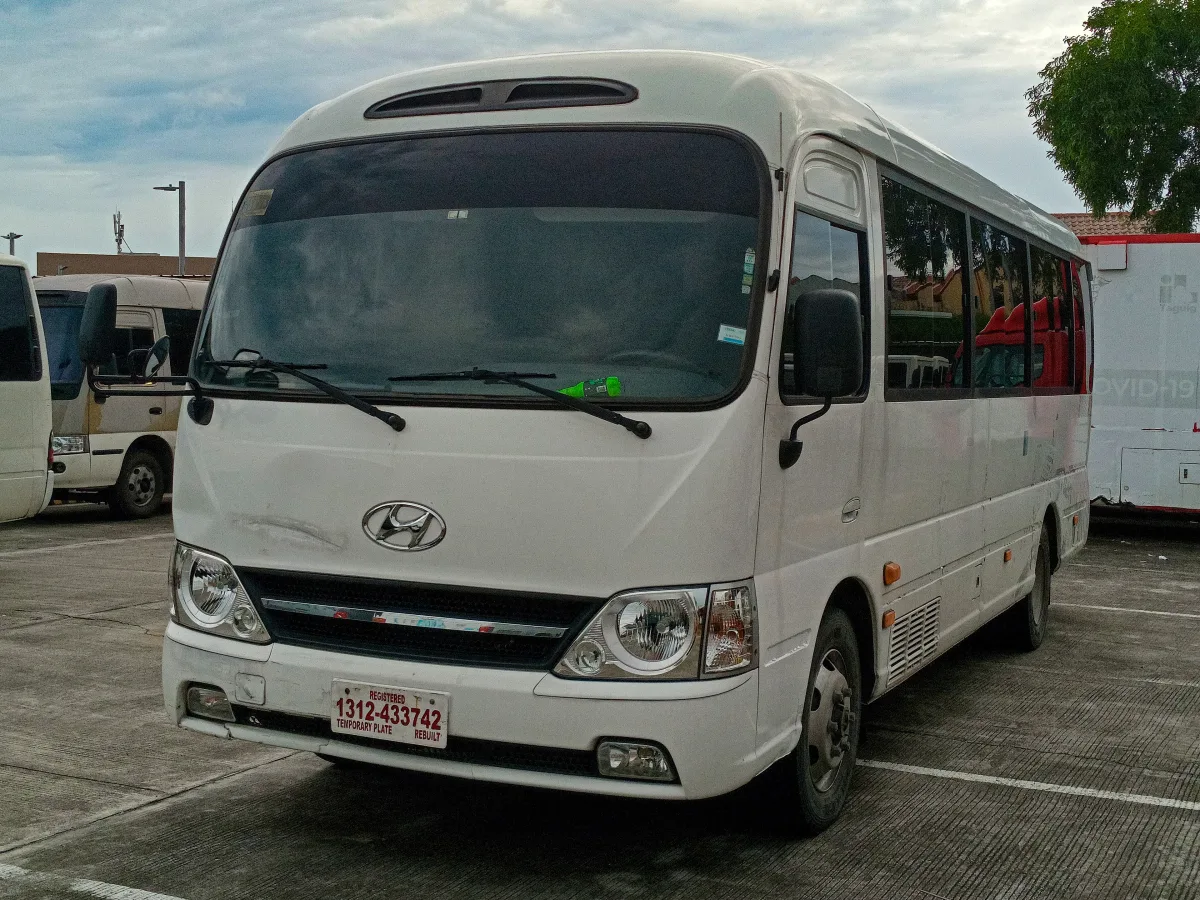
Hyundai County: minibus, versions and what to check
Hyundai County (from 1998) — a compact Korean bus widely used for passenger transport, excursions, and corporate travel. We look at the versions, engines, and what to check when buying used.






County in brief
County — a compact bus designed for smaller groups of passengers — roughly twenty to thirty-plus seats, depending on the version. It's used for excursions, staff transport, hotel shuttles, and suburban routes.
Thanks to its smaller dimensions, the County manoeuvres more easily in narrow streets than larger buses. In the used market, it's popular among smaller operators looking for a more affordable alternative to larger buses.
Versions — what's the difference?
The County comes in several lengths, with some versions featuring a wider body or an extended cabin section (e.g., the 'Deluxe' or 'Long' variants). The cabin configuration varies depending on its purpose — excursions or city routes.
Earlier versions are more basic, while newer ones boast a more modern interior, more comfortable seats, and air conditioning. Before buying, check the version and seat count, as these depend on the market and order.
Engines and gearboxes
The County is powered by a Hyundai diesel turbo engine — usually around 4 litres. The exact power output and engine family depend on the year and market, so check the documents for precise information.
The gearbox is usually manual. The condition of the clutch and gearbox heavily depends on usage — the clutch wears out faster in city driving.
What to check when buying a used County
Inspect the body — look for dents, wheel arches, door frames, and the floor. Compact buses are used intensively, so corrosion and wear are common.
Start the engine cold and listen for any unusual noises, smoke, or leaks. Check the clutch, gearbox, brakes, and suspension, as well as the air conditioning and heating systems.
Ask for the service history and check if the mileage matches the wear and tear. In the cabin, check the seats, doors, seatbelts, and emergency exits.


Versions
Names and equipment vary by market and year; we list generally described versions, and check the exact specifications in the documents of the specific bus.
County (ankstesnė)
from 1998The more basic first-generation version.
- Simple construction
- Often — an older interior
- Often — high mileage
County Deluxe
later yearsA more comfortable version with better equipment.
- Often — air conditioning
- More comfortable seats
- A more modern interior
County Long
Various yearsLonger version with greater capacity.
- More seating positions
- Longer body
- Check the exact version
Priemiesčio / specialios
Various yearsAdapted for other purposes.
- More storage space
- Often — modified interiors
- Check the refurbishment documents
Comparing versions
| Ankstesnė | Deluxe | Long | |
|---|---|---|---|
| Who it suits | Affordable for a small group of cars | For more comfortable journeys | For larger groups |
| Capacity | Smaller | Mid-sized | Larger |
| Interior comfort | More basic | Better | Depends on the version |
| Price in the used market (relatively) | € | €€ | €€ |
The County is ideal for drivers who need a compact bus for smaller groups. Choose based on technical condition and suitable capacity.
Pros
- Compact dimensions
- Cheaper than large buses
- Suitable for small groups
- Simple mechanics
Cons
- Smaller capacity
- Wear and tear with heavy use
- Less comfort than larger coaches
Frequently asked questions
How many seats does the County have?
It depends on the version — usually around twenty to thirty or more. Check the documents for exact figures.
Who is the County suitable for?
Small groups — excursions, staff transport, hotel shuttles, or suburban routes.
What driver's license category is required?
It depends on the number of seats and weight; you should verify this according to current regulations.
Updated 2026-10-21 · Trim levels and equipment vary by market and model year — check the equipment of the specific car. · Translated automatically


