 English
 Lietuvių
 Latviešu
 Eesti
 Polski
 Русский
 Українська
 Deutsch
 Nederlands
 Čeština
 Slovenčina
 Svenska
 Norsk
 Dansk
 Suomi


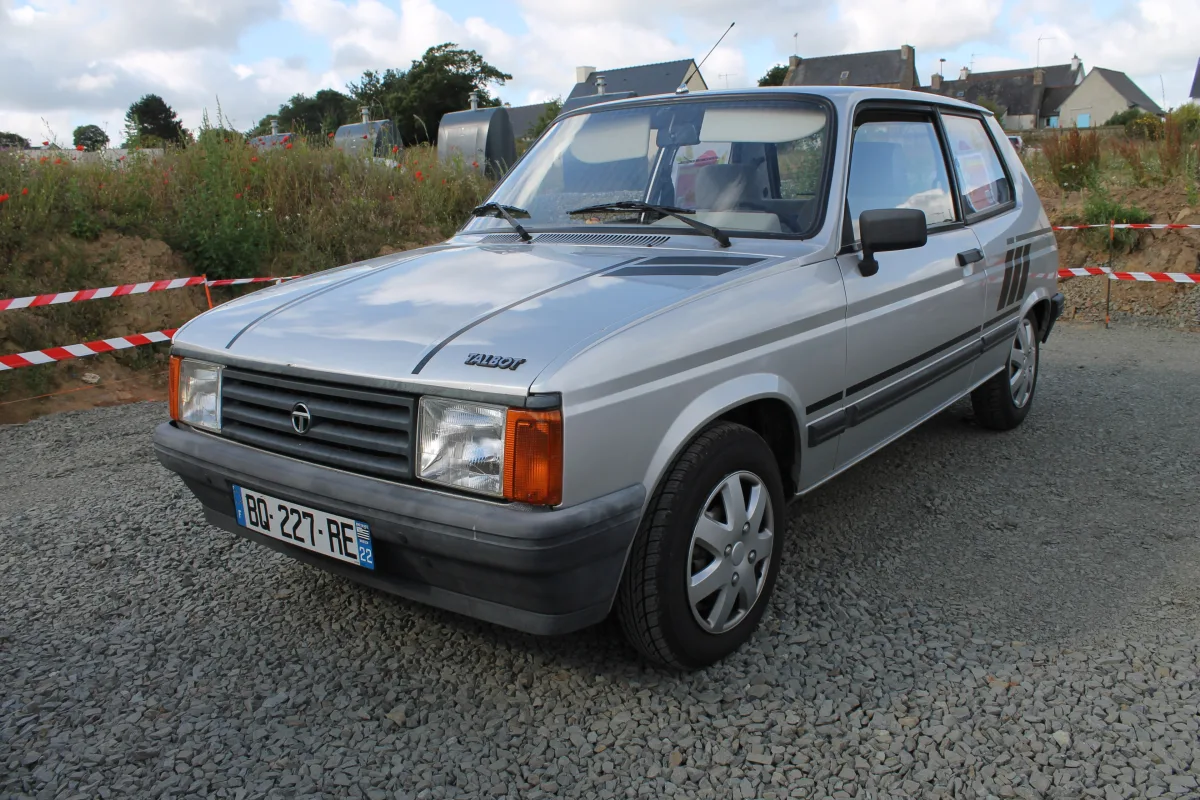
Talbot Samba: generations, engines and what to know when buying used
Talbot Samba — a compact French city hatchback produced from 1981 to 1986, based on the Peugeot 104. In this article, we review the body styles, engines, and what you need to know if you're hunting for this classic car in Lithuania.






Talbot Samba in brief
The Samba is a compact three-door hatchback based on the Peugeot 104. It was manufactured by the Talbot brand, which belonged to the PSA Peugeot Citroën group. There was also a convertible version, developed in collaboration with Pininfarina.
Today, the Samba is a rare classic. It's valued for its small size, simple mechanics, and 1980s design, but its availability in Lithuania is very limited.
Which version to choose
The main versions differ in engine size and equipment. The more basic ones are suited to everyday city driving, while the sportier Rallye version had a larger engine and a different exterior design.
The convertible is even rarer and more of a collector's item, so it's crucial to check the condition of the roof and body.
Engines and gearboxes
The Samba came with small petrol engines, roughly ranging from 1.0 to 1.4 litres. The engine was mounted transversely, with front-wheel drive.
The gearbox was usually manual. Due to the car's light weight, these engines were quite capable for city driving, but they're not suited to long, high-speed journeys.
What to check when buying a used Samba
The main concern is rust. Inspect the sills, wheel arches, floor, and door bottoms. For a car of this age, this is the primary risk.
Check that the engine starts easily, there are no oil leaks, and the gearbox operates smoothly. You might need to hunt for body and interior parts in classic car enthusiast communities.


Trim levels
Names and equipment vary by market and year; we list the versions most commonly found in Europe.
GL
All versionsBasic, budget-friendly trim for city driving.
- Often — simpler interior trim
- Often — smaller engine
- Steel wheels
GLS
All versionsBetter-equipped version.
- Often — more comfortable seats
- Often — more interior trim details
- Often — larger engine
Rallye
All versionsSportier version.
- Often — larger 1.4-litre engine
- Sportier exterior styling
- Often — special wheels
Cabriolet
All versionsOpen body, designed in collaboration with Pininfarina.
- Opening fabric roof
- Rarer and more collectible
- Important condition of the roof and body
Comparison of Talbot Samba versions
| GL | GLS | Rallye | Cabriolet | |
|---|---|---|---|---|
| Who it's for | For the budget-conscious city driver | For daily driving | For sportier driving | For collectors |
| Body | Hatchback | Hatchback | Hatchback | Convertible |
| Engine (often) | Smaller | Mid-range | 1.4 l | Varies |
| Price in the used market (relatively) | € | € | €€ | €€ |
For most buyers, the key is to find a well-maintained and rust-free car. The Rallye and convertible are more suited to collectors.
Pros
- A compact, city-friendly car
- Simple technology
- Rare classic design
- Convertible version
Cons
- Very limited supply
- Rust is the main risk
- Some parts are hard to find
Frequently asked questions
What is the Talbot Samba related to?
It was built on the "Peugeot 104" platform, so some of the mechanics are shared with that model.
Was there a convertible version of the Samba?
Yes, a convertible version was produced in collaboration with "Pininfarina".
Is the Samba suitable for daily use?
A well-maintained car is great for city driving, but due to its age and limited parts availability, it's more often used as a classic rather than a daily driver.
Updated 2026-10-21 · Trim levels and equipment vary by market and model year — check the equipment of the specific car. · Translated automatically


