 English
 Lietuvių
 Latviešu
 Eesti
 Polski
 Русский
 Українська
 Deutsch
 Nederlands
 Čeština
 Slovenčina
 Svenska
 Norsk
 Dansk
 Suomi


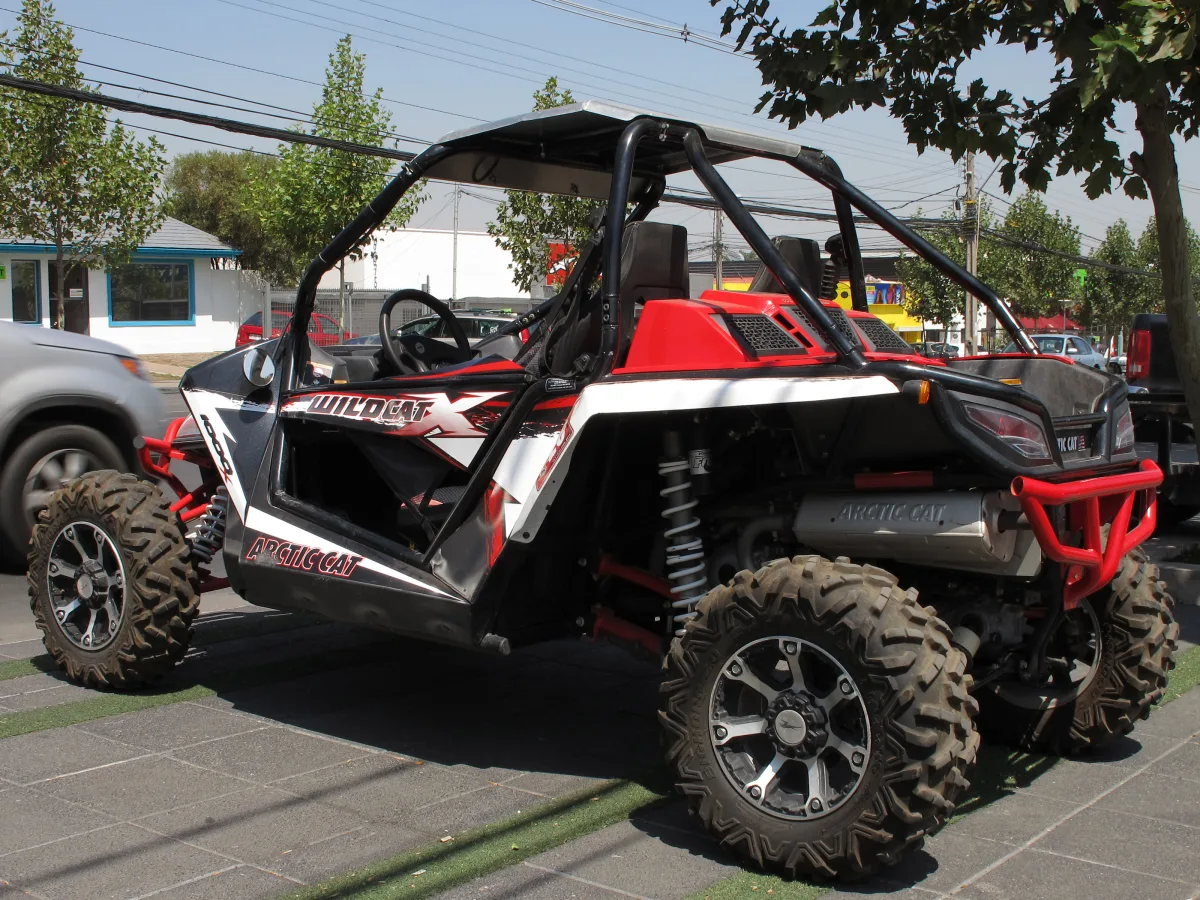
Arctic Cat Wildcat: sporty side-by-side UTV and what to check
Arctic Cat Wildcat (from 2012) — the sporty Arctic Cat side-by-side UTV (side-by-side) with long-travel suspension. We look at how versions differ, the tech, and what to check when buying used.






Wildcat in brief
Wildcat — the Arctic Cat sporty side-by-side UTV with two seats, open frame, and long-travel suspension. Designed for fast off-road driving, hill climbing, and desert or forest trails.
The first Wildcat 1000 appeared in 2012 with a V-twin engine of around 1000 cm³. Later, the series expanded — a four-seater version, the smaller Wildcat Trail, and other variants emerged. Since 2017, Arctic Cat has belonged to the Textron group.
How versions differ
Wildcat 1000 and 1000X — the main sporty series with a large V-twin engine. X versions often feature higher-end shocks, wider suspension, and additional protection.
Wildcat Trail and Sport — smaller, lighter, and more affordable models aimed at beginners and trails. Check exact specs via year-specific documents.
Engine and transmission
The largest Wildcats feature a V-twin engine of around 1000 cm³ with an automatic CVT transmission and all-wheel drive. Smaller models use smaller engines.
In sporty used UTVs, the CVT belt, variator, half-shafts, and suspension bushings typically see the most wear.
What to check when buying a used Wildcat
Check the CVT belt and engine: cold start should be smooth, with no judders. Test all-wheel drive and locking. Inspect the halfshafts and their rubber boots.
Inspect the suspension: shock absorber leaks, suspension mounts, bushes, and play in the steering joints. In sporty off-roaders, these often need replacing.
Check the chassis and safety cage for deformations, corrosion, or signs of welding. Ask if the vehicle was used in competitions or extreme conditions, or driven through deep water.


Versions
Names and equipment vary by market and year; we list generally described versions, but check the exact specification in the vehicle's documents.
Wildcat 1000
from 2012The first sporty version with a V-shaped engine.
- A two-cylinder ~1000 cm³ engine
- Long-travel suspension
- Open safety cage
Wildcat 1000X
various yearsA sportier version with higher-grade equipment.
- Often — higher-grade shock absorbers
- Additional safety features
- Higher used-car price
Wildcat Trail / Sport
later yearsSmaller, lighter models.
- Smaller engine
- Lighter handling
- Lower price
Comparing versions
| Wildcat 1000 | Wildcat 1000X | Trail / Sport | |
|---|---|---|---|
| Who it's for | For sporty driving | For sporty driving and extreme routes | For beginners and tracks |
| Power | High | High | Medium |
| Suspension | Long journeys | Upper class | Base |
| Price in the used market (relatively) | €€€ | €€€€ | €€ |
If you want a true sporty all-terrain vehicle, go for the Wildcat 1000 or 1000X. Beginners and road use are better suited to the smaller displacement versions.
Pros
- Powerful sporty engine
- Long-travel suspension for off-roading
- Distinctive design
- Two side-by-side seats
Cons
- Expensive maintenance for sporty examples
- CVT belt and pulleys — wear items
- Registration on roads requires compliance
Frequently asked questions
Is the Wildcat suitable for a beginner?
The high-powered Wildcat 1000 demands experience. Beginners are better off choosing the smaller-displacement Wildcat Trail or Sport.
Can a Wildcat be registered for road use?
This depends on the specific model's documentation and compliance with regulations. Consult with the seller and the registration authority.
How does the Wildcat differ from the Prowler?
The Wildcat is designed for sporty driving with a long-travel suspension, while the Prowler is more versatile and work-oriented.
Updated 2026-10-21 · Trim levels and equipment vary by market and model year — check the equipment of the specific car. · Translated automatically


