 English
 Lietuvių
 Latviešu
 Eesti
 Polski
 Русский
 Українська
 Deutsch
 Nederlands
 Čeština
 Slovenčina
 Svenska
 Norsk
 Dansk
 Suomi


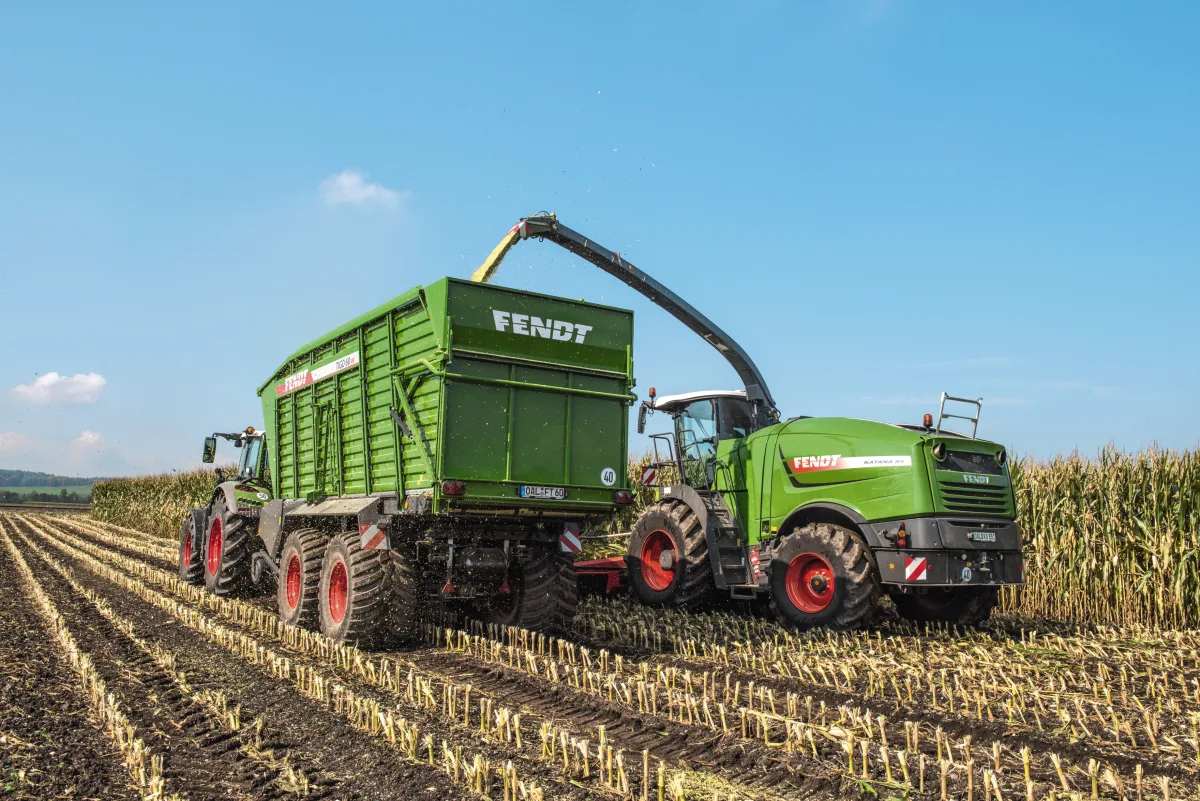
Fendt Katana: self-propelled forage harvesters and what to check
Fendt Katana — a series of self-propelled forage (silage) harvesters produced since 2011. We look at their purpose, models, and what to check when buying a used harvester.






Katana in brief
Fendt Katana is a self-propelled forage harvester designed for chopping corn, grass, and other crops for silage and biogas. The series was introduced in 2011 and is widely used by farmers and large livestock operations.
This machinery is quite expensive, so it's often purchased by farmers. There aren't many used ones on the market, and the price heavily depends on the number of hectares cut and the harvester's condition.
Models and choice
The series includes two main models that differ in power: the smaller Katana 65 and the more powerful Katana 85. The choice depends on the workload and desired efficiency.
Various attachments can be connected to the harvester: a corn header (independent of rows) and a grass collector. Check which attachments are sold with it and their condition.
Engine and key components
The Katana is powered by a robust diesel engine with approximately 650 HP (Katana 65) and approximately 850 HP (Katana 85). Power is transmitted to the chopping drum, gearboxes, and wheels.
Key components include the chopping drum with knives, a grain processor (for corn silage), feed rollers, and a discharge spout. Wear on these components significantly affects work quality and fuel consumption.
What to check when buying a used Katana
First, ask to see the mileage and accident history reports, as well as the service records. Check the brake discs, pads, and callipers – wear and tear will require expensive replacement.
Inspect the gearbox, drive belts, mounts, and hoses. Look for oil leaks and damaged hydraulic lines.
Test the exhaust control, accessory lift, and cabin equipment. Perform diagnostics on newer models using specialist equipment.


Configurations
Specific versions and equipment vary by market and year; we list the most common configurations.
Katana 65
2011–A smaller series model for mid-size and large SUVs.
- Around 650 bhp
- Lower fuel consumption
- Easier maintenance
Katana 85
2011–A more powerful model for greater performance.
- Around 850 bhp
- Greater performance
- Higher maintenance cost
Su kukurūzų priedu
On requestConfiguration with a corn header.
- Designed for corn silage.
- Often — with a grain chopper.
- Check the header's condition separately.
Su žolės surinkėju
On requestConfiguration for grass silage.
- Suitable for grass and haylage.
- Often — with header suspension.
- Check the setup and wear.
Su papildoma įranga
On requestVersion with additional features, e.g., GPS or moisture sensors.
- More precise work.
- Often — a moisture sensor.
- Check the condition of the equipment according to the vehicle.
Model comparison.
| Katana 65 | Katana 85 | |
|---|---|---|
| Who it's for. | For medium and large-scale farmers. | For larger tractors, big farms |
| Approximate power | ~650 HP | ~850 HP |
| Torque | High | Very high |
| Maintenance cost | High | Highest |
| Price in the used market (relatively) | €€€ | €€€ |
The smaller Katana 65 is suitable for most tractors, while the Katana 85 is worth considering for larger fields. The key thing is the condition of the cutting rotor and knives.
Pros
- High power and torque
- Good working quality
- Spacious cab and visibility
- Fendt service network
Cons
- Very high price and maintenance costs
- Complex technology requiring skilled servicing
- Limited used options available
Frequently asked questions
What is the Fendt Katana designed for?
It's a self-propelled forage harvester used for chopping corn and grass for silage and biogas.
What power does the Katana have?
Katana 65 — around 650 HP, Katana 85 — around 850 HP. Check the exact power based on the specific harvester's data.
What to look for when buying a used Katana?
Check the cut hectares, condition of the chopping drum and knives, grain processor, and service history.
Updated 2026-10-21 · Trim levels and equipment vary by market and model year — check the equipment of the specific car. · Translated automatically


