 English
 Lietuvių
 Latviešu
 Eesti
 Polski
 Русский
 Українська
 Deutsch
 Nederlands
 Čeština
 Slovenčina
 Svenska
 Norsk
 Dansk
 Suomi


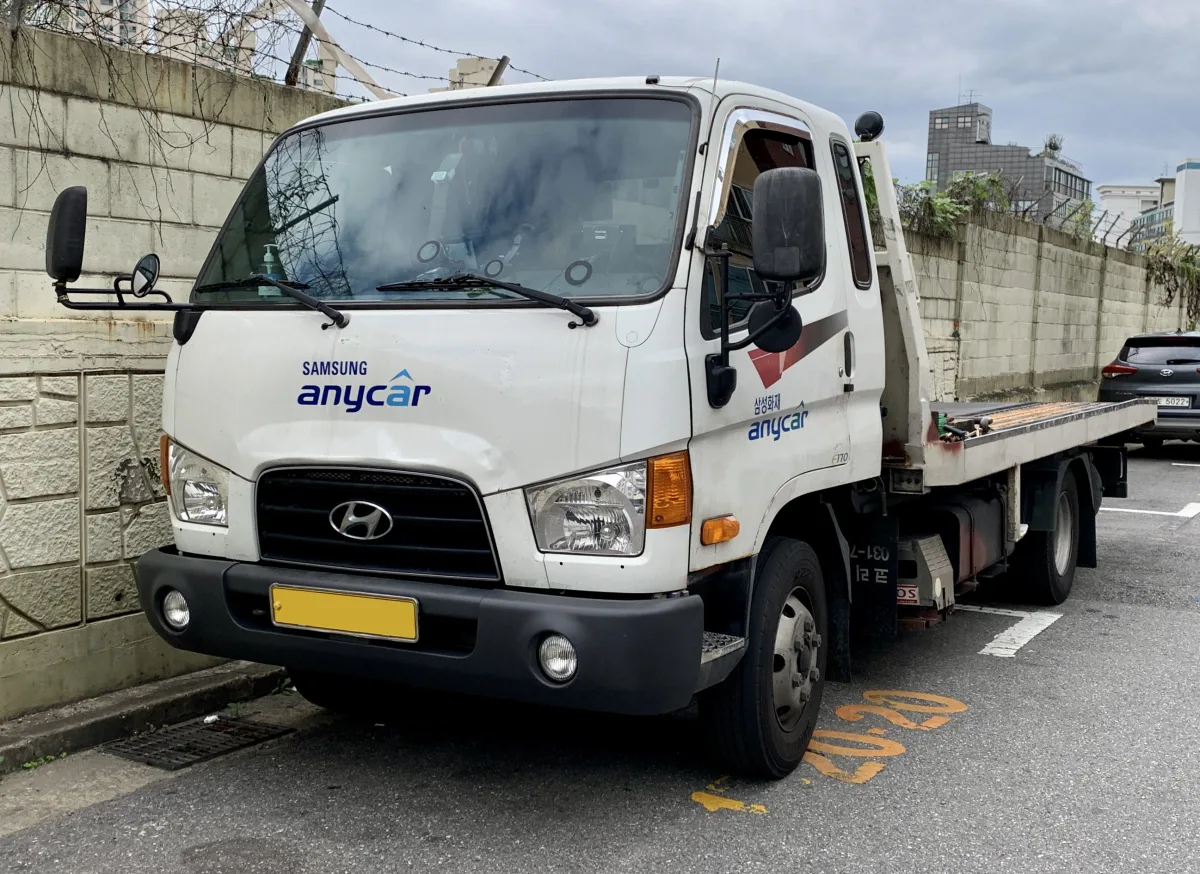
Hyundai Mighty: generations, engines, and what to check
The Hyundai Mighty is a light and medium-duty truck manufactured in South Korea, introduced in 1986 and widely used for urban delivery, construction, and municipal services. We'll look at its generations, engines, cabs, and what to check when buying a used Mighty.






Mighty in brief
The Mighty is the backbone of Hyundai's light and medium-duty trucks. It's usually a 4x2 truck with a flatbed, van, refrigerated, box, car carrier, or specialty body, with a gross weight ranging from a few to several tonnes.
In export markets, the Mighty is often labeled with HD series names, such as HD65, HD72, or HD78. You might encounter both names in listings, so check which specific version is offered before buying.
Generations — what's the difference
Earlier generations of the Mighty are simpler, with easier-to-repair mechanics, but they are older, so corrosion and wear are common. Many of these vehicles have seen heavy use, so the frame and chassis condition are crucial.
Newer generations of the Mighty feature a more modern cab, more economical Euro 5 or later engines, and additional safety features. These trucks are suitable for cities with low-emission zones, but their exhaust systems are more expensive to repair.
When buying an imported Mighty, ensure the vehicle can be registered, and check the driver's side — South Korean market vehicles have the steering wheel on the right, but some variants from other markets may differ.
Engines and transmissions
The Mighty most often comes with a roughly 3.9-litre four-cylinder turbodiesel engine, with power ranging from around 110 to 170 hp. Heavier versions might feature a six-cylinder engine.
Transmissions are typically manual, usually with 5 or 6 speeds; some versions might have an automatic or automated manual. Be sure to test-drive the automated manual.
Before buying, ask for the specific engine code and Euro class of the vehicle, as these determine the availability of spare parts and permitted operating zones.
What to check when buying a used Mighty
First off, inspect the frame, cab mounts, and body attachments. Corrosion is particularly common in vehicles that have seen a lot of winter use. Check if the frame has been repaired or extended.
Start the engine cold and pay attention to any smoke, oil, or coolant leaks. In newer models, assess the condition of the DPF and SCR systems, and test the transmission while driving.
Check the operation of additional features like hydraulic tailgates, tailgate closers, fridges, or vehicle transport platforms separately. Inspect the bed and tyres according to the service history.


Versions and cabins
Badges and equipment vary by market and year; we list the most commonly encountered Mighty versions.
Siauroji kabina
Common in earlier generationsCompact cabin for urban delivery.
- 2–3 seating positions
- Good manoeuvrability
- Simpler interior trim
Plačioji kabina
Common in newer generationsRoomier cabin with more comfortable seats.
- More space at shoulder level
- Often comes with air conditioning
- More comfortable driver's seat
Dviguba kabina
Less common variantsCabin with a second row of seats for the crew.
- Two rows of seats
- Common in municipal and construction companies
- Shorter body
Bortinis ar furgonas
All generationsMost common commercial body for distribution.
- Often comes with a hydraulic tailgate
- Simple body construction
- The condition of the body determines the value
Savivartis ar automobilių vežėjas
Common special editionsFor construction or vehicle transport.
- Hydraulic tailgate or platform
- Enhanced suspension
- High-mileage vehicles
Mighty variants compared
| Siauroji kabina | Plačioji kabina | Dviguba kabina | Savivartis ar vežėjas | |
|---|---|---|---|---|
| Who it's for | For urban deliveries | For daily work | For crews with tools | For construction and towing |
| Seating | 2–3 | 2–3 | Two rows of seats | Often 2–3 |
| Most common body style | Pickup, van | Van, refrigerator | Body, special | Pickup, chassis |
| Price in the used market (relatively) | € | €€ | €€ | €€ |
For urban deliveries, the best bet is usually a newer Mighty with a wider cab and suitable body. Choose a pickup or a truck only after assessing the condition of the hydraulics and chassis.
Pros
- Compact dimensions and good manoeuvrability
- Simple, reliable construction
- Wide range of body options
- Newer vehicles have Euro 5 or later engines
Cons
- Older vehicles are often affected by corrosion
- Repairing Euro 5+ emission systems is expensive
- The parts supply for European models is smaller than for domestic manufacturers
Frequently asked questions
What's the difference between the Mighty and HD65, HD72, HD78?
Mighty is the common series name, while HD65, HD72 and HD78 are the version designations used in export markets. Check the exact version and gross vehicle weight rating in the specific vehicle's documents.
Can the Mighty be driven with a B category license?
Only if the specific vehicle's gross vehicle weight rating does not exceed 3.5 tonnes. Heavier versions require a C1 or C category license, so check the exact weight in the registration documents.
Is it hard to find parts?
Parts for popular engines and other components are usually easy to find, but they might take longer to order than those from local manufacturers. Before buying, make sure you have a reliable mechanic and parts supplier.
Updated 2026-10-21 · Trim levels and equipment vary by market and model year — check the equipment of the specific car. · Translated automatically


