 English
 Lietuvių
 Latviešu
 Eesti
 Polski
 Русский
 Українська
 Deutsch
 Nederlands
 Čeština
 Slovenčina
 Svenska
 Norsk
 Dansk
 Suomi


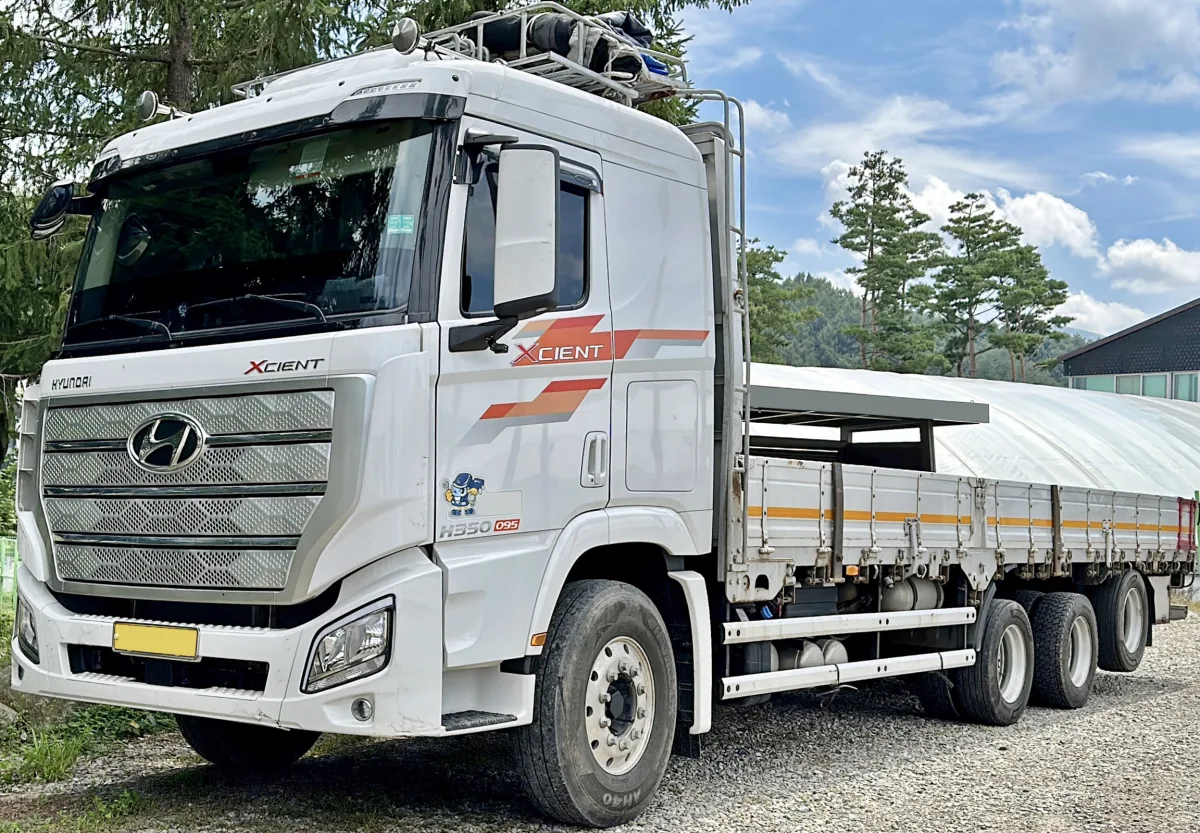
Hyundai Xcient: heavy-duty truck, versions and hydrogen model
Hyundai Xcient — the heavy-duty truck series produced since 2013. We look at the versions, including the hydrogen fuel cell Xcient Fuel Cell, engines, and what to check when buying.






Xcient at a glance
Hyundai Xcient is Hyundai's heavy-duty truck series, introduced in 2013 and sold in many markets worldwide. It's designed for long-haul transport, construction, and other trucking needs.
In Europe, the Xcient is best known for its hydrogen fuel cell version (Xcient Fuel Cell), which is used in several countries. Conventional Xcients with diesel engines are rarely seen in Lithuania, so the choice in the used market is limited.
Versions — what sets them apart
The Xcient comes with various axle configurations and chassis types: tractors, flatbed trucks, dump trucks, and concrete mixers. Different markets offer different trim levels, so it's crucial to pinpoint the vehicle's origin and specifications.
The Xcient Fuel Cell is powered by an electric motor, with energy generated by hydrogen fuel cells. It's aimed at businesses looking to operate without tailpipe emissions and is mainly used in regions with developed hydrogen infrastructure.
Engines and transmissions
Conventional Xcients are fitted with Hyundai diesel engines, with varying capacities and power outputs depending on the market and year. Transmissions are either manual or automated.
The Xcient Fuel Cell has no internal combustion engine: power comes from an electric motor, hydrogen fuel cell stacks, and hydrogen tanks. This technology requires specialist maintenance and access to hydrogen refuelling stations.
What to check when buying an Xcient
First, verify the vehicle's provenance, specifications, and compliance with European standards. Documents, emission class, and registration for a truck imported from outside the EU can complicate the process.
Check in advance about parts availability and servicing, as the Hyundai truck service network in Lithuania is quite limited. Inspect the engine, gearbox, chassis, suspension, and body condition.
For the Fuel Cell version, check the condition of the fuel cells and hydrogen tanks, warranty coverage, and availability of hydrogen refuelling stations along your routes. Also, find out who will service the vehicle.


Trims and Versions
Trims and versions vary by market and year; below are the most commonly encountered versions.
Xcient vilkikas
From 2013Tractor unit for semi-trailers.
- Often — 4x2 or 6x2
- Day or sleeper cab
- Suitable for long-haul journeys
Xcient borto sunkvežimis
From 2013Versatile choice for loads.
- Removable sides
- Often — a curtain-sided trailer
- Ideal for local hauls
Xcient savivartis
From 2013For construction and earth-moving tasks
- Hydraulic tailgate lift
- Often — three or four axles
- Check the hydraulics and chassis
Xcient Fuel Cell
Latest iterationsHydrogen fuel cell truck
- Electric motor and fuel cells
- Hydrogen tanks
- Requires hydrogen refuelling stations
Comparing versions
| Xcient vilkikas | Xcient savivartis | Xcient Fuel Cell | |
|---|---|---|---|
| Who it's for | For long-distance hauls | For construction | Operate without emitting pollutants |
| Transmission | Diesel engine | Diesel engine | Electric motor |
| What to check in particular | The engine and gearbox | The hydraulics and suspension | Fuel components and tanks |
| Availability in Lithuania | Very limited | Very limited | Very limited |
| Price in the used market (relatively) | €€ | €€ | €€€ |
The diesel Xcient is rare in Lithuania and raises questions about parts and servicing, so it's worth choosing only if you're well-prepared. The Fuel Cell version is only suitable for companies with hydrogen infrastructure.
Pros
- Robust heavy-duty truck construction
- A wide range of versions worldwide
- The hydrogen version — zero emissions while driving
- Modern interior
Cons
- Very limited service network in Lithuania
- Minimal used-car availability
- The Fuel Cell requires hydrogen infrastructure
Frequently asked questions
Is the Xcient available in Europe?
The most well-known in Europe is the Xcient Fuel Cell, used by a few countries. Conventional diesel Xcients are rarely seen here.
How does the Xcient Fuel Cell work?
Hydrogen is converted into electricity in fuel cells, which powers the electric motor. Only water vapour is emitted, and refuelling happens at hydrogen stations.
Can the Xcient be bought in Lithuania?
Theoretically yes, but before purchasing, check the documentation, service availability, and parts supply.
Updated 2026-10-21 · Trim levels and equipment vary by market and model year — check the equipment of the specific car. · Translated automatically


