 English
 Lietuvių
 Latviešu
 Eesti
 Polski
 Русский
 Українська
 Deutsch
 Nederlands
 Čeština
 Slovenčina
 Svenska
 Norsk
 Dansk
 Suomi


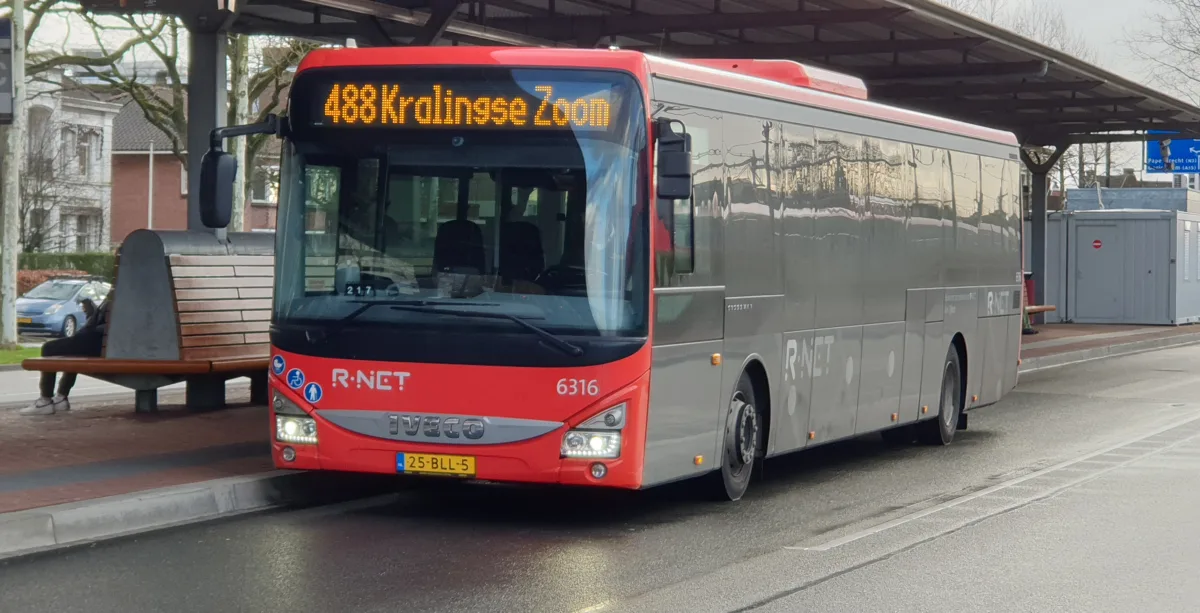
Iveco Crossway: urban and long-distance bus, engines and inspection
The Iveco Crossway has been in production since 2006 as an urban and long-distance bus, initially sold under the Irisbus name. We look at the versions, engines, seating capacity, and what to check when buying used.






Crossway in brief
The Iveco Crossway is an urban and long-distance bus designed for intercity routes, school transport, and regional lines. It comes in several length versions and layouts.
Initially, the model was sold under the Irisbus name, later under Iveco Bus. Many used examples still bear the old Irisbus badge.
Versions — what's the difference
The Crossway is offered in several versions: standard, low-entry (LE), and others tailored for different routes. The LE version has a lower step-in height, making it more accessible for passengers with disabilities and those with strollers.
Lengths range from about 10 to 14.5 meters, with seating capacities of around 40–60 (depending on layout). Urban versions have more standing room and wider doors.
During production, the model underwent updates: engines, safety systems, and the interior were refined. Earlier examples comply with Euro 4 or Euro 5, newer ones with Euro 6.
Engines and transmissions
The Crossway is powered by Iveco diesels with capacities of around 8 and 9 liters (Cursor series engines). Power ranges from roughly 250 to over 350 HP, depending on the version. Always check the exact Euro standard via the documentation.
Transmissions — manual or automatic (ZF or others). Automatics are convenient for city and suburban routes, but require regular maintenance.
What to check when buying a used Crossway
First off — service history and mileage data. City buses run daily, so ask for a full service book, inspection documents, and information about repairs. Check the air suspension, brakes, and tyres.
The engine and transmission should run smoothly, without vibrations or rattles. Check the AdBlue and SCR system, particulate filter, cooling system, and air conditioning. Test the automatic doors and ramp — these often fail due to constant use.
Inspect the interior: seats, storage compartments, floor covering, and windows. Check the body for corrosion and painted parts, and the electrical equipment for blown fuses. Match the numbers with the documents.


Versions
Names and equipment vary by market and year; we list the most common variants found in Europe.
Crossway (standartinis)
2006–The base version for suburban and long-distance routes.
- Higher floor level
- Mostly two doors
- Around 49–55 seats
Crossway LE
2006–Low-entry version for suburban routes.
- Lower step-in height
- Wider doors
- More seating space
Crossway Pop
2006–Base trim for budget-conscious buyers
- Simpler interior
- Less additional equipment
- Cheaper on the used market
Crossway Euro 6
2006–Newer versions with Euro 6 engines
- Updated engines
- Additional safety systems
- Often pricier on the used market
Comparison of base Crossway versions
| Standartinis | LE | Euro 6 | |
|---|---|---|---|
| Who it's for | City and long-distance driving | City routes | Newer routes |
| Entry-level | Higher | Lower | Depends on the version |
| Number of seats (usually) | Around 49–55 | Around 40–55 | Around 40–55 |
| Price in the used market (relatively) | Budget-friendly | Budget-friendly | Mid-range |
For city driving, opt for the LE, for long distances the standard version, and for newer Euro 6 standards, the updated Crossway. Most importantly, check the service history.
Pros
- Quite accessible price
- Wide range of versions
- Suitable for city and long-distance driving
- Fairly straightforward technology
Cons
- AdBlue and SCR systems can be costly
- Many used buses have high mileage
- Older examples may have outdated electronics
Frequently asked questions
How does the Crossway differ from the Evadys?
The Evadys is the newer model, built on the Crossway platform, with updated design and technology. The Crossway is the earlier generation, often cheaper in the used market.
How many seats does the Crossway have?
It depends on the length and interior layout, usually around 40–60 seats. The exact number is specified in the technical documents.
Is it worth buying a Crossway with high mileage?
If it has a full service history and is mechanically sound — yes. However, a high-mileage bus will need more maintenance, so haggle on the price.
Updated 2026-10-21 · Trim levels and equipment vary by market and model year — check the equipment of the specific car. · Translated automatically


