 English
 Lietuvių
 Latviešu
 Eesti
 Polski
 Русский
 Українська
 Deutsch
 Nederlands
 Čeština
 Slovenčina
 Svenska
 Norsk
 Dansk
 Suomi


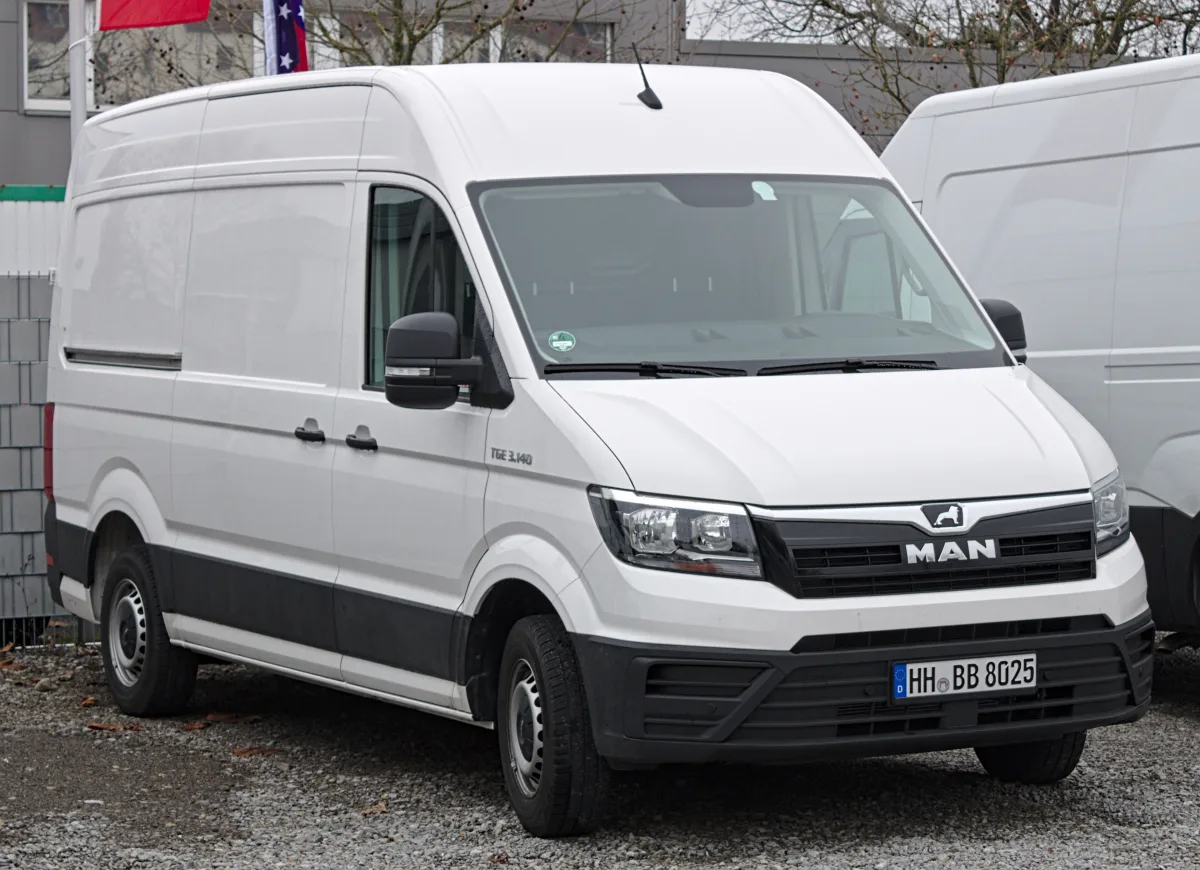
MAN TGE: generations, engines and trims
The MAN TGE is a large van that is essentially a cousin of the Volkswagen Crafter, sold through the MAN truck network. We look at the engines, length and roof versions, drivetrain options, the e-TGE and what to check when buying a used one.






TGE in brief
The MAN TGE is a large van introduced in 2017 and built alongside the second-generation Volkswagen Crafter. The differences lie in the badging, some interior details and the MAN service network.
This is a van for business: for deliveries, construction, loading and passenger transport. Available as a van, cab chassis, double cab and minibus.
Generations and names
The TGE is a single-generation (since 2017) vehicle whose names reflect the permissible weight and power. The first digit (e.g. 3 or 5) indicates the weight class, and the number after the dot indicates the engine power class (e.g. 3.140, 3.180).
In the used market, you'll mostly find 3.xxx (around 3.5t) variants, as they are lighter and can be driven with a B category driver's license.
Engines and gearboxes
The most common engine is the 2.0 TDI diesel (around 100–180 hp), paired with a 6-speed manual or 8-speed automatic gearbox. Front-wheel drive, rear-wheel drive and all-wheel drive (4MOTION) versions are offered.
The electric version, the e-TGE, has around a 36 kWh battery and around 100 kW of power — it's designed for urban deliveries, not long journeys.
What to check when buying a used TGE
Body: check the condition of the doors, sills, and cargo area floors, especially if the car was used for construction. Inspect the roof structure for dents.
Check the diesel engine for the condition of the DPF, EGR, and AdBlue systems (SCR). The engine should start without prolonged cranking, and the automatic transmission should shift smoothly.
In the cabin, check the seats, air conditioning, electrical functions, and cargo area fastenings. Inspect the ride based on service records.


Trim levels and versions
Trim levels and names vary by market and year; below are the most common body versions.
Furgonas (vidutinis)
From 2017 onwardsThe most popular length for most tasks.
- Mid-sized cargo area
- Often a mid or high roof version
- Often features two sliding doors
Furgonas (ilgas)
From 2017 onwardsMore cargo space for longer items
- Longer cargo area
- High roof is common
- Less maneuverable
Važiuoklė su kabina
From 2017 onwardsDesigned for specialty bodies (van, camper, refrigerated)
- Open rear section
- Often — dual rear-wheel drive
- Required rear section equipment
Dviguba kabina
From 2017 onwardsFor cargo and crew.
- Two rows of seats
- Smaller cargo area
- Often — cab chassis
e-TGE
Electric versionElectric version for urban deliveries.
- Approximately 36 kWh battery
- Zero tailpipe emissions in the city
- Range depends on load
Comparison of TGE versions
| Furgonas vidutinis | Furgonas ilgas | e-TGE | |
|---|---|---|---|
| Who it's for | For deliveries and work | More cargo | For city business |
| Body | Van | Van | Van |
| Engine | 2.0 TDI | 2.0 TDI | Electric, around 100 kW |
| Price in the used market (relatively) | Mid-range | Mid-range | High-end |
For most businesses, the best choice is a mid-sized van with a 2.0 TDI. The e-TGE is worth considering only for city routes and where there's convenient loading space.
Pros
- Spacious and robust large van
- Wide range of lengths, roofs, and body styles
- Technology based on the Crafter — parts are readily available
- MAN service network
Cons
- The used market offers fewer options than the Crafter
- Costs of maintaining the diesel DPF and AdBlue
- The e-TGE has a limited range
Frequently asked questions
Is the MAN TGE the same as the Volkswagen Crafter?
Technically, they are very similar: the TGE is built alongside the Crafter in its second generation, differing only in badging and some trim details.
What does TGE 3.140 or 5.180 mean?
The first digit indicates the weight class (e.g., 3 — around 3.5 tonnes, 5 — a heavier variant), while the number after the dot represents the engine power class.
Is the e-TGE suitable for daily use?
For urban deliveries — yes, if the range is sufficient for your routes and there is a convenient loading spot. For longer journeys, a diesel is more suitable.
Updated 2026-10-21 · Trim levels and equipment vary by market and model year — check the equipment of the specific car. · Translated automatically


