 English
 Lietuvių
 Latviešu
 Eesti
 Polski
 Русский
 Українська
 Deutsch
 Nederlands
 Čeština
 Slovenčina
 Svenska
 Norsk
 Dansk
 Suomi


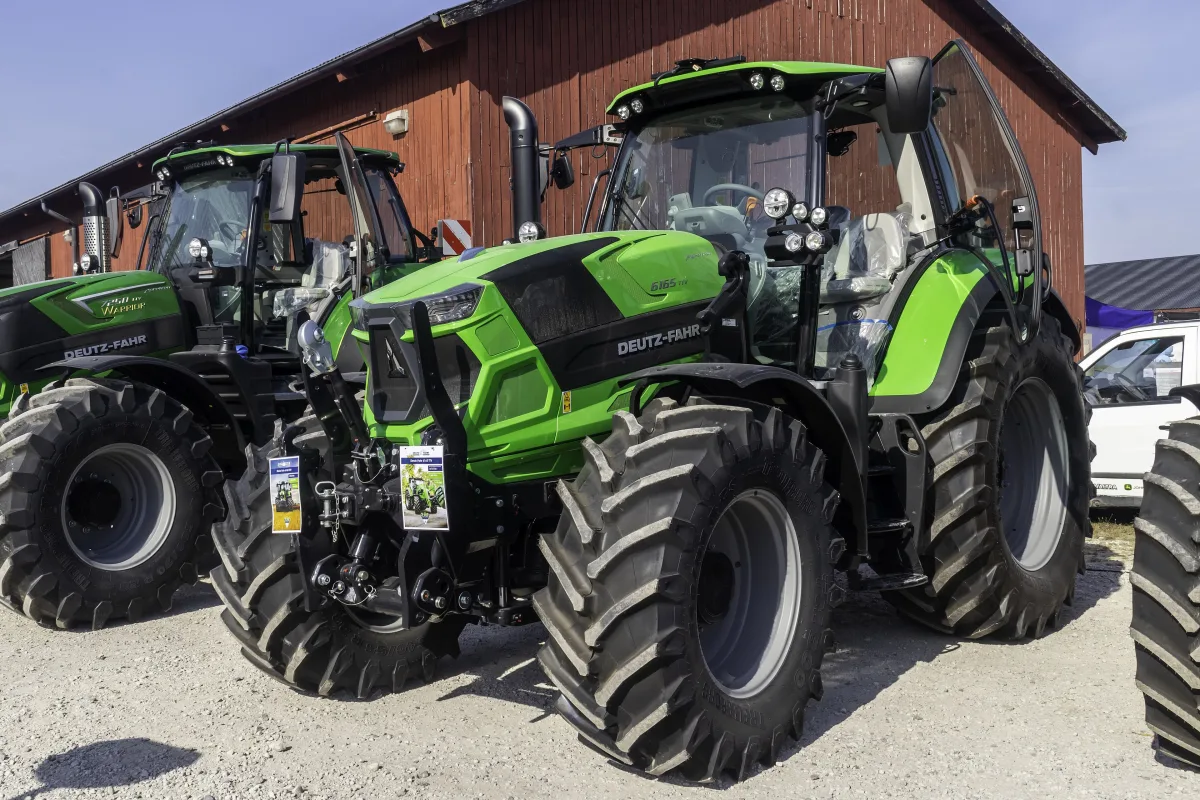
Deutz-Fahr 6 Series: generations, TTV and what to check when buying used
Deutz-Fahr 6 Series — a line of mid-range and high-horsepower tractors produced since 2013. We look at the main generations, transmissions, and what to check when buying a used tractor.






6 Series in brief
Deutz-Fahr 6 Series — versatile tractors designed for medium and large farms. The series covers models with roughly 120–230 HP, making them suitable for both fieldwork and road travel.
The numbers in the model names indicate the power class: for example, 6165 is around 165 HP. The letters C and TTV denote the generation or transmission type.
Which version to choose
The series includes several versions: C (simpler, with manual or semi-automatic transmission), G, and TTV (with continuous transmission). The choice depends on the type of work and budget.
TTV is popular for its comfort and efficiency, but its repairs are more expensive. If the tasks are straightforward and you want a lower price, it's better to choose the simpler version.
Engines and transmissions
The tractors are powered by Deutz diesel engines with SCR system and AdBlue. The exact power is indicated in the model name.
Transmissions: manual, RC-Shift (semi-automatic), and TTV (continuous). TTV feels smoother, but its repairs are more expensive than those of manual transmissions.
What to check when buying a used 6 Series
Test the transmission: movement and shifting should be smooth. In the case of TTV, check for error codes and whether the speed remains stable.
Check the hydraulics, lift mechanism, power take-off shaft, and front axle. If the tractor worked with a loader, inspect the front axle and lift cylinders.
Check the SCR system and AdBlue pump. Review the service history and ensure that the oil has been changed according to the manufacturer's intervals.


Versions and series
Names and equipment vary by market and year; we list the versions most commonly found in Europe.
6 C
All generationsThe base version with standard equipment.
- Often — a manual or semi-automatic transmission
- Basic cab
- Lower price
6 G
All generationsMid-range with a more comfortable cab and hydraulics.
- Often — RC-Shift
- Enhanced cab
- More comfort
6 TTV
All generationsVersion with a stepless transmission.
- Smooth gear shifting
- More comfort
- Low-maintenance
6 RC-Shift
All generationsSemi-automatic gearbox with gears that shift under load.
- Easier shifting
- Less electronics than TTV
- Average maintenance cost
6 Series comparison
| 6 C | 6 G | 6 TTV | |
|---|---|---|---|
| Who it's for | For everyday tasks | For daily chores | For comfort and economy |
| Gearbox | Manual / semi-automatic | RC-Shift | TTV (no gears) |
| Cab | Base | Enhanced | Most Comfortable |
| Electronics complexity | Small | Medium | Large |
| Price in the used market (relatively) | Mid-range | Mid-range | High-end |
Most farms will get by with a 6G with RC-Shift. If you cover lots of miles and work long hours, it's worth opting for a 4WD, while a 6-speed manual will suffice for simpler tasks.
Pros
- Wide range of power and version choices
- Comfortable cabin and good visibility
- Deutz engines are widely used
- 4WD ensures smooth driving
Cons
- TTV repairs are expensive
- Newer versions of the SCR system require attention
- Used prices can be high
Frequently asked questions
How much horsepower does the Deutz-Fahr 6 Series have?
The 6 Series covers roughly 120–230 hp models. The exact power is indicated by the model name, for example, the 6165 has around 165 hp.
What's the difference between TTV and RC-Shift?
TTV is a stepless transmission, while RC-Shift is a semi-automatic with gears. TTV is more comfortable, but repairs are pricier.
Is the 6 Series suitable for working with a loader?
Yes, the 6 Series is widely used with front loaders. Before buying, check the condition of the hydraulics and front axle.
Updated 2026-10-21 · Trim levels and equipment vary by market and model year — check the equipment of the specific car. · Translated automatically


