 English
 Lietuvių
 Latviešu
 Eesti
 Polski
 Русский
 Українська
 Deutsch
 Nederlands
 Čeština
 Slovenčina
 Svenska
 Norsk
 Dansk
 Suomi


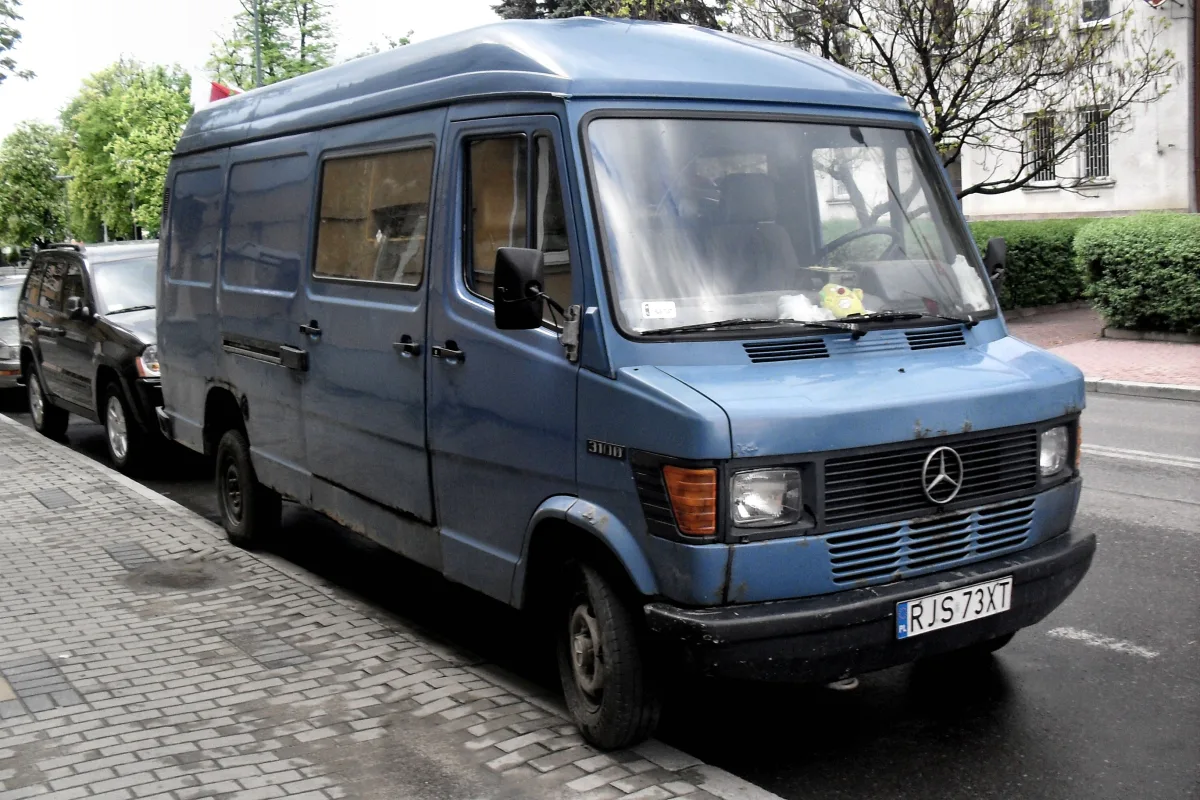
Mercedes-Benz T1: 1977–1995 van, body styles and what to check
The Mercedes-Benz T1 is a light commercial vehicle produced from 1977 to 1995, widely used in Europe as a van, minibus, and pick-up. In this article, we look at the different body styles, the engines fitted, and what's particularly important to check when buying an older model.






T1 at a glance
The T1 was designed for light commercial loads and passengers: you'll find it as a van, minibus, and flatbed truck. It was produced for over 15 years, so during that time, both the badging and some of the tech changed.
Today, the T1 is mostly bought as a classic or hobby car, rarely as a daily work van. It's a straightforward vehicle, so plenty can be fixed independently, but condition and rust are more important than mileage.
Body styles and badging
Early T1 models were badged 207 D, 208, 307 D, 308, 407 D, and 408; later, the badging changed (for example, 210 D, 310 D). The first number indicated the weight class, and the letter 'D' signified a diesel engine.
Body styles: enclosed van, van with windows, minibus or passenger estate, flatbed truck, and cab chassis. Passenger versions had more seating, while vans offered a significantly larger cargo area; body length and height vary by style.
Engines and gearboxes
The T1 came with four-cylinder petrol and diesel engines from the era's light Mercedes-Benz cars. Exact variants depend on the year and version, so check the engine code in the data table and registration documents.
The most common transmission is a manual gearbox, with power sent to the rear wheels. This simple setup ensures good reliability, provided the vehicle has been well-maintained.
What to check when buying a used T1
First and foremost — corrosion. Inspect the sills, wheel arches, floor, door bottoms, and body joints; these are often the cause of expensive repairs for used T1s. Also, check if the body hasn't been repaired after an accident or repainted unnecessarily.
The engine should start without prolonged cranking (diesels should start even on cold days), it shouldn't smoke or leak oil. Test the gearbox, steering smoothness, brakes, and suspension, and inside the cabin, check that the electrical equipment works.


Trim levels
T1 trim levels weren't named like those of modern cars; below, we provide general versions based on purpose.
Furgonas
1977–1995Enclosed cargo area without windows.
- Often just two seats up front
- Basic interior
- Cargo area accessible from the rear or side with doors
Furgonas su langais
1977–1995Van body with side windows.
- More light in the cargo area
- Often — additional seats in the rear
- Ideal for small businesses or camper conversions
Mikroautobusas (kombi)
1977–1995Passenger version with several rows of seats
- Windows all around the body
- Additional rows of seats
- Perfect for families or road trips
Bortinis sunkvežimis ir važiuoklė
1977–1995Open cargo body or cab-over vehicle
- Open cargo platform
- Often comes with tailgates
- Suitable for conversions and special bodies
Comparison of T1 versions
| Furgonas | Furgonas su langais | Mikroautobusas | Bortinis | |
|---|---|---|---|---|
| Who it's for | For cargo | For cargo and passengers | For passengers | For cargo needing an open platform |
| Passengers | 2 seats | 2 seats or more | More seats | 2–3 seats |
| Price in the used market (relatively) | € | € | €€ | € |
For many enthusiasts, a microbus or van with windows is ideal for road trips, as they can be more easily adapted for travel. In any case, the version is less important than the condition of the body and how much it has rusted.
Pros
- Simple, sturdy construction
- Vintage car appearance
- Many options to customise the body
- Low used prices, compared to modern vans
Cons
- Corrosion — the main issue
- Lack of modern safety systems
- Spare parts might take longer to find
Frequently asked questions
Is the T1 suitable for daily use?
It might be worth it if the car is in good condition, but it lacks modern safety systems and spare parts can be hard to find. It's often bought as a hobby or travel car.
What's the difference between the 207 D and 307 D?
The first number indicates the weight class: the 307 D belongs to a heavier class than the 207 D. Always check the specific car's documents for accurate details.
Is it worth buying a T1 imported from abroad?
It might be worth it, as cars from southern countries often have less rust. Always inspect the body and check the history before paying.
Updated 2026-10-21 · Trim levels and equipment vary by market and model year — check the equipment of the specific car. · Translated automatically


