 English
 Lietuvių
 Latviešu
 Eesti
 Polski
 Русский
 Українська
 Deutsch
 Nederlands
 Čeština
 Slovenčina
 Svenska
 Norsk
 Dansk
 Suomi


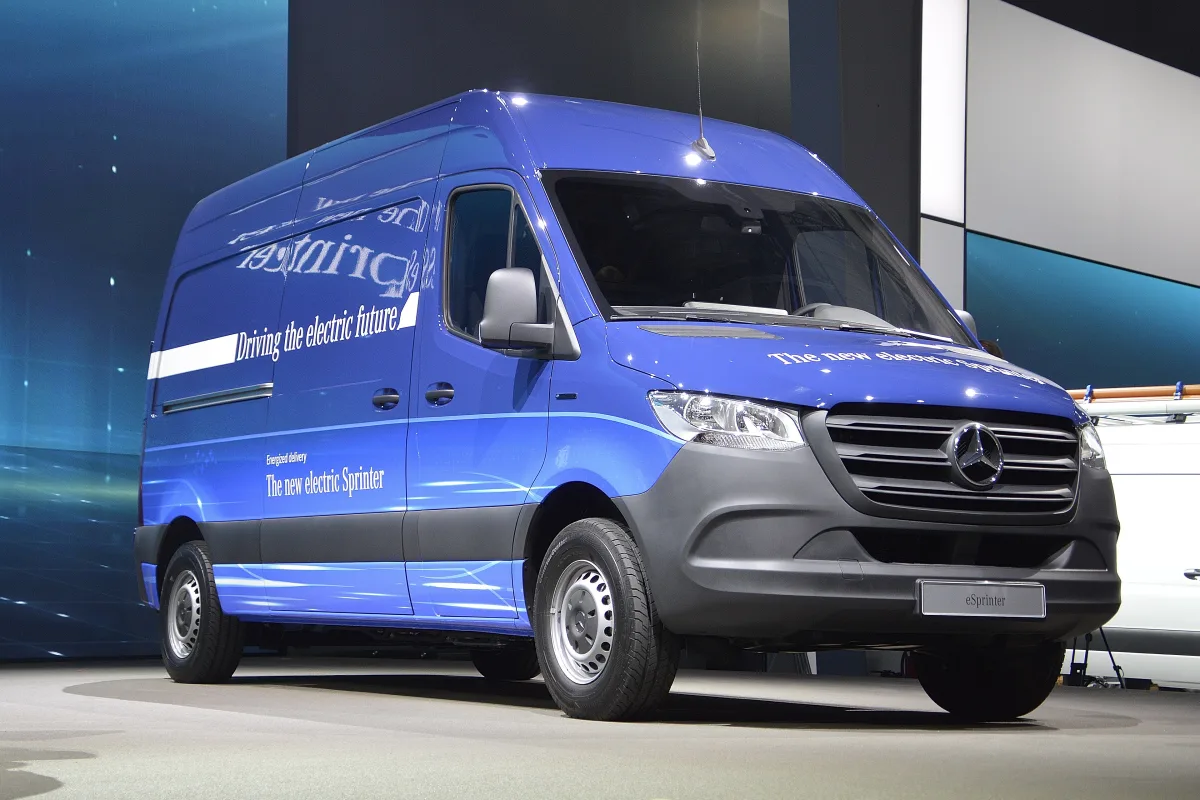
Mercedes-Benz eSprinter: electric van, batteries and versions
Mercedes-Benz eSprinter — an electric van designed for urban deliveries and business use. We review the first (2019) and refreshed generation, battery capacities, range, and what to check when buying a used electric van.






eSprinter in brief
The eSprinter is the electric version of the 'Sprinter' — a large van body with electric powertrain and rear-wheel drive. The first version debuted in 2019 and was primarily aimed at urban deliveries with typical daily loads.
This is a business vehicle: a van with a predictable daily route and the ability to charge frequently at the same location. The supply of used models is limited, so it's crucial to understand the specific vehicle's trim.
Generations and differences
The first-generation eSprinter (from 2019) had roughly a 41 kWh battery and up to a 116 hp engine, with a range of about 115–150 km according to the manufacturer. The top speed was limited, making it a city van rather than one for long journeys.
The new-generation eSprinter (introduced in 2023, production from 2024) features significantly larger batteries and a more powerful electric powertrain. The manufacturer specifies a range of several hundred kilometres with the largest battery.
Batteries and charging
For an electric van, the most important factors are battery capacity, range under load, and charging power. Range decreases when driving fast, with a load, or heating the cabin in winter.
First-generation eSprinters are typically charged with alternating current or fast charging (CCS). Before buying, check the maximum charging capacity the vehicle supports and how it was used previously.
What to check when buying a used eSprinter
Request a battery health report, charging history, and actual range when fully charged. If possible, have diagnostics done at an authorized service center.
Check the body (as with any commercial van — doors, steps, cargo area floor condition), suspension, and brakes. In electric vans, brakes often wear less due to regeneration, but discs can rust.
Ensure the vehicle comes with charging cables, there are no error messages on the screen, and check if the manufacturer's warranty for the battery and electric powertrain is still valid.


Trim levels and versions
Van versions and equipment vary greatly; below are the main versions by purpose.
Furgonas (trumpesnė bazė)
From 2019 onwardsEasier to manoeuvre in the city, smaller cargo area.
- Shorter wheelbase variant
- Often — standard roof height
- Smaller boot, but easier parking
Furgonas (ilga bazė)
From 2019 onwardsMore cargo space and longer items.
- Longer cargo area
- Often — higher roof
- Larger turning circle
Pagrindinė versija
Pirma kartaBasic trim for work and delivery.
- Often — standard interior trim
- Often — basic air conditioning
- Basic interior
Didesnės baterijos versija
Nauja kartaSuitable for longer journeys.
- Larger battery capacity
- Often — more powerful charging
- Longer range than the first generation
Comparison of eSprinter versions
| Pirma karta | Nauja karta | Didžiausia baterija | |
|---|---|---|---|
| Who it's for | For urban deliveries | For wider route selection | For longer journeys |
| Battery | Around 41 kWh | Larger than the first iteration | The top-tier version on offer |
| Body | Van, several versions | Van, several versions | Van, several versions |
| Transmission | Electric, up to 116 hp | Electric, more powerful | Electric, more powerful |
| Price in the used market (relatively) | €€ | €€€ | €€€€ |
If your routes are short and predictable, the first-gen eSprinter could be an economical choice. For longer trips and heavier loads, the new generation is more suitable.
Pros
- Quiet and economical for city use
- Low running costs
- Subject to emissions restrictions
- Generous cargo area
Cons
- Range insufficient for long journeys (especially first-gen)
- Battery condition affects value
- Limited availability in the used market
Frequently asked questions
What’s the range of a first-gen eSprinter?
The manufacturer quotes around 115–150 km according to WLTP, but real-world range depends on speed, load, and temperature. Before buying, check the actual range with your typical routes.
Is the eSprinter suitable for urban deliveries?
Yes. Predictable routes and the ability to charge overnight or during breaks are key advantages, while quiet operation and zero tailpipe emissions are the icing on the cake.
Is buying a used eSprinter risky?
The battery condition is the most important factor. If you have a health report, charging history, and a certified warranty, the risk is lower; without these, replacing the battery can be very expensive.
Updated 2026-10-21 · Trim levels and equipment vary by market and model year — check the equipment of the specific car. · Translated automatically


