 English
 Lietuvių
 Latviešu
 Eesti
 Polski
 Русский
 Українська
 Deutsch
 Nederlands
 Čeština
 Slovenčina
 Svenska
 Norsk
 Dansk
 Suomi


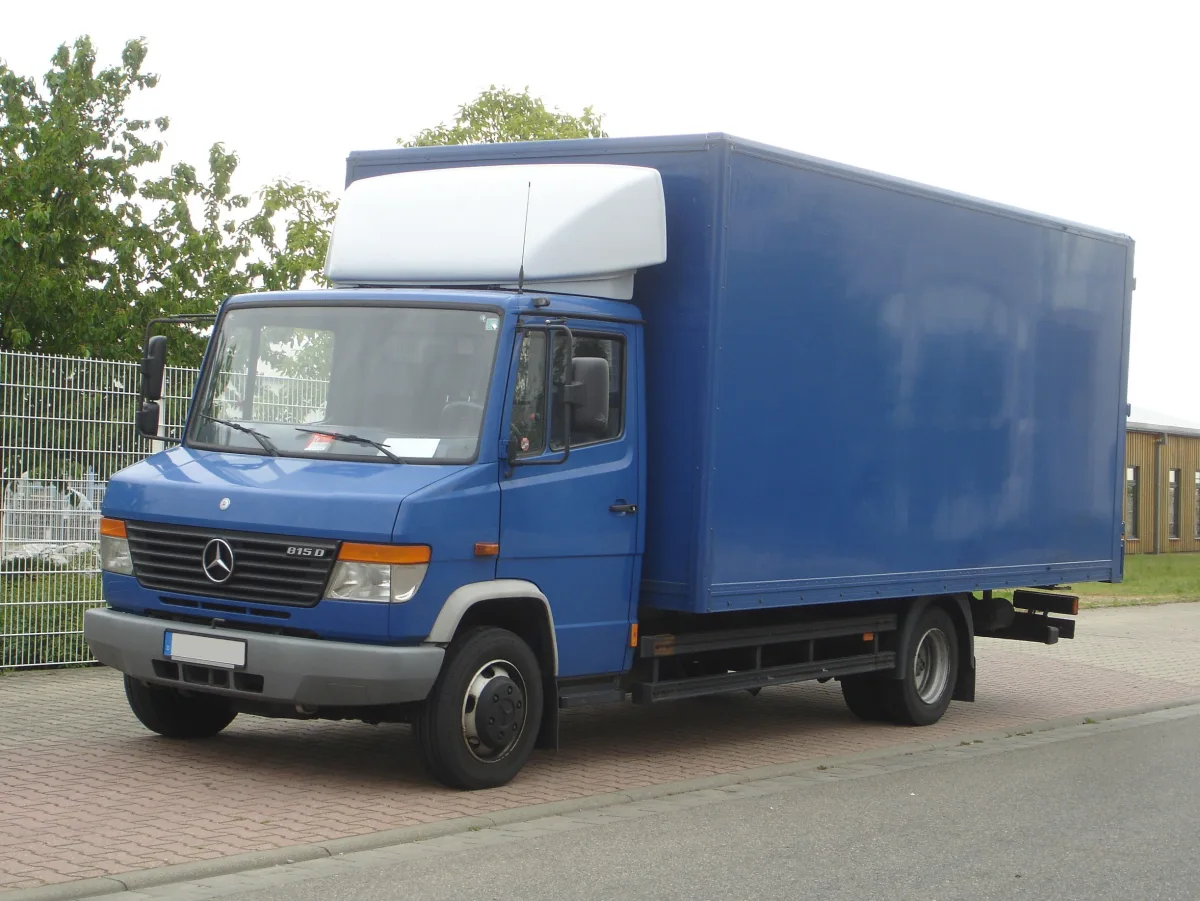
Mercedes-Benz Vario: bodies, engines and what to check when buying
Mercedes-Benz Vario (1996–2013) — a light commercial vehicle and large van that filled the gap between the Sprinter class and heavier commercial vehicles. In this article, we look at the model's purpose, engines, body versions, and what to check when buying a used Vario.






Vario in brief
The Vario was designed as a light commercial vehicle for urban and regional transport: gross vehicle weight rating — from a few to around eight tonnes. Mostly, it served as a van or flatbed with a canopy, but there were also refrigerated units, box trucks, fire trucks, and special-purpose vehicles.
The first digits indicate the gross vehicle weight rating class, and the last two represent the approximate power divided by ten horsepower. For example, 815D is an approximately 8-tonne class diesel vehicle with around 150 HP.
Which version to choose
The Vario was produced for about 17 years, so there are both early and later models on the market. Newer vehicles usually have engines that meet stricter emission standards, a more comfortable cabin, and better equipment.
When choosing, the most important factor is the purpose. If you need to transport light but bulky cargo, a van with a longer wheelbase is suitable. For heavier loads and movable bodies, it's better to choose higher weight class versions with a sturdier chassis.
Engines and transmissions
Powered by four-cylinder diesel engines. Early models used around 4-litre engines, later models featured around 4.3-litre OM 904 LA units with a turbocharger, producing between roughly 130 and 180 hp in various versions.
The Vario is most commonly equipped with a manual transmission. In updated models meeting stricter emission standards, you might find additional exhaust gas treatment systems, including AdBlue.
What to check when buying a used Vario
First, inspect the frame and cab mounts, wheel arches, and underbody — commercial vehicles often work in winter and encounter salt and moisture. Pay attention to the box or platform mounting to the frame and rear suspensions.
Start the engine cold: there shouldn't be excessive smoking or unusual noises. Check the clutch, brakes, steering system, and suspension, as these components wear out quickly when the vehicle is constantly loaded.
Be sure to review the service history, tachograph data (if fitted), and documents. For cargo vans, it's important to check for signs of odometer tampering and whether the body has been repaired after an accident.


Body styles
The Vario was offered in a variety of body styles and weight classes; here we describe the most commonly encountered types.
Furgonas su metaliniu kėbulu
1996–2013Enclosed cargo area, suitable for parcel and general freight transport.
- Protects the cargo from weather conditions.
- Often features side or rear doors.
- Ideal for urban deliveries.
Platforma su tentu
1996–2013Versatile option for various cargo types and quick side loading.
- Side loading
- Often — a tent with supports
- Suitable for building materials and pallets
Šaldytuvas ar izoterminis kėbulas
1996–2013Special version for food and temperature-sensitive cargo
- Insulated cargo compartment
- Often — a refrigeration unit
- Suitable for food delivery
Dviguba kabina ir specialioji įranga
1996–2013Versions for command units, fire brigades, or technical services
- More space in the cabin
- Often — special tanks and equipment
- Suitable for services and municipal companies
Comparison of van body versions
| Furgonas | Platforma su tentu | Šaldytuvas | |
|---|---|---|---|
| Who it's for | For general cargo | For universal cargo | For food delivery |
| Loading | Rear and side access | Side and rear access | Mostly rear access |
| Operation | Ideal for city work | Requires careful securing of cargo | Additional refrigeration unit maintenance |
| Price in the used market (relatively) | €€ | €€ | €€€ |
For most buyers, the simplest choice is a van or a flatbed with a canopy that has a clean history. Opt for a refrigerated unit only if you need temperature control and have a reliable service for the unit.
Pros
- Robust construction for heavy-duty work
- A wide range of body and weight classes to choose from
- Engine and mechanics proven over time
- Ideal for city and regional driving
Cons
- Commercial vehicles often have a high payload
- The cabin comfort is less than that of light vans
- The chassis and body can be affected by corrosion
Frequently asked questions
What driver's license category is needed for a Vario?
This depends on the gross vehicle weight rating. Lighter versions may only require a B or C1 license, while heavier ones need a C. Always check the specific vehicle's weight in the registration document.
Is the Vario suitable for daily city work?
Yes, it's quite compact compared to heavier trucks, so it handles well in the city. Lighter versions are better suited to congested urban areas and narrow streets.
What's most important to check before buying?
Chassis and cabin corrosion, engine condition, suspension, and service history. Also, ensure the body and its mounts haven't been improperly repaired.
Updated 2026-10-21 · Trim levels and equipment vary by market and model year — check the equipment of the specific car. · Translated automatically


