 English
 Lietuvių
 Latviešu
 Eesti
 Polski
 Русский
 Українська
 Deutsch
 Nederlands
 Čeština
 Slovenčina
 Svenska
 Norsk
 Dansk
 Suomi


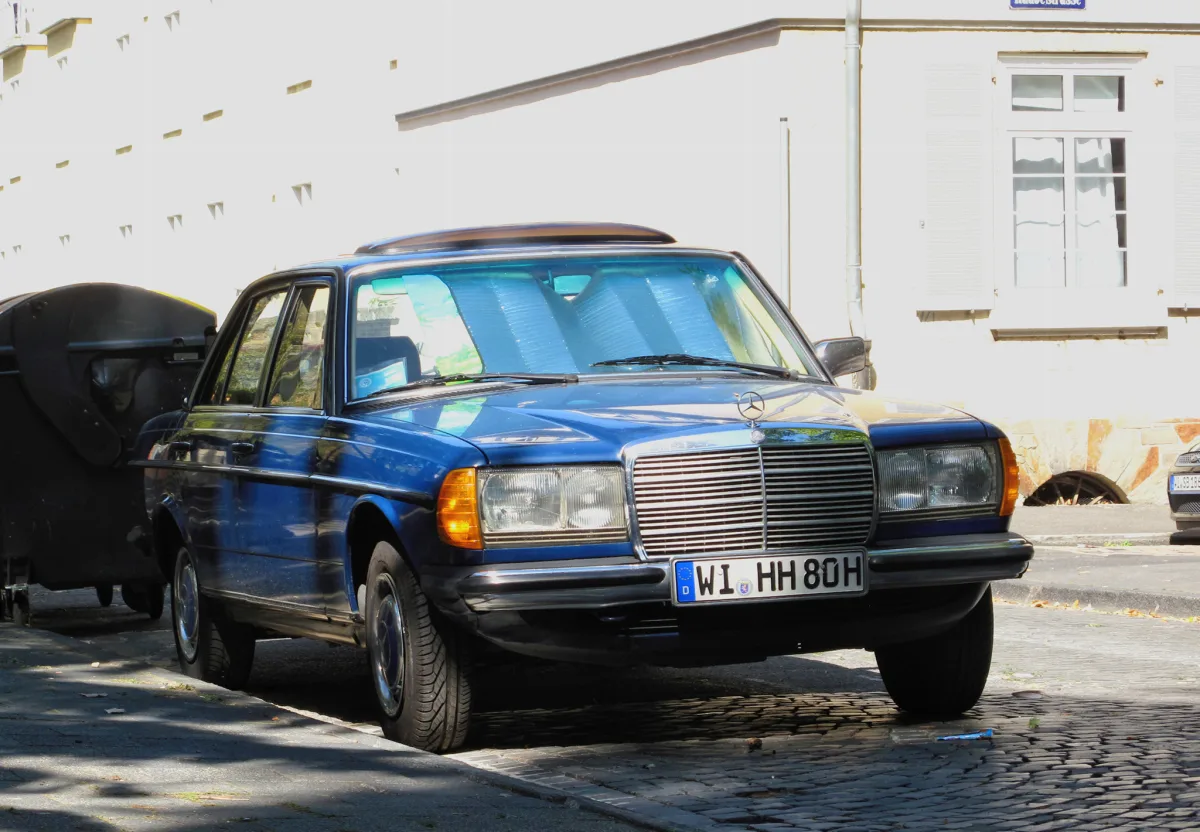
Mercedes-Benz W123: generations, engines and what to know before buying
The Mercedes-Benz W123, launched in 1976, is a mid-size series renowned for its robustness and simple construction. In this article, we review the body styles, engines, and what you need to know when buying a used W123.






W123 in brief
The W123 replaced the previous /8 series and was produced until the mid-1980s. Several body styles were offered: sedan, estate (T-model), coupe (C123), and a longer wheelbase (V123), often used as a taxi or limousine.
The car is famous for its long-lasting construction, sturdy body, and high-quality interior. As a result, many have survived to this day, and there are plenty of parts and knowledge about this model available.
Which version to choose
Diesel W123s (e.g., 200 D, 220 D, 240 D) are considered the most robust, but they are slow and noisy. The five-cylinder 300 D offers better performance.
Petrol variants (e.g., 200, 230, 250, 280 E) are faster and quieter. The 280 E is regarded as one of the most powerful sedan versions, while the coupes 230 C and 280 CE are praised for their elegance and rarer body style.
Engines and transmissions
Petrol engines are four- and six-cylinder units; power ranges from around 90 to about 180 hp (280 E). Diesel engines are four-cylinder and five-cylinder (300 D) with significantly less power.
The transmission is either a manual (four- or five-speed) or a four-speed automatic. The engine construction is simple and very long-lasting, provided oil changes are regular and the cooling system is well-maintained.
What to check when buying a used W123
The main enemy is rust. Check the sills, wheel arches, front wings, floor, boot floor, and the lower part of the front windscreen frame. Even a car that looks fine can have hidden damage under the paint.
Check the engine condition (smoke, leaks), gearbox operation, and suspension. Many W123s have a vacuum-operated central locking system, whose leaks can cause issues. It's worth consulting a specialist who knows classic Mercedes.


Trim levels
Names and equipment vary by market and year; we list the most common trims found in Europe.
200 D – 240 D
1976–1985Four-cylinder diesels are a simple and long-lasting option.
- Four-cylinder diesel
- Very reliable technology
- Slower acceleration and noisier driving
300 D
From 1976Five-cylinder diesel, praised for its robustness.
- Five-cylinder engine
- Better performance than four-cylinder diesels
- Often comes with an automatic gearbox
230 / 250
1976–1985Petrol saloons for everyday use.
- Four or six-cylinder petrol
- Smoother ride than diesels
- Often — manual or automatic gearbox
280 E
1976–1985Most powerful six-cylinder saloon
- Around 180 hp
- Fuel injection
- Better dynamics
T-modell
estateEstate with a larger boot
- Spacious boot compartment
- Plenty of engine choices
- Practical for families
Coupé (C123)
coupeTwo-door coupe with an elegant look
- No central locking or electric windows
- Petrol engines
- The rarer, more sought-after version
W123 generation comparison
| 200 D–240 D | 300 D | 280 E | Coupé | |
|---|---|---|---|---|
| Who it's for | For economical and long-lasting driving | For the steadfast classic enthusiast | For dynamic driving | For those who appreciate elegance |
| Engine | 4-cylinder diesel | 5-cylinder diesel | 6-cylinder petrol | 4–6-cylinder petrol |
| Body style | Sedan / Estate | Sedan / Estate | Sedan | Coupe |
| Dynamics | Cuddly | Average | Good | Good |
| Price in the used market (relatively) | € | €€ | €€ | €€€ |
For most buyers, a sensible choice is a well-maintained 300 D or petrol 230 / 250. The Coupe is worth considering if distinctive style is important.
Pros
- Very robust, long-lasting construction
- Simple technology, plenty of parts and know-how
- High-quality interior and comfortable cabin
- Classic design
Cons
- Rust — the main issue
- Diesel variants are slow and noisy
- Low safety by today's standards
Frequently asked questions
Why is the W123 considered a long-lasting design?
Thanks to its sturdy body, simple mechanics, and quality materials. Many W123s have clocked hundreds of thousands of kilometres with regular maintenance.
Which W123 engine is the best?
Often mentioned are the 300 D (five-cylinder diesel) for reliability and the 280 E for dynamics. The choice depends on what you want — economy or speed.
Is the W123 suitable for daily use?
Well-maintained — yes, but safety and comfort lag behind modern cars. Often used as a classic for the summer season.
Updated 2026-10-19 · Trim levels and equipment vary by market and model year — check the equipment of the specific car. · Translated automatically


