 English
 Lietuvių
 Latviešu
 Eesti
 Polski
 Русский
 Українська
 Deutsch
 Nederlands
 Čeština
 Slovenčina
 Svenska
 Norsk
 Dansk
 Suomi


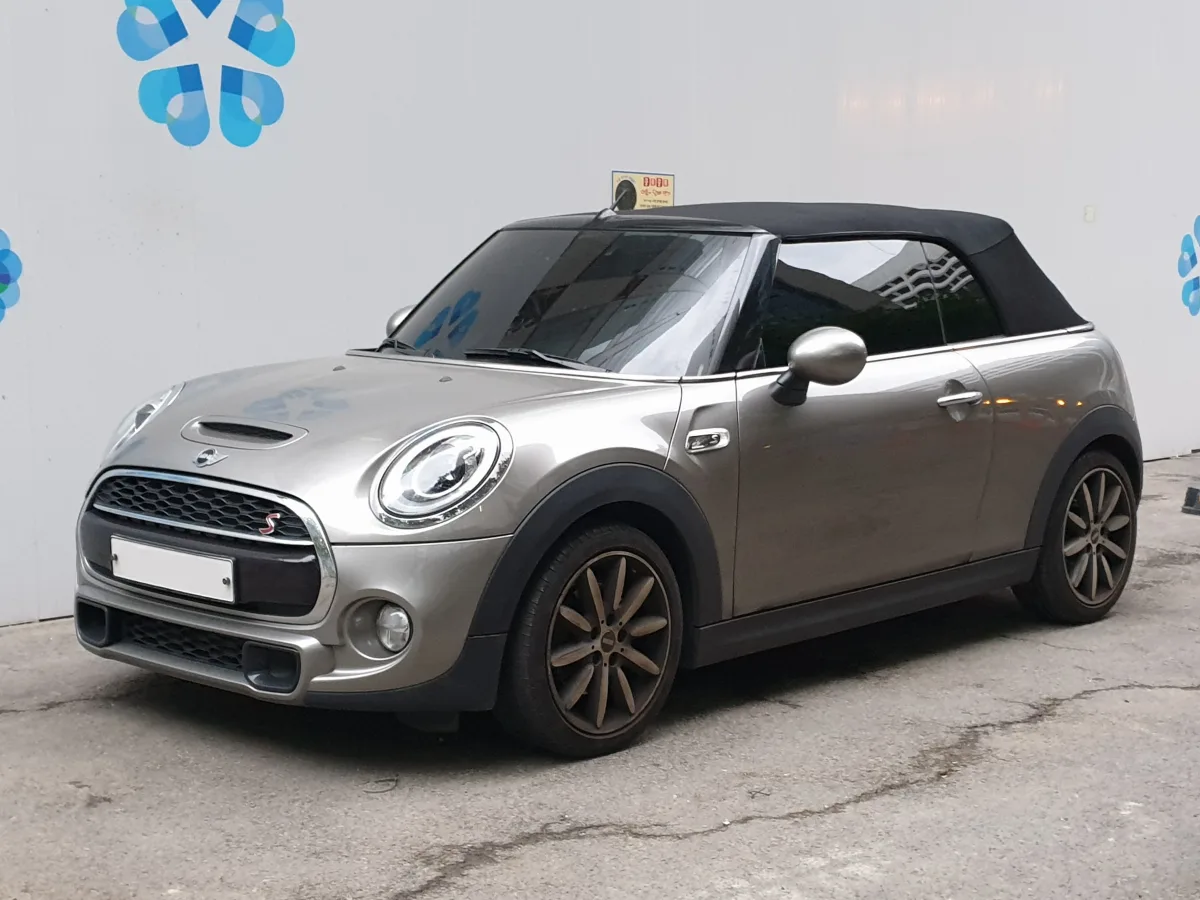
Mini Cabrio: R52, R57 and F57 generations, engines and trims
Mini Cabrio — a compact convertible with a fabric roof, produced since 2004. We look at the R52, R57 and F57 generations, engines, trims and what to check before buying a used Mini Cabrio.






Mini Cabrio in brief
Mini Cabrio — an open four-seater with an electrically operated fabric roof. It's for those who value style, enjoyable driving and the open-top experience, but don't need a large boot or much space in the rear.
In the used market, the Mini Cabrio is prized for its distinctive design, good handling and wide range of engines. However, like all convertibles, it's crucial to thoroughly check the roof mechanism and seals.
Which generation to choose
R52 (2004–2008) — the first Mini Cabrio generation. It's the cheapest in the used market, but it's also quite old, so condition, mileage and service history are more important than the trim level.
R57 (2009–2015) — the second generation with improved design, more equipment and a wider range of engines (petrol and diesel). This generation is most commonly found in the used market, offering a good balance of price and quality.
F57 (from 2016) — the most modern generation. It's larger, has newer turbo engines, an improved interior and more driver assistance systems. It's the most expensive, but also the most technologically advanced and comfortable for daily use.
Engines and gearboxes
In R52 guise, 1.6-litre petrol engines were used, including the supercharged Cooper S. R57 models employed 1.6-litre petrol units (including turbocharged Cooper S and JCW) as well as 1.6 and 2.0-litre diesel engines.
The F57 range uses 1.5-litre three-cylinder (One, Cooper) and 2.0-litre four-cylinder (Cooper S, John Cooper Works) petrol engines, plus diesel Cooper D and SD units. Exact power outputs vary by year and market.
Transmissions are manual (5 or 6-speed) or automatic. In F57 models, you'll often find a 7-speed dual-clutch box.
What to check when buying a used Mini Cabrio
The roof is key. Open and close it several times to ensure the mechanism operates smoothly and quietly. Inspect the roof fabric and seams carefully, and check the interior for signs of moisture — convertibles can suffer from blocked water drainage channels.
In R57 models with 1.6-litre engines, check the timing chain condition and oil consumption — these engines are known for timing chain stretch and oil use in some cases. Ask for service history.
If the car has an automatic gearbox, test low-speed manoeuvring and slow driving. Check the suspension and brakes, as Mini driving is sporty and parts can wear quickly.


Trim levels
Names and equipment vary by market and year; we list the most common trims found in Europe.
One
R52 / R57 / F57The base trim with the least powerful engine.
- Often — light-alloy wheels
- Simpler interior trim
- Often — manual gearbox
Cooper
R52 / R57 / F57The most popular trim with a good balance of price and comfort.
- Often — 15–16 inch wheels
- Often — climate control
- More comfortable trim
Cooper S
R52 / R57 / F57Sportier version with a more powerful engine.
- More powerful engine
- Often — sportier suspension
- Often — 16–17 inch wheels
John Cooper Works
R57 / F57Top sport model.
- Even more powerful engine
- Often — sport brakes
- Sport trim
Trim comparison
| One | Cooper | Cooper S | John Cooper Works | |
|---|---|---|---|---|
| Who it's for | On a tight budget | For daily driving | For sporty driving | For maximum sportiness |
| Engine | Least powerful petrol | Mid-range petrol | Powerful turbo or supercharger | Most powerful turbo |
| Wheels (most common) | 15–16 in. | 16 in. | 16–17 col. | 17–18 col. |
| Price in the used market (relatively) | € | €€ | €€ | €€€ |
For most buyers, the Cooper will do just fine, as it strikes a good balance between cost and features. The Cooper S is worth considering if you're after a sportier drive, while the JCW is only for those seeking maximum performance.
Pros
- Distinctive design and style
- Lively, sporty driving
- Electric sunroof — the joy of open-top motoring
- Wide range of engines and trim levels
Cons
- Small boot and cramped rear seats
- The roof mechanism and build quality require careful inspection
- Some engine issues in older models
Frequently asked questions
Is the Mini Cabrio suitable for winter?
Yes, if the roof is in good condition and well-maintained. A fabric roof is suitable for winter conditions, but it's important to regularly check the drainage channels.
How many seats does the Mini Cabrio have?
Four, but the rear seats are cramped — they're best for kids or short journeys.
Which generation of Mini Cabrio should you choose?
If price is the top priority, go for the R57. If you want more modern tech and comfort, opt for the F57. The R52 is worth considering only if your budget is very tight and the car is in excellent condition.
Updated 2026-10-17 · Trim levels and equipment vary by market and model year — check the equipment of the specific car. · Translated automatically


