 English
 Lietuvių
 Latviešu
 Eesti
 Polski
 Русский
 Українська
 Deutsch
 Nederlands
 Čeština
 Slovenčina
 Svenska
 Norsk
 Dansk
 Suomi


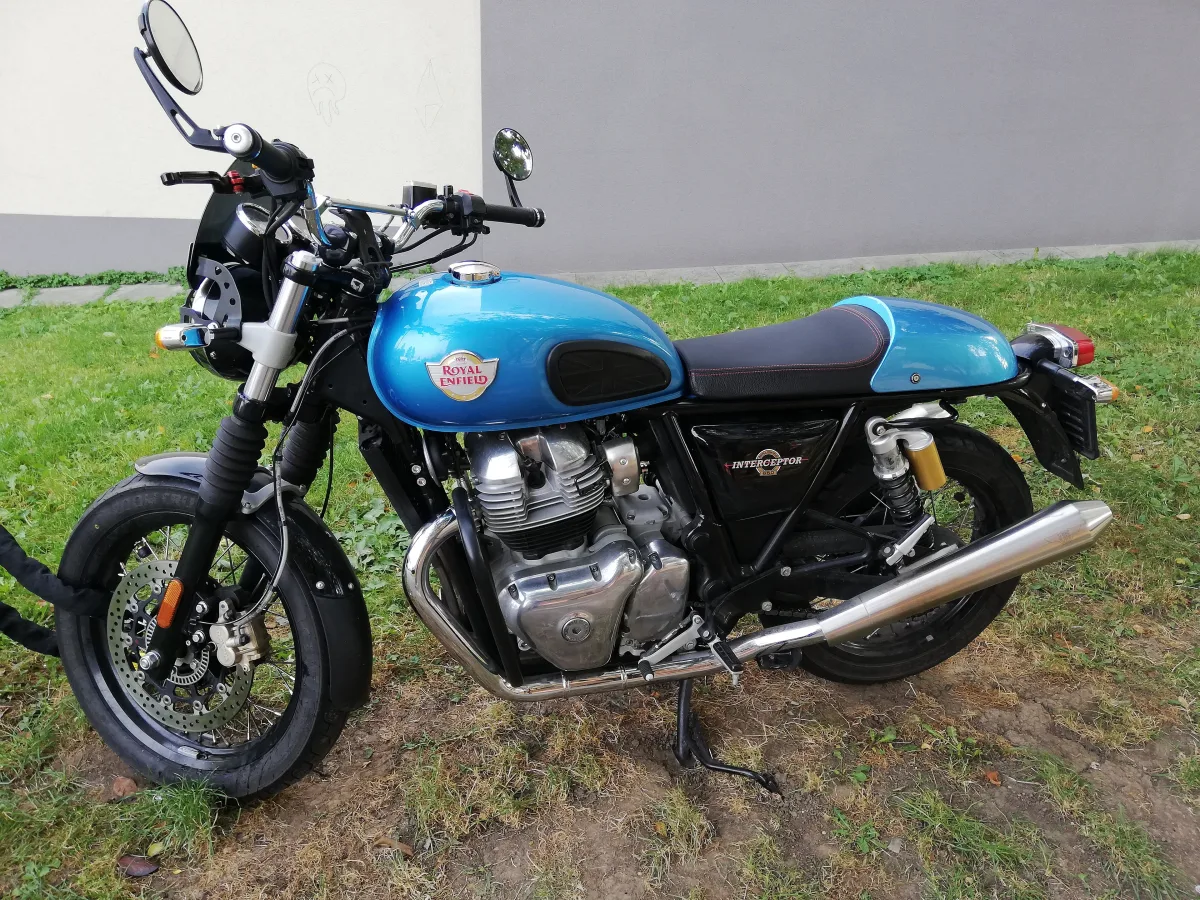
Royal Enfield Interceptor 650: generations, engine and what to check when buying used
Royal Enfield Interceptor 650 — the classic-style motorcycle introduced in 2018 with a twin-cylinder 648 cm³ engine. We look at its features, generations and what to check before buying used.






Interceptor 650 in brief
Interceptor 650 — Royal Enfield's answer to classic 'standard' motorcycle enthusiasts. It combines retro looks with modern tech: fuel injection, ABS and a reliable twin-cylinder engine.
It's a straightforward, easy-to-handle and relatively affordable motorcycle, suitable for both beginners and experienced riders who enjoy classics. Its 'brother' is the Continental GT 650 with a café racer style.
Which generation to choose
All Interceptor 650 models share the same technical base, so differences mainly lie in aesthetics: colours, chrome details and trim. Earlier motorcycles (2018–2022) often have simpler trim.
Later motorcycles received updates (e.g., new colours and changes to some details), so it's worth considering the specific year of the example. The Chrome version stands out with a more pronounced shine.
Engine and gearbox
The engine is an air- and oil-cooled parallel-twin, 648 cm³, around 47 hp and around 52 N·m of torque. The power allows this motorcycle to be ridden with an A2 licence.
The gearbox is a six-speed manual with a slipper clutch. The ride is smooth, even, without an aggressive character.
What to check when buying a used Interceptor 650
Inspect the chrome parts and paintwork — corrosion and scratches often appear on the mudguards and frame. Check the oil leaks around the engine and covers.
Test the suspension, clutch engagement, and brakes. Ask for the service history and check that all manufacturer recall work has been done.


Trim levels and versions
Versions mainly differ in trim and colours; we list the most common.
Standartinė versija
2018–2022The base version with classic trim.
- 648 cm³ twin-cylinder engine
- Often — ABS
- Simple instrument cluster
Chrome
by yearWith a larger headlight and more vibrant trim.
- Chrome details
- Distinctive colour
- Same tech
Atnaujintos versijos
from ~2022With new colours and minor updates.
- New colour schemes
- Often — minor changes
- The same technical base
Su priedais
by yearMotorcycles with original or additional accessories.
- Often — luggage or panniers
- Often — additional protection
- Higher used price
Interceptor 650 versions comparison
| Standartinė | Chrome | Atnaujinta | |
|---|---|---|---|
| Who it suits | For classic enthusiasts | For a distinctive look | For the newer model |
| Engine | 648 cm³, around 47 hp | 648 cm³, around 47 hp | 648 cm³, around 47 hp |
| Driver's license category | A2 or A | A2 or A | A2 or A |
| Price in the used market (relatively) | Budget-friendly | Mid-range | Mid-range |
For most buyers, the standard version is just fine — the tech is the same, with differences mainly in appearance. Chrome or the newer version are worth considering if a distinctive design is important.
Pros
- Classic, appealing look
- Simple and reliable tech
- Suitable for A2 category
- Relatively affordable
Cons
- No high power or sporty character
- Quality details sometimes fall short of competitors
- Limited selection in the used market
Frequently asked questions
Is the Interceptor 650 suitable for a beginner?
Yes, it's easy to handle, and the engine isn't aggressive. It's perfect for the A2 category, so many beginners choose it as their first bigger motorcycle.
How does the Interceptor 650 differ from the Continental GT 650?
The engine and frame are similar, but the Continental GT has a café racer style with a lower, sportier stance, while the Interceptor offers a more upright, comfortable position.
Is the Interceptor 650 suitable for long trips?
Yes, for short and medium journeys, especially with panniers. For long highways, it lacks wind protection.
Updated 2026-10-21 · Trim levels and equipment vary by market and model year — check the equipment of the specific car. · Translated automatically


