 English
 Lietuvių
 Latviešu
 Eesti
 Polski
 Русский
 Українська
 Deutsch
 Nederlands
 Čeština
 Slovenčina
 Svenska
 Norsk
 Dansk
 Suomi


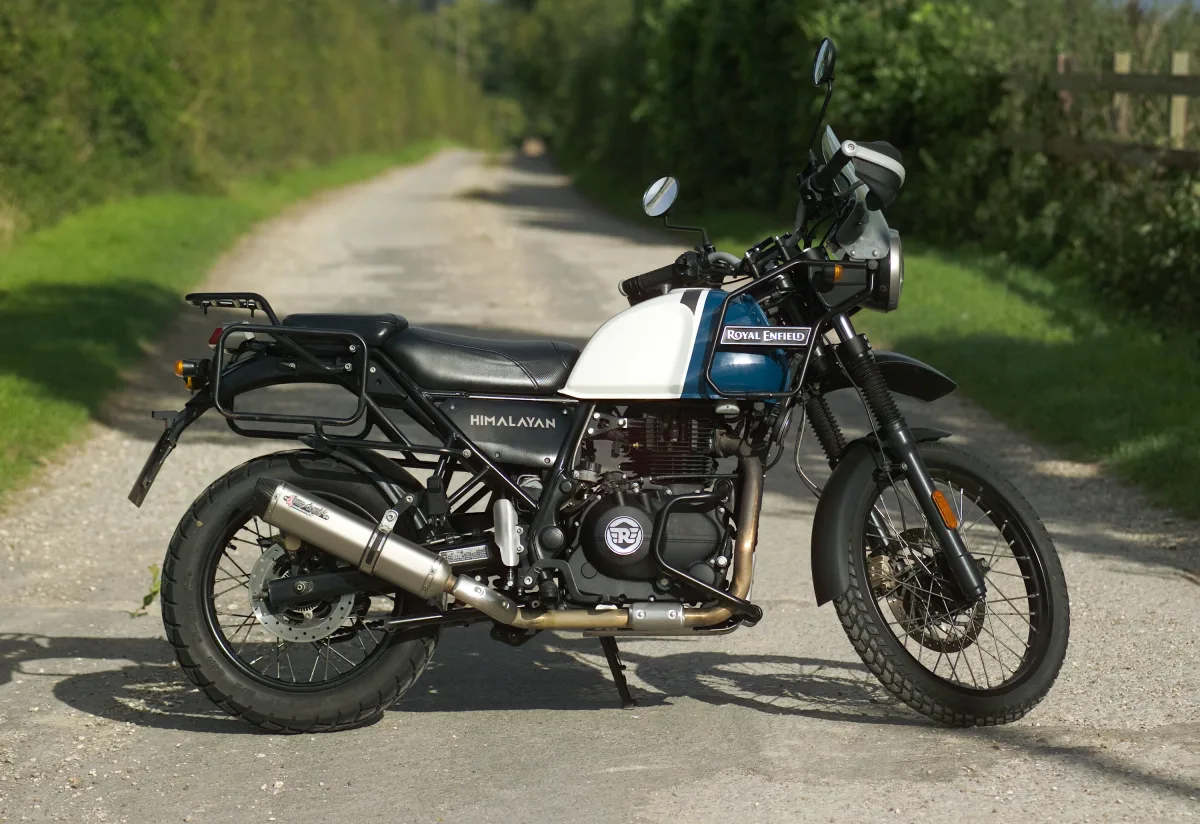
Royal Enfield Himalayan: 411 and 450 versions and what to check in a used one
Royal Enfield Himalayan (from 2016) — an affordable adventure bike, with the first generation featuring a 411 cm³ single-cylinder engine, and the newer one a 450 cm³ liquid-cooled unit. We look at the versions and what to check on a used motorcycle.






Himalayan in brief
The Himalayan debuted in 2016 as a simple, affordable, and robust adventure bike. It comes with a 21-inch front wheel and a 17-inch rear, making it suitable for both road and off-road use. Its simplicity makes it popular among beginners.
The motorcycle is praised for its reliability, low cost, and ease of maintenance. There's no high power or complex electronics, making it ideal for those who value simplicity.
Generations — what's the difference
The first generation (from 2016) features a 411 cm³ air-cooled single-cylinder engine with around 24 hp. Earlier versions had a carburettor, while later ones came with fuel injection and ABS. There was also a Scram 411 version with a different chassis.
The second generation — Himalayan 450 (from 2023) — boasts a brand-new 452 cm³ liquid-cooled engine with around 40 hp, a six-speed gearbox, and a modern colour display. It's significantly more powerful and modern.
Engine and gearbox
The Himalayan 411 engine is a single-cylinder, air-cooled unit with around 24 hp and a five-speed gearbox. It's smooth and torquey from low revs but not particularly quick.
The Himalayan 450 offers around 40 hp, a six-speed gearbox, and modern rider aids. Its power output is suitable for the A2 category (around 29.5 kW).
What to check when buying a used Himalayan
First-gen 411s should have their fuel system, oil leaks, brakes, ABS operation, and electrical system checked. Ask about vibrations and engine noise.
Inspect the frame, mounts, wheel bearings, chain, and sprockets. Since this is an adventure enduro, look for signs of drops and bent parts.
The Himalayan 450 is still quite new, so the key points are service history, mileage accuracy, and warranty. Check that all manufacturer-recommended services have been done.


Versions
Names and equipment vary by market and year; we list the versions most commonly found in Europe.
Himalayan 411 (karbiuratorius)
from 2016 onwardsEarlier version.
- Around 24 hp engine
- Simpler tech
- Requires carburettor tuning
Himalayan 411 (įpurškimas)
Later yearsUpdated version.
- Fuel injection
- ABS
- More reliable technology
Scram 411
various yearsLess enduro, more asphalt.
- A different kind of ride
- Different wheel size
- Ideal for the city
Himalayan 450
from 2023New generation.
- Approximately 40 HP liquid-cooled engine
- Six-speed gearbox
- Coloured screen
Generation comparison
| 411 | 450 | |
|---|---|---|
| Who it's for | For the budget-conscious traveller | For the modern enduro enthusiast |
| Engine | ~411 cm³, around 24 hp | ~452 cm³, around 40 hp |
| Gearbox | Five-speed | Six-speed |
| Price in the used market (relatively) | Budget-friendly | High-end |
For most budget-conscious buyers, the 411 with injection is a solid choice. If you're after something more modern and powerful, go for the 450.
Pros
- Simple and robust build
- Low cost
- Suitable for both road and off-road
- Easy to maintain
Cons
- The 411 version isn't particularly powerful
- Vibrations
- Less electronics than pricier rivals
Frequently asked questions
Is the Himalayan suitable for beginners?
Yes, especially the 411 version — simple, not very powerful and easy to handle.
Is the Himalayan 450 suitable for an A2 licence?
The power of around 40 hp allows it to be registered for an A2 in most cases, but check the exact compliance in the documents.
Is the Himalayan suitable for long journeys?
Yes, especially the 450, although the 411 isn't the best choice for motorway cruising.
Updated 2026-10-21 · Trim levels and equipment vary by market and model year — check the equipment of the specific car. · Translated automatically


