 English
 Lietuvių
 Latviešu
 Eesti
 Polski
 Русский
 Українська
 Deutsch
 Nederlands
 Čeština
 Slovenčina
 Svenska
 Norsk
 Dansk
 Suomi


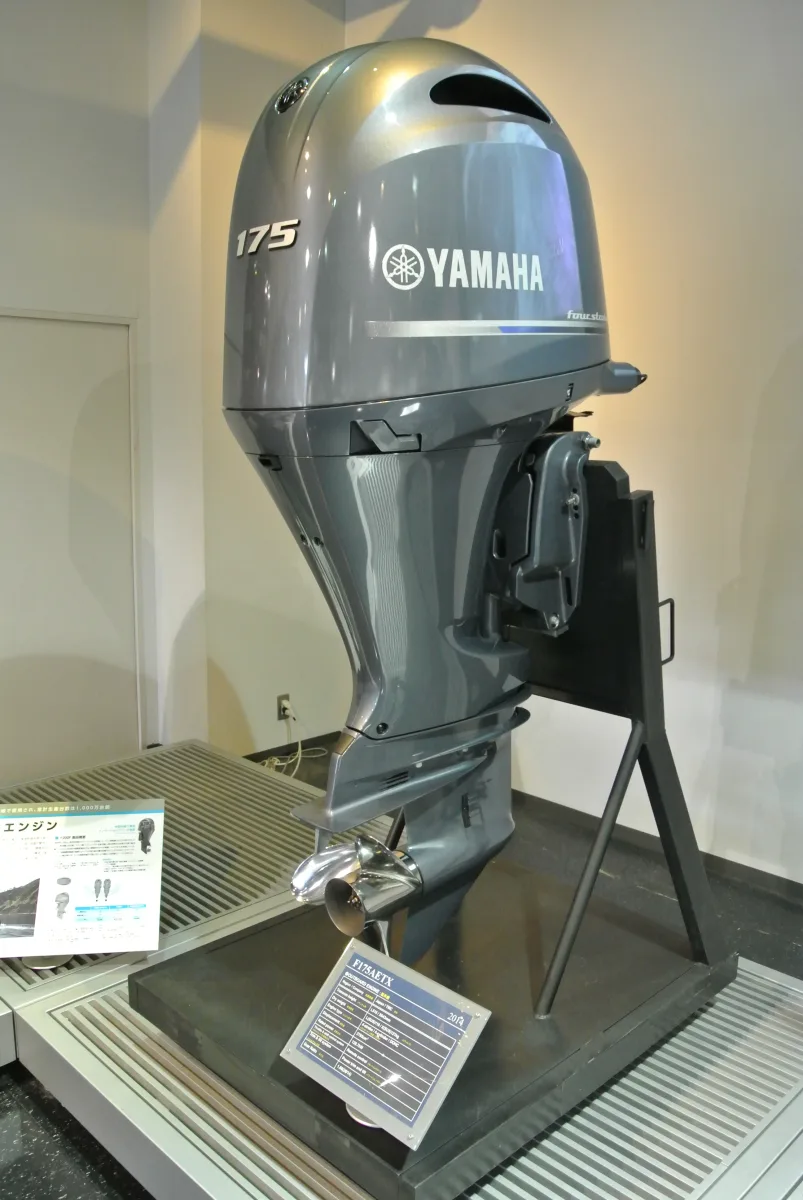
Yamaha F series outboard engines: power, versions and inspection
The Yamaha F series — four-stroke outboard engines ranging from a few horsepower to several hundred, used from small boats to large catamarans. We look at power classes, shaft lengths, key features and what to check when buying a used outboard engine.






Yamaha F series in brief
The letter F in the Yamaha name denotes a four-stroke outboard engine, and the number indicates the nominal power in horsepower (e.g., F9.9, F40, F115, F150, F250). These engines are more economical and quieter than older two-strokes, making them widely used for fishing, leisure and commercial activities.
In Lithuania, the F9.9–F20 engines are popular for small boats, and the F60–F150 for mid-sized catamarans and inflatable boats. Larger F200–F300 engines are used for more powerful catamarans and large fishing vessels.
Power classes and versions
Smaller engines (up to around F20) are often controlled by a tiller and started by hand; mid-sized (F40–F90) and large (from F115) engines have electric start, remote control and hydraulic or electric trim (power trim). Additional letters in the name denote the shaft length (S — short, L — long, X — extra long) and the control type.
Before purchasing, it's worth finding out if the engine suits your boat's transom height and which generation it is, as this affects parts availability and electronics.
Engines and key features
Yamaha F engines typically have several cylinders (from one or two small ones to six larger V-shaped ones), electronic fuel injection (in the larger ones) and cooling with either saltwater or freshwater. Most larger models come with an electronic control system and diagnostics.
Key components: water pump with impeller, thermostats, lower gearbox with propeller, oil pump, fuel system, trim mechanism, alternator and connections. The condition of the lower unit's oil indicates whether water has entered.
What to check when buying a used outboard engine
Ask to see the engine running — it should start on the first or second try, run smoothly without smoke, and have a strong water flow in the saltwater cooling system. Check the engine hours via the hour meter or control unit if available, and review the service history.
Inspect the lower unit: the oil should be clean and not milky (milky oil indicates water ingress), and the propeller should be free of significant wear. Check the trim mechanism, fuel line, anodes, transom mounts, and look for signs of corrosion. Ask for documents and verify the serial number.


Versions and trims
Names and equipment vary by market and production year; we list the versions most commonly found in Europe.
F2.5–F20
small enginesFor small boats or as a spare engine.
- Often — manual start
- Tiller steering
- Small, easy to transport
F40–F90
mid-range enginesPopular for small boats and inflatables.
- Often — electric start
- Often — remote control
- Often — electronic fuel injection
F115–F150
medium to high powerVersatile for small boats and larger craft.
- Often — four-cylinder
- Often — trim (lift) system
- Often — digital control
F200–F300
high powerFor larger boats and fishing vessels.
- Often — V6 configuration
- Often — digital control
- Higher fuel consumption
Comparison of Yamaha F series
| F9.9–F20 | F40–F90 | F115–F150 | |
|---|---|---|---|
| Who it suits | For small boats | For boats and inflatables | For larger boats |
| Control | Manual | Manual or remote | Remote |
| Starting | Often manual or electric | Often electric | Electric |
| Price in the used market (relatively) | € | €€ | €€€ |
Smaller boats get by with F9.9–F20, while larger boats and inflatables often need F40–F90, and the biggest vessels should consider an F115 or more powerful engine.
Pros
- Reliable and economical four-stroke engines
- A wide range of generations
- Good Yamaha parts and service availability
- Holds its value well
Cons
- Prices in the used market are higher than some competitors
- Some engines have complex electronics
- High-performance engines are expensive to maintain
Frequently asked questions
What do the letters in the Yamaha F designation mean?
The F denotes an inline-four engine, the numbers indicate power. Additional letters (S, L, X) specify the shaft length, while others indicate the control type, such as electric start or remote control.
How to choose the shaft length?
The shaft length must match your boat's transom height. An incorrect length results in poor performance and higher fuel consumption.
What is the milky oil at the bottom?
This indicates water has entered the lower unit—often due to worn seals. Before purchasing, it's essential to identify the cause, as repairs can be costly.
Updated 2026-10-21 · Trim levels and equipment vary by market and model year — check the equipment of the specific car. · Translated automatically


