 English
 Lietuvių
 Latviešu
 Eesti
 Polski
 Русский
 Українська
 Deutsch
 Nederlands
 Čeština
 Slovenčina
 Svenska
 Norsk
 Dansk
 Suomi


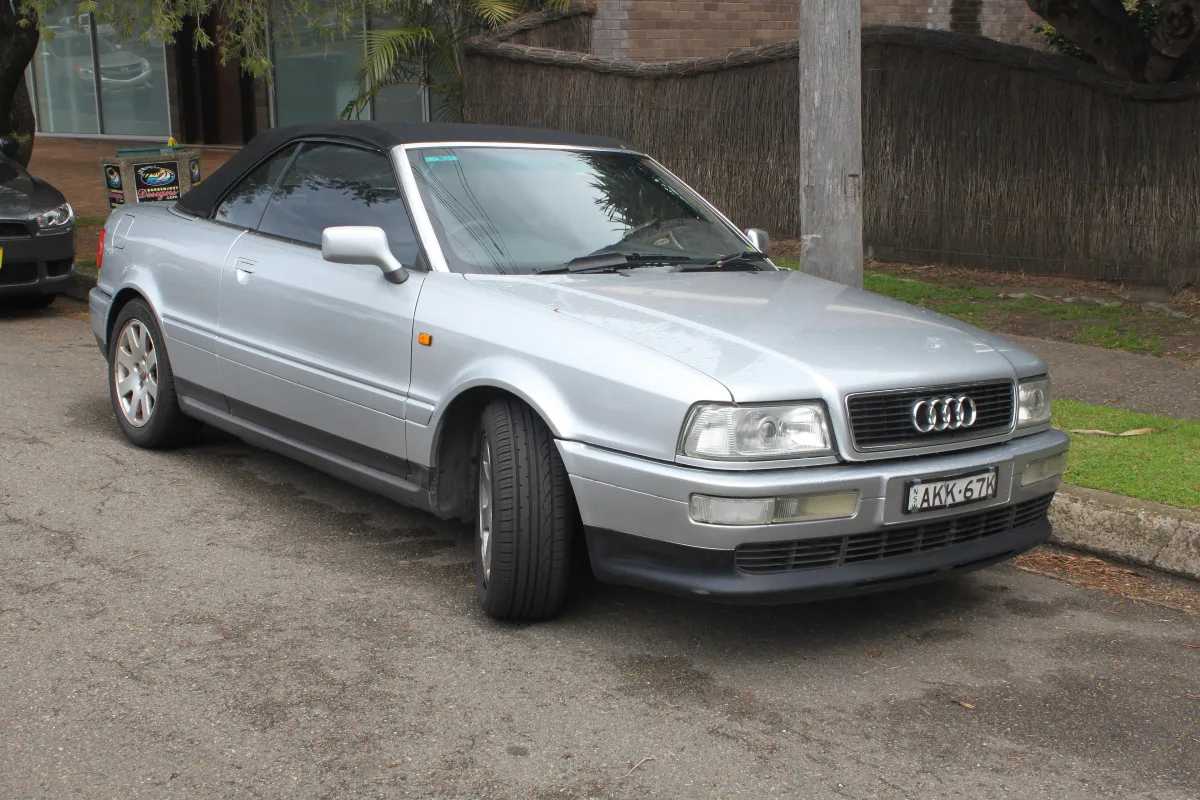
Audi Cabriolet (8G): The Audi 80-based convertible and what to know when buying
Audi Cabriolet — a four-seater open-top car based on the Audi 80 (B3, later B4) and produced from 1991 to 2000. We explain what sets it apart, which engines are available, and what to check if you come across one in the used market.






Cabriolet in brief
The Audi Cabriolet debuted in 1991 and was produced until 2000. It is based on the Audi 80 B3, similar to the Audi Coupé, but features a soft, folding roof and four seats. Unlike some Coupé models, the Cabriolet does not have quattro four-wheel drive — it is front-wheel drive.
This model is one of the more affordable ways to own a four-seater Audi convertible. It's rarely seen in Lithuania, often used as a seasonal car, and well-maintained examples are highly valued.
What sets it apart
The body is built with reinforced floors and other details to ensure the convertible's structure is sufficiently robust. The roof is fabric, often with electric operation; always check the specific features for each car.
The Cabriolet looks like a close relative of the Audi 80 but is more elegant. The interior is tidy and matches the Audi style of the era.
Engines and transmissions
The Cabriolet typically comes with petrol engines: early models have a five-cylinder 2.3-litre, later models a four-cylinder 2.0-litre, and V6 2.6 and 2.8-litre (power ranging from about 115–174 hp). Always check the specific details in the car's documents.
Transmission — manual or automatic. Most cars are front-wheel drive, while more powerful V6 variants cost more and are rarer.
What to check when buying a Cabriolet
The most important thing is the condition of the body and roof. Check for rust in the sills, floors, and arches, and ensure the roof opens and closes smoothly without any rattles. Well-maintained roof mechanisms and fabric can be expensive.
Check the engine operation, oil leaks, transmission, and suspension. Look into previous maintenance and whether the car was kept in a garage — open cars suffer more in winter.


Trim levels
Trim names and equipment vary by market and year; Cabriolets are usually categorized by engine rather than specific trim names.
Standartinė versija
1991–2000A four-seater cabriolet with a soft top and front-wheel drive.
- Often — electrically operated roof
- Often — alloy wheels
- Equipment varies by market and year
Comparison of main variants
| Keturių cilindrų | Penkių cilindrų | V6 | |
|---|---|---|---|
| Who it's for | For economical driving | For enthusiasts of early cars | For those who want more power |
| Gearbox | Front wheels | Front wheels | Front wheels |
| Engine size (approx.) | 2.0 l | 2.3 l | 2.6–2.8 l |
| Price in the used market (relatively) | € | €€ | €€ |
For most buyers, a four-cylinder or V6 Cabriolet with a good body and roof condition is ideal. The key is not the engine, but that the body and roof are in good shape.
Pros
- A four-seater convertible for a sensible price
- Elegant, time-tested styling
- Based on the well-known Audi 80 technology
- Collectible potential for well-maintained examples
Cons
- Roof and bodywork repairs can be expensive
- Risk of corrosion due to age
- Not all wheels are driven
Frequently asked questions
Does the Audi Cabriolet have quattro?
No. The Cabriolet is only available with front-wheel drive, unlike some Audi Coupé variants.
When was the Audi Cabriolet produced?
Production ran from 1991 to 2000. The body was based on the Audi 80 B3.
What to look out for when buying a cabriolet?
First and foremost, check the condition of the roof and bodywork: seals, mechanisms, and signs of corrosion. Also, find out if the car has been kept in a garage.
Updated 2026-10-21 · Trim levels and equipment vary by market and model year — check the equipment of the specific car. · Translated automatically


