 English
 Lietuvių
 Latviešu
 Eesti
 Polski
 Русский
 Українська
 Deutsch
 Nederlands
 Čeština
 Slovenčina
 Svenska
 Norsk
 Dansk
 Suomi


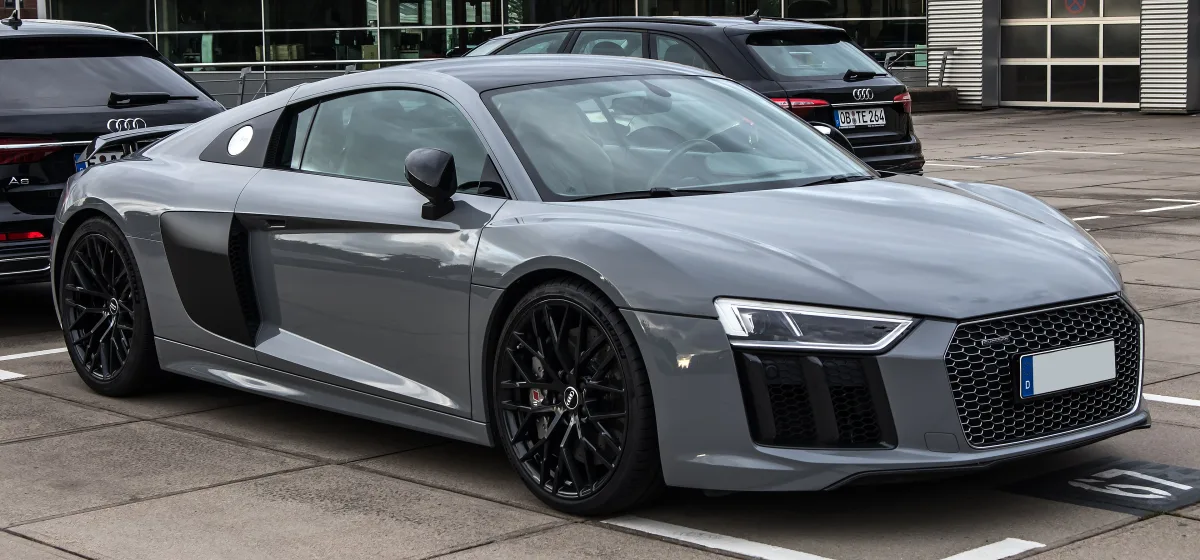
Audi R8: Type 42 and Type 4S generations, engines and trims
The Audi R8 is a mid-engine sports car produced from 2006 to 2024 and has served as a showcase for Audi's sporting technologies. It's rare in Lithuania and often imported from other European countries or the USA. We'll look at what sets the two generations apart, the V8 and V10 engines, transmissions, and what to check before buying.






The R8 in brief
The R8 was produced in two generations: the first (Type 42) from 2006 to 2015, and the second (Type 4S) from 2015 to 2024. Both generations were offered as coupes and Spyder convertibles with soft tops. The engine is mounted behind the seats, and most versions come with quattro all-wheel drive.
The R8 is praised as one of the most user-friendly supercars for daily use: it offers good visibility, comfortable seating, and the familiar Audi interior controls. The second generation is technically close to the Lamborghini Huracán, with both models sharing a platform and a V10 engine.
Type 42 and Type 4S — what's the difference
The first generation was initially offered with a 4.2 V8 engine, and a V10 was added in 2009. Early models came with a 6-speed manual transmission with an open metal gate or the R tronic robotised gearbox, which was replaced by the 7-speed S tronic with dual clutches after the 2012 update.
The second generation comes only with the 5.2 V10 engine and a 7-speed S tronic gearbox. Its body is made from aluminium and carbon fibre, making it sturdier and lighter, while the interior features the Audi virtual cockpit digital instrument cluster. All-wheel-drive versions have been available since 2017, and the model was refreshed in 2019.
The first generation is more affordable and straightforward, with the V8 and manual gearbox appreciated by enthusiasts for its pure driving feel. The second generation is faster and more modern, often with lower mileage, but also significantly more expensive.
Engines and gearboxes
The first generation offers the 4.2 FSI V8 (around 420–430 hp) and 5.2 FSI V10 (around 525 hp) engines, with the limited GT and later V10 plus versions boasting around 550–560 hp.
The second generation features only the 5.2 FSI V10: the base version had around 540 hp (around 570 hp post-facelift), the V10 plus around 610 hp, and the V10 performance around 620 hp. Rear-wheel-drive versions (RWS, later RWD) had around 540–570 hp.
Engines in both generations are naturally aspirated — one reason why the R8 is so beloved by enthusiasts. In the first generation, you could choose between a manual, R tronic, or S tronic gearbox, while the second generation offers only the S tronic.
What to check when buying a used R8
The R tronic gearbox can wear out quickly, especially in city driving — ask when it was last replaced and request a diagnostic check of its wear. The manual and S tronic gearboxes are considered more robust, but the S tronic fluid should still be changed regularly.
Magnetic Ride suspension dampers with metal parts can start to leak — check for oil on them. Front-mounted radiators collect mud and leaves, and small stones can damage them. If the car has ceramic brake discs, assess their condition — replacing them is very expensive.
Always check the car's history: some R8s have been used on tracks or have been in accidents, and repairing an aluminium body is complex and costly. If the car was imported from the US, find out if it was damaged, and check the mileage against official service records.


Versions
There are hardly any R8 trim levels — versions differ by engine power, gearbox, and body style. Most came with both coupé and Spyder body styles.
V8
Type 42 (2006–2015)The first and most affordable R8 version — loved by enthusiasts for its balance and sound.
- 4.2 FSI V8, around 420–430 hp
- Often — manual gearbox or R tronic
- All-wheel drive quattro
V10
Type 42 (2009–2015)A more powerful first-generation version with a Lamborghini-derived V10 engine.
- 5.2 FSI V10, around 525 hp
- Often — LED headlights and magnetic suspension
- Also offered with Spyder body style
V10 plus
Type 42 (from 2013) and Type 4SA lighter, more powerful version, more track-focused.
- Around 550 PS (Type 42) or 610 PS (Type 4S)
- Often features carbon fibre details and ceramic brakes
- Firmer suspension, sport seats
V10
Type 4S (2015–2024)The base second-generation model with a more modern interior.
- 5.2 FSI V10, around 540–570 PS
- 7-speed S tronic and quattro transmission
- Digital instrument cluster
RWS / RWD
Type 4S (from 2017)Rear-wheel-drive version for those seeking a more engaging drive.
- Around 540–570 PS
- Lighter, as it lacks front-wheel drive
- Requires more driver experience, especially on wet roads
V10 performance
Type 4S (2019–2024)The most powerful updated second-generation version.
- Around 620 hp
- Often features carbon fibre details and ceramic brakes
- Sportier settings and larger wheels
Comparison of base models
| V8 (Type 42) | V10 (Type 42) | V10 (Type 4S) | V10 performance | |
|---|---|---|---|---|
| Who it's for | Comfortable driving for less | For power and sound enthusiasts | The modern everyday supercar | For maximum performance |
| Engine | 4.2 V8, around 420–430 hp | 5.2 V10, around 525 hp | 5.2 V10, around 540–570 hp | 5.2 V10, around 620 hp |
| Gearbox | Manual, R tronic or S tronic | Manual, R tronic or S tronic | S tronic | S tronic |
| Interior | Analogue dials | Analogue dials | Digital display | Digital display, sporty trim |
| Price in the used market (relatively) | Budget-friendly | Mid-range | Premium | Premium |
The first-gen V8 is the most accessible way to get an R8, especially with a manual or S tronic box. The second-gen V10 is for those who want something more modern, faster, and generally lower-mileage.
Pros
- Atmospheric V8 or V10 engine and distinctive sound
- A supercar that's comfortable for daily use
- Quattro four-wheel drive in most versions
- A quality, well-known Audi interior
Cons
- Very expensive maintenance, tyres and brakes
- R tronic gearbox clutch wear
- Small boot and low ground clearance
Frequently asked questions
Which R8 should you choose?
If price and driving feel are paramount, go for the first-gen V8 or V10, ideally with a manual or S tronic gearbox. If you want a more modern interior, more power and lower ride height, opt for the second-gen V10.
Is the Audi R8 suitable for daily driving?
More so than most supercars: it's comfortable, offers good visibility to the sides, and quattro all-wheel drive helps in tougher conditions. However, the front boot is small, and low ground clearance and wide tyres hinder it on poor roads.
What's the difference between R tronic and S tronic?
R tronic is a robotised gearbox with a single clutch – it shifts slower, feels jerky and engages the clutch more abruptly. S tronic has two clutches, shifts quickly and smoothly, making it the better choice for most buyers.
Updated 2026-10-09 · Trim levels and equipment vary by market and model year — check the equipment of the specific car. · Translated automatically


