 English
 Lietuvių
 Latviešu
 Eesti
 Polski
 Русский
 Українська
 Deutsch
 Nederlands
 Čeština
 Slovenčina
 Svenska
 Norsk
 Dansk
 Suomi


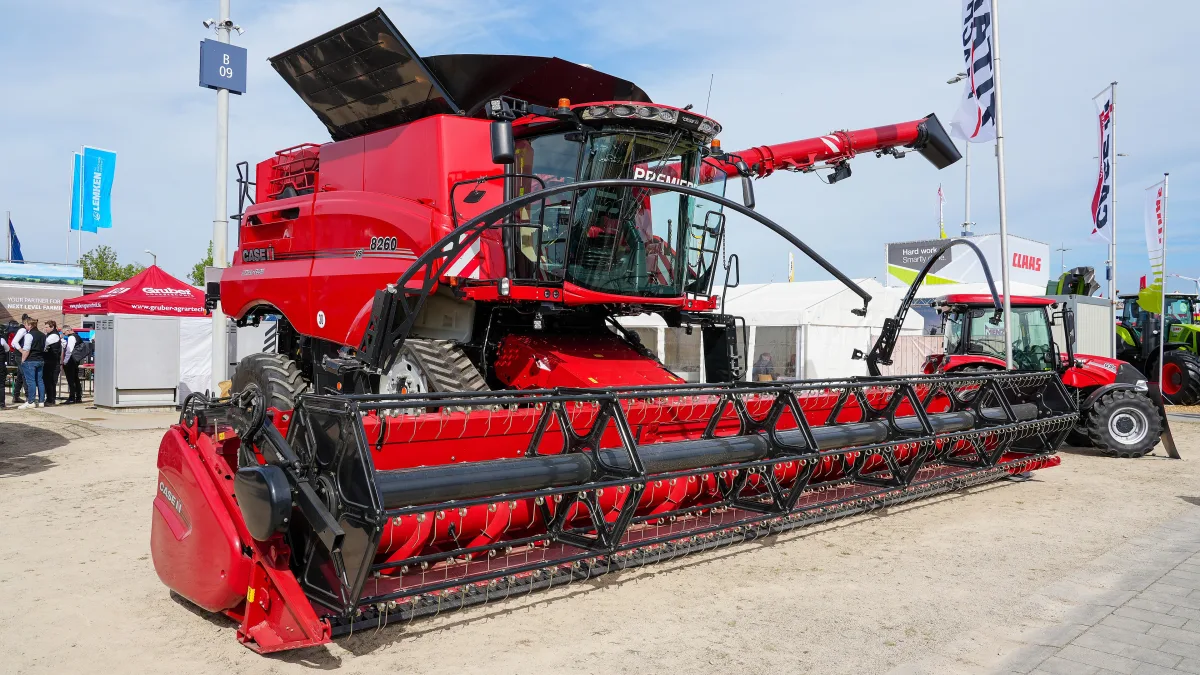
Case IH Axial-Flow: rotary combines and what to check
Case IH Axial-Flow — a family of combines with an axial rotor, produced since 1977. We look at its principles, series, and what to check when buying a used combine.






Axial-Flow in brief
Case IH Axial-Flow combines feature threshing and separating in a single large axial rotor. This concept was introduced in 1977 and is now one of the most popular rotary combine technologies.
Axial-Flow combines are widely used around the world — from wheat to corn, soybeans, and rice. The rotary system gently threshes the grain, resulting in less seed damage.
Series and selection
Over the years, the series has evolved — new generations have come with more power, modern cabs, and advanced electronics. Model names have changed too, but the core principle remains.
Consider the size of your farm and crops: smaller models suit medium-sized farms, while larger ones are ideal for large-scale operations and extensive fields. Also, check if the combine has the right header.
Engine and key components
Axial-Flow combines are powered by FPT (Fiat Powertrain) diesel engines, with power ranging from around 250 to over 600 HP, depending on the model. Newer engines feature SCR (AdBlue) systems.
Key components include the axial rotor, concaves, cleaning system with sieves and fans, grain tank, and unloading auger. The rotor and concaves are the primary wearing parts.
What to check when buying a used Axial-Flow
Ask to see the engine and rotor hours meters and service history. Check the rotor and concaves — wear significantly affects performance and fuel consumption.
Check the cleaning sieves, fan, chains, belts, and auger flights. Look for oil leaks and damaged bearings.
Test the hydraulics, header lift, unloading auger, and cab equipment. On newer models, check the Selective Catalytic Reduction (SCR) system with diagnostics.


Configurations
Specific models and equipment vary by market and year; we list the most common configurations.
Mažesni Axial-Flow
All generationsSmaller combines for medium-sized farms.
- Lower power and fuel tank capacity
- Suitable for medium-sized fields
- Simpler maintenance
Vidutiniai Axial-Flow
All generationsVersatile configuration for most farms.
- Good balance of power and efficiency
- Often includes air conditioning
- Suitable for various crops
Didesni Axial-Flow
Newer generationsLarge-capacity estate cars for towing.
- Powerful engine
- Large fuel tank capacity
- More expensive maintenance
Su ratų arba vikšrų priedais
Available to orderConfiguration for wet conditions.
- Lower ground pressure
- Often — tracks or wider tyres
- Check the condition of accessories separately
Su SCR sistema
Newer generationsNewer models with exhaust gas recirculation.
- Compliance with newer standards
- Requires AdBlue
- Diagnostics mandatory before purchase
Size comparison
| Mažesni | Vidutiniai | Didesni | |
|---|---|---|---|
| Who it's suitable for | For average households | For most households | For enthusiasts, large households |
| Approximate power | ~250 HP | ~400 HP | 500+ HP |
| Refinement | Average | Good | High |
| Service cost | Lower | Average | Higher |
| Price in the used market (relatively) | Mid-range | High-end | High-end |
Most farms will find a mid-sized combine suitable. For larger fields and high-capacity operations, opting for a bigger model makes sense, though maintenance costs will be higher.
Pros
- The longitudinal rotor gently threshes the grain
- Suitable for a variety of crops
- High productivity
- Wide availability of Case IH service centers and parts
Cons
- Replacing the rotor and concaves is expensive
- Larger models have higher fuel consumption
- Condition of used machines varies greatly
Frequently asked questions
How does Axial-Flow differ from combines with straw walkers?
Axial-Flow features a longitudinal rotor where threshing and separation occur in one system, eliminating the need for straw walkers.
What is the power of Axial-Flow?
Depending on the model — roughly from 250 to over 600 HP. Check the specific combine for exact power.
What to look for when buying a used estate car?
Check the engine and rotor hours, condition of the rotor and concaves, service history and mileage.
Updated 2026-10-21 · Trim levels and equipment vary by market and model year — check the equipment of the specific car. · Translated automatically


