 English
 Lietuvių
 Latviešu
 Eesti
 Polski
 Русский
 Українська
 Deutsch
 Nederlands
 Čeština
 Slovenčina
 Svenska
 Norsk
 Dansk
 Suomi


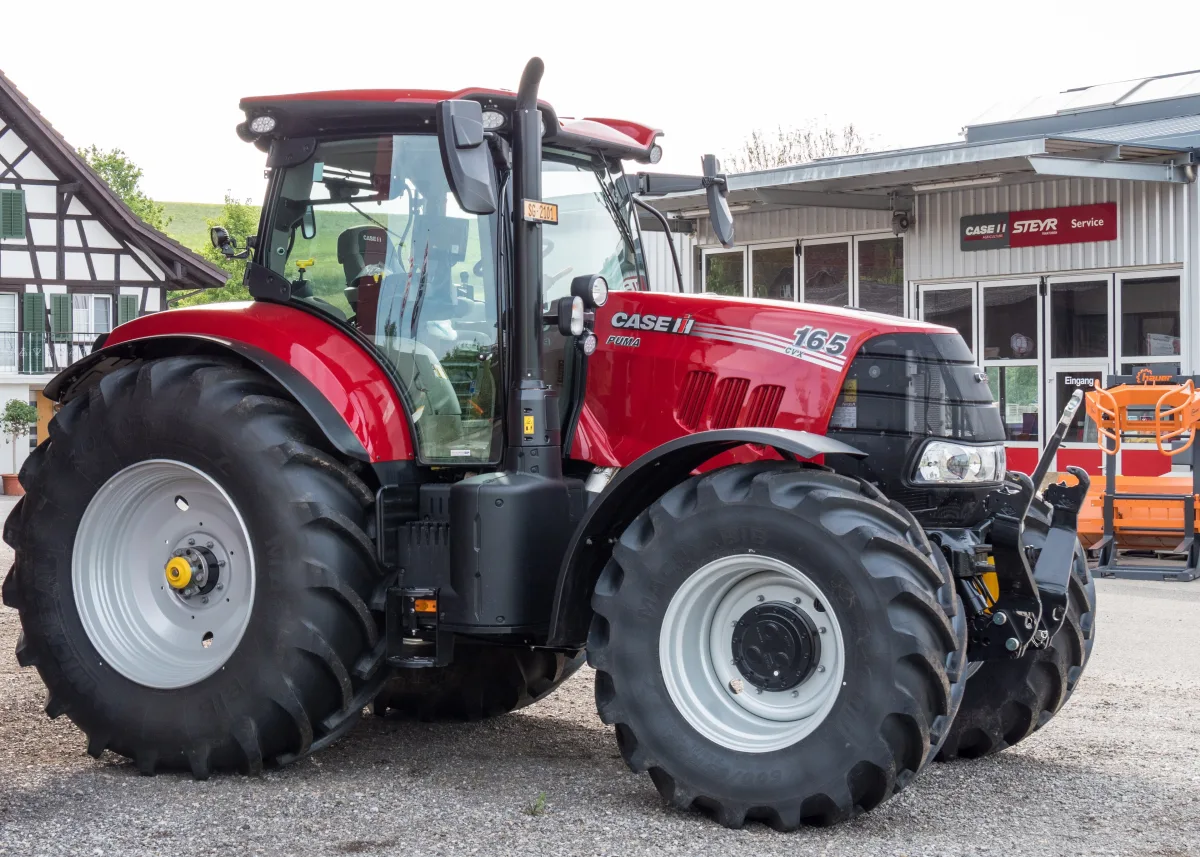
Case IH Puma: transmissions, power classes and what to look for when buying
Case IH Puma — versatile mid-range and high-horsepower tractors, produced since 2007 for European farms. We review the main series, transmission types and what to check when buying used equipment.






Puma in brief
Puma — a line of four-wheel-drive tractors covering models from around 130 to 270 HP. They are designed to work with ploughs, cultivators, seeders, presses, and to haul heavy trailers.
Puma tractors are powered by a six-cylinder FPT diesel engine. Used tractors on the market come with widely varying hours, so the most important thing is the service history.
Which version to choose
Early Puma models (from 2007) were offered with a mechanical 'Powershift' transmission or a stepless CVX transmission. They are simpler, have less electronics, so often cheaper and easier to repair.
In later generations, considering environmental requirements, an SCR system with AdBlue was introduced, an improved cab, and semi-automatic and fully automatic transmissions. Newer Puma CVXDrive versions feature a stepless transmission with a higher maximum speed limit and a more modern control environment.
Engines and transmissions
Power is designated by model name: for example, Puma 165 CVX is around 165 HP, and Puma 260 is around 260 HP. Always check the exact power on the identification plate and documents of the specific tractor.
Three types of gearbox: Powershift (semi-automatic, with gear shifts under load), Multicontroller (fully powered shift with a single control lever) and CVX (stepless). CVX is popular on farms where road driving is frequent, as it allows for maintaining a constant speed.
What to check when buying a used Puma
First up — the hydraulics: check that the lift cylinder, quick-release couplings and control blocks aren't leaking oil. Test the rear and front hitch and the power take-off (PTO) shaft under load.
On newer tractors with SCR/AdBlue systems, listen for any fault codes, and check that the gear shifts and movements are smooth. Ask if the gearbox and hydraulic oil were changed according to the manufacturer's intervals.
Inspect the front axle, cab windows and air conditioning. The tractor should show signs of wear: worn pedals, a sagging seat and faded control levers can indicate that the tractor has worked harder than the hour meter suggests.


Versions and series
Names and equipment vary by market and year; we list the most commonly found gearbox versions in Europe.
Puma Powershift
Early generationsSimpler, semi-automatic gearbox with gears under load.
- Less electronics than CVX
- Often — mechanical hydraulic valves
- Often — cheaper on the used market
Puma Multicontroller
Mid-range generationsFully powered shift gearbox with a single control lever.
- Smooth shifts under load
- Often — AFS control
- Easy to handle with frequent turns in the fields
Puma CVX
All generationsSingle-speed transmission — constant speed and economical driving.
- Smooth gear changes
- Often — road speed up to 50 km/h
- Often — automatic engine and transmission control
Puma CVXDrive
Latest generationUpdated CVX transmission with newer control and cab.
- More modern cab and screen
- Often — advanced road and field mode functions
- Newer SCR system
Puma gearbox comparison
| Powershift | Multicontroller | CVX | CVXDrive | |
|---|---|---|---|---|
| Who it's for | For straightforward fieldwork | For those with frequent towing | For plenty of hauling and fieldwork | For heavy-duty work and frequent road use |
| Gearbox | Semi-automatic | Fully shiftable on-the-fly | No gears | No gears, enhanced |
| Cab | Standard | Standard, often more comfortable | Comfortable, more automation | Modern, newer |
| Electronics complexity | Lower | Mid-range | Higher | Top |
| Price in the used market (relatively) | € | €€ | €€ | €€€ |
For those needing simpler, more affordable tech, the older Powershift version is a good fit. If you're doing a lot of highway driving or working off-road, opt for the CVX or the newer CVXDrive.
Pros
- A wide range of power options — from mid-range to high-performance tractors
- Comfortable cabin and excellent visibility
- Well-established parts supply across Europe
- Several transmission options — choose based on your needs
Cons
- Newer versions with SCR and AdBlue are more expensive to maintain
- CVX transmission repairs are costly
- The interior design and ergonomics of earlier versions are outdated
Frequently asked questions
Which Puma gearbox is the most reliable?
The simplest and most often reliable is the Powershift. The CVX is usually more practical and economical, but repairs are more expensive, so it's essential to check its technical condition and service history.
How much HP do Puma tractors have?
The Puma range covers approximately 130–270 HP models. The exact power can be determined by the model name, for example, the Puma 165 has around 165 HP.
Is the Puma suitable for working with heavy machinery?
Yes, the Puma is suitable for ploughs, cultivators, seeders, and presses. Smaller models are better for general farm work, while more powerful ones are ideal for heavier implements.
Updated 2026-10-21 · Trim levels and equipment vary by market and model year — check the equipment of the specific car. · Translated automatically


