 English
 Lietuvių
 Latviešu
 Eesti
 Polski
 Русский
 Українська
 Deutsch
 Nederlands
 Čeština
 Slovenčina
 Svenska
 Norsk
 Dansk
 Suomi


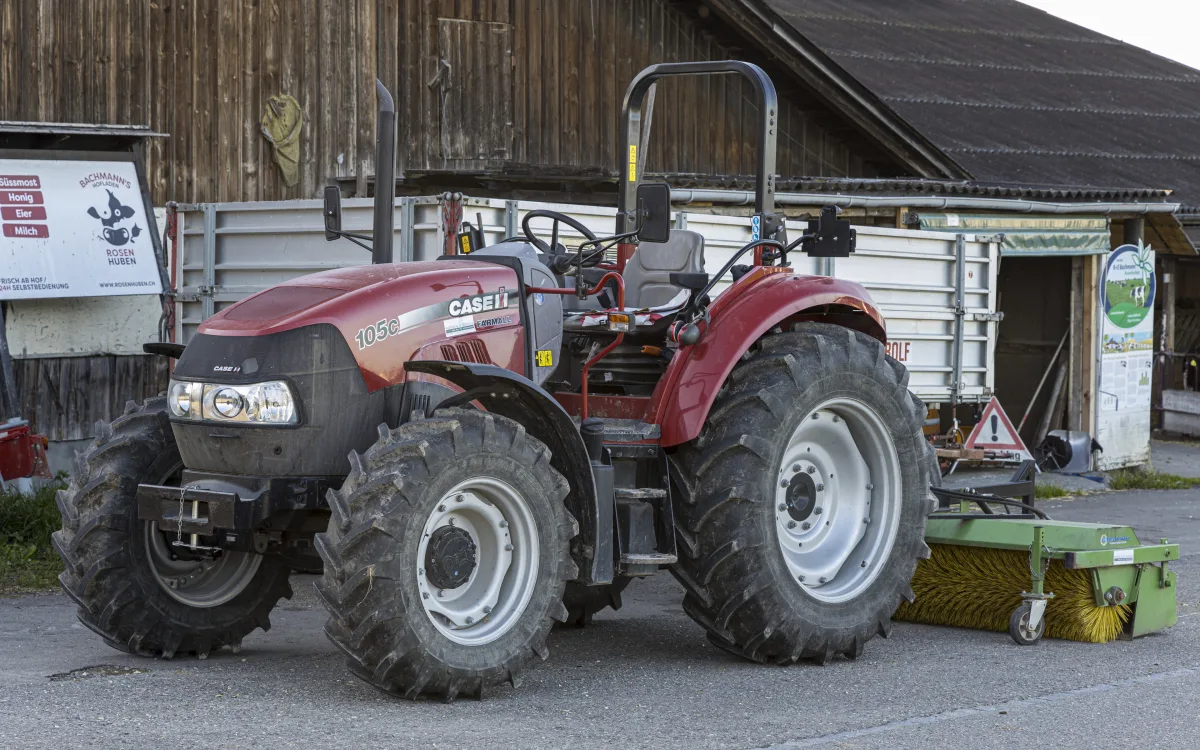
Case IH Farmall: generations, engines and key trims
The Farmall is Case IH's range of versatile tractors, a name that dates back to 1923. In this article, we look at the current Farmall generations, their purposes, and what to check when buying a used tractor.






Farmall at a glance
The name Farmall originated in 1923 as a trademark for International Harvester tractors, and today it denotes Case IH's range of compact and mid-range versatile tractors. They are designed for farming, livestock, horticulture, and municipal work.
In the used market, you'll commonly find several generations: the older Farmall JX and the newer Farmall C, U, and A series models. They are appreciated for their simple design, ease of maintenance, and good manoeuvrability.
Which generation to choose
Farmall JX are older models, often straightforward, with mechanical transmissions. They are affordable, but emission standards have changed since then, and some tractors may have high operating hours.
Farmall C, U, and other newer models feature more modern cabs, more comfortable driving positions, and greater hydraulic efficiency. If you plan to work with a front loader or handle larger loads, it's worth choosing a newer generation and checking if it has a reverse shuttle.
Engines and transmissions
Farmall tractors use FPT (Fiat Powertrain) diesel engines. Power output depends on the generation and model: compact Farmall A tractors have smaller engines, while JX, C, and U have mid-range power, typically around 75–115 hp.
Transmissions are usually manual with synchronizers and reverse; some models may feature a semi-automatic shift or a stepless transmission (Farmall CVT). Four-wheel drive is commonly chosen.
What to check when buying a used Farmall
Inspect the hour meter and service records. Check for oil leaks around the engine, transmission, and hydraulic connections, and ensure both wheels operate smoothly.
Tractors that have worked extensively with a front loader often have a worn front axle and loader mounts. Check the drawbar, reverse, brakes, and PTO.
Test the cabin equipment — heating, air conditioning, wipers, and lights. For older tractors, it's worth finding out about spare parts and repair costs in advance.


Mainline versions
Names and equipment vary by market and year; we list the versions most commonly found in Europe.
Farmall JX
Previous generationA straightforward mid-range tractor with a manual transmission.
- Simple design
- Often — 4WD and a cabin
- Older model, pay attention to its condition
Farmall C
Newer generationA versatile tractor for farming and municipal work.
- More modern cabin
- Often — reverse gear and 4WD
- Ideal for work with a front loader
Farmall U
Newer generationA higher-class version with more comfort and features
- Greater hydraulic performance
- Often — semi-automatic transmission
- More comfortable cabin
Farmall A
Newer generationA compact model for smaller farms
- Smaller dimensions
- Ideal for gardens and municipal work
- Less power
Farmall CVT
Depending on the modelVersion with stepless transmission for smooth driving
- The driver doesn't change gears
- Convenient for loader work
- The condition of the transmission needs to be checked thoroughly
Comparing generations
| JX | C | U | |
|---|---|---|---|
| Who it's for | For straightforward farm work | Versatile use | Heavy-duty work |
| Approximate power | 65–95 hp | 75–115 hp | 95–115 hp |
| Transmission | Manual | Manual, often with reverse | Manual / semi-automatic |
| Cab | Basic | Modern | More Comfortable |
| Price in the used market (relatively) | Budget-friendly | Mid-range | Premium |
For the budget-conscious buyer, the JX is a good fit, but for most farms, the Farmall C is the better choice. The U version is worth it if you work a lot and value comfort.
Pros
- A simple, reliable construction
- A wide range of models — from compact to mid-sized
- Ideal for work with a front loader
- Wide availability of parts and services
Cons
- Older JX models have significant wear and tear
- The number of features varies between series, so check carefully
- Less power than large-class tractors
Frequently asked questions
What does the name Farmall mean?
The name of the International Harvester tractor from 1923, which Case IH uses today for its range of versatile tractors.
Which Farmall series is best for farming?
For most farms, the Farmall C is a great fit—it's versatile, straightforward, and powerful enough. If you need more comfort and greater hydraulics, consider the U series.
Is the Farmall suitable for work with a front loader?
Yes, many versions are built ready for a loader. Choose a model with reverse and check the condition of the front axle.
Updated 2026-10-21 · Trim levels and equipment vary by market and model year — check the equipment of the specific car. · Translated automatically


