 English
 Lietuvių
 Latviešu
 Eesti
 Polski
 Русский
 Українська
 Deutsch
 Nederlands
 Čeština
 Slovenčina
 Svenska
 Norsk
 Dansk
 Suomi


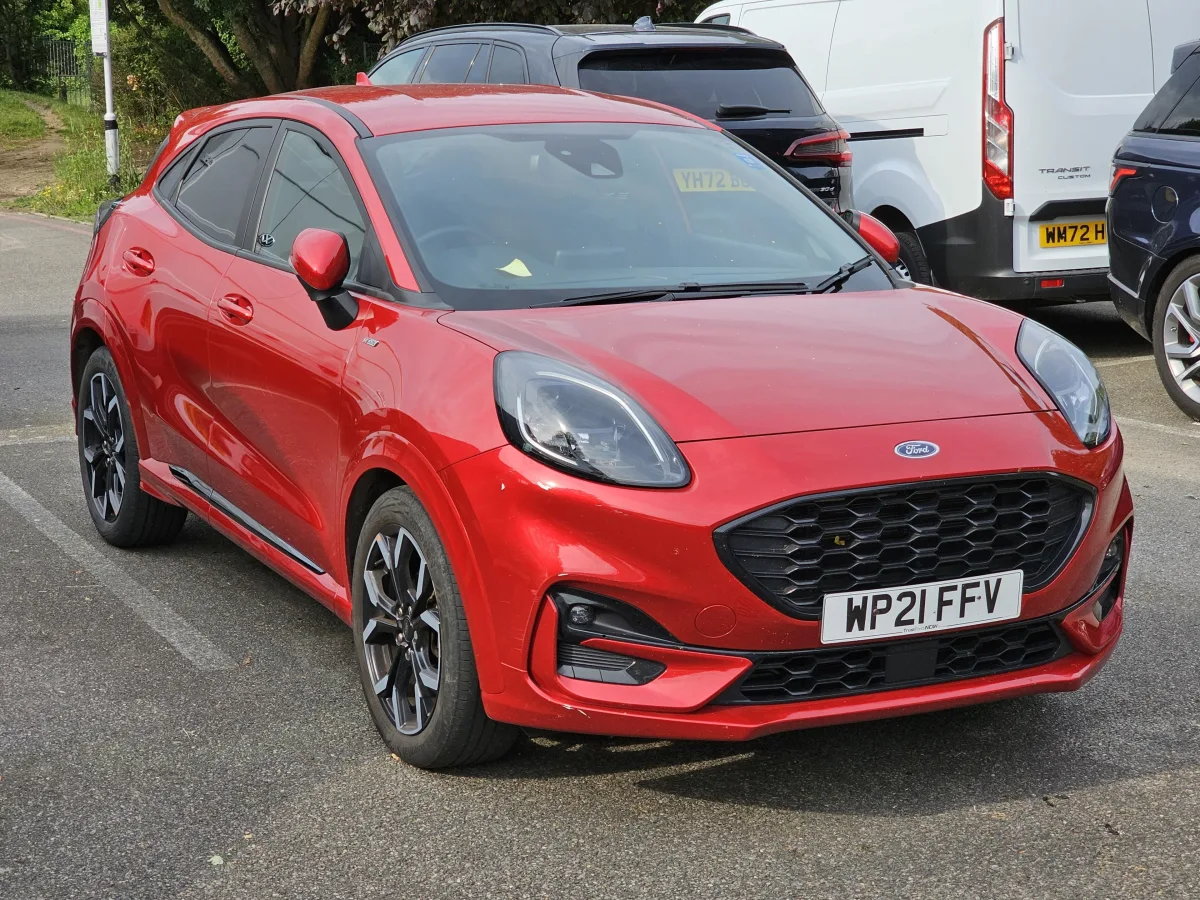
Ford Puma: engines, trims and what to know when buying
The Ford Puma is a compact city SUV built on the Ford Fiesta platform and stands out with its practical boot and driving feel. We look at how cars differ before and after the 2024 refresh, which engines are most popular, how trims differ and what to check before buying.






Puma in brief
The current Puma has been in production since late 2019 and shares nothing with the small coupe of the same name produced from 1997–2002. Today, it is one of Ford's most popular models in Europe.
The Puma is praised for its precise handling, economical engines and practical boot: under its floor is a deep MegaBox storage compartment with a drain plug, so it can be hosed out. Rear seat space is average, so the car is best suited to a couple or small family.
Before and after the 2024 refresh — what's different
Early models (2019–2023) often feature a digital instrument cluster and around an 8-inch multimedia screen with SYNC 3 system. There are plenty on the used market, so the choice of colours, engines and trims is the widest.
The 2024 refreshed Puma gets a large central screen, which includes climate control, newer multimedia and a slightly altered appearance. Later, an electric version, the Puma Gen-E, was introduced.
If price and a wide choice are most important, go for a 2020–2023 model. If you want the latest multimedia and more driver assistance systems — opt for the refreshed version.
Engines and Gearboxes
The core is the three-cylinder 1.0 EcoBoost petrol engine, often with a 48V mild hybrid system (EcoBoost Hybrid, around 125 or 155 hp). For a while, a 1.5 EcoBlue diesel was also offered, but there aren't many of these cars on the market.
The sporty Puma ST came with a 1.5-litre EcoBoost engine (around 200 hp) and a manual gearbox, later joined by an ST version with a 1.0-litre mild hybrid engine and an automatic gearbox.
Gearboxes are either a 6-speed manual or a 7-speed automatic with a dual-clutch. This is a different, newer box than the previous Fiesta and Focus 6-speed dry-clutch Powershift, which was notorious for failures.
What to check when buying a used Puma
Many 1.0 EcoBoost engines have a timing chain that runs in oil. If the oil is changed too infrequently or the wrong type is used, the chain can wear out prematurely, so check the service history and ensure oil changes have been done on time.
During a test drive, make sure the automatic gearbox moves smoothly away from a standstill, and the mild hybrid system starts the engine without hesitation. Check that the multimedia, camera, and parking sensors are working.
ST-Line versions with large wheels and a firmer suspension ride quite firmly, so check that the wheels aren't damaged. Inspect the ride based on technical inspection and service records, and the body for repainted parts.


Trim Levels
Names and equipment vary by market and year; we list the most common trims found in Europe.
Titanium
2019–PresentComfortable trim with good equipment.
- Light-alloy wheels
- Often — automatic climate control and parking sensors
- Chrome exterior details
ST-Line
2019–PresentMost popular sporty trim.
- Sporty bumpers and rear spoiler
- Sport seats and firmer suspension
- Often — 17–18-inch wheels
ST-Line X
2019–PresentST-Line with more comfort equipment.
- Often — larger wheels and LED headlights
- Part-leather interior trim
- Often — wireless phone charging and B&O sound system
ST-Line Vignale
Up to 2024Top-of-the-range version before the facelift.
- Full-leather interior trim
- Often — heated seats and steering wheel
- Lots of extra kit as standard
ST
2020–presentThe sporty Puma version.
- 1.5 EcoBoost (around 200 hp) or 1.0 mild-hybrid (around 170 hp) engine
- Sporty suspension and brakes
- Sport seats and ST interior trim
Trim comparison
| Titanium | ST-Line | ST-Line X | ST | |
|---|---|---|---|---|
| Who it's for | For daily driving | Sporty looks | For comfort and style | For driving pleasure |
| Used car listings (most often) | 17-inch | 2017-18 model | 2018 model | 2019 model |
| Interior | Base | Sport seats | Sport seats, partial leather trim | Sport seats, ST trim |
| Engine | 1.0 EcoBoost (Hybrid) | 1.0 EcoBoost (Hybrid) | 1.0 EcoBoost Hybrid | 1.5 EcoBoost or 1.0 Hybrid |
| Relative price in the used market | Budget | Mid-range | Mid-range | €€€ |
Many buyers' best bet is the ST-Line or ST-Line X with the 1.0 EcoBoost Hybrid engine. Titanium is for those who prioritise comfort, while ST is for those seeking a sporty car.
Pros
- Precise, enjoyable driving
- Practical boot with MegaBox storage
- Economical mild-hybrid engines
- Plenty of used examples on the market
Cons
- Limited legroom in the back
- The 1.0 EcoBoost timing belt in the sump requires meticulous maintenance
- ST-Line versions have a sporty suspension
Frequently asked questions
Is the Ford Puma 1.0 EcoBoost engine reliable?
Most of these engines serve without major issues if the oil is changed on time and the manufacturer's recommended oil is used. It's crucial to check the service history, as the condition of the timing belt, which runs in the oil in many of these engines, depends on the oil quality.
How does the Puma differ from the Fiesta and Kuga?
The Puma is built on the Fiesta platform but is taller, with a larger boot and a more rugged look. The Kuga is a larger compact SUV, better suited to families needing more space at the rear.
Does the Puma have four-wheel drive?
No, all Puma versions are front-wheel drive. In winter, good winter tyres usually suffice, but those frequently driving on poor roads might want to consider a larger SUV.
Updated 2026-10-09 · Trim levels and equipment vary by market and model year — check the equipment of the specific car. · Translated automatically


