 English
 Lietuvių
 Latviešu
 Eesti
 Polski
 Русский
 Українська
 Deutsch
 Nederlands
 Čeština
 Slovenčina
 Svenska
 Norsk
 Dansk
 Suomi


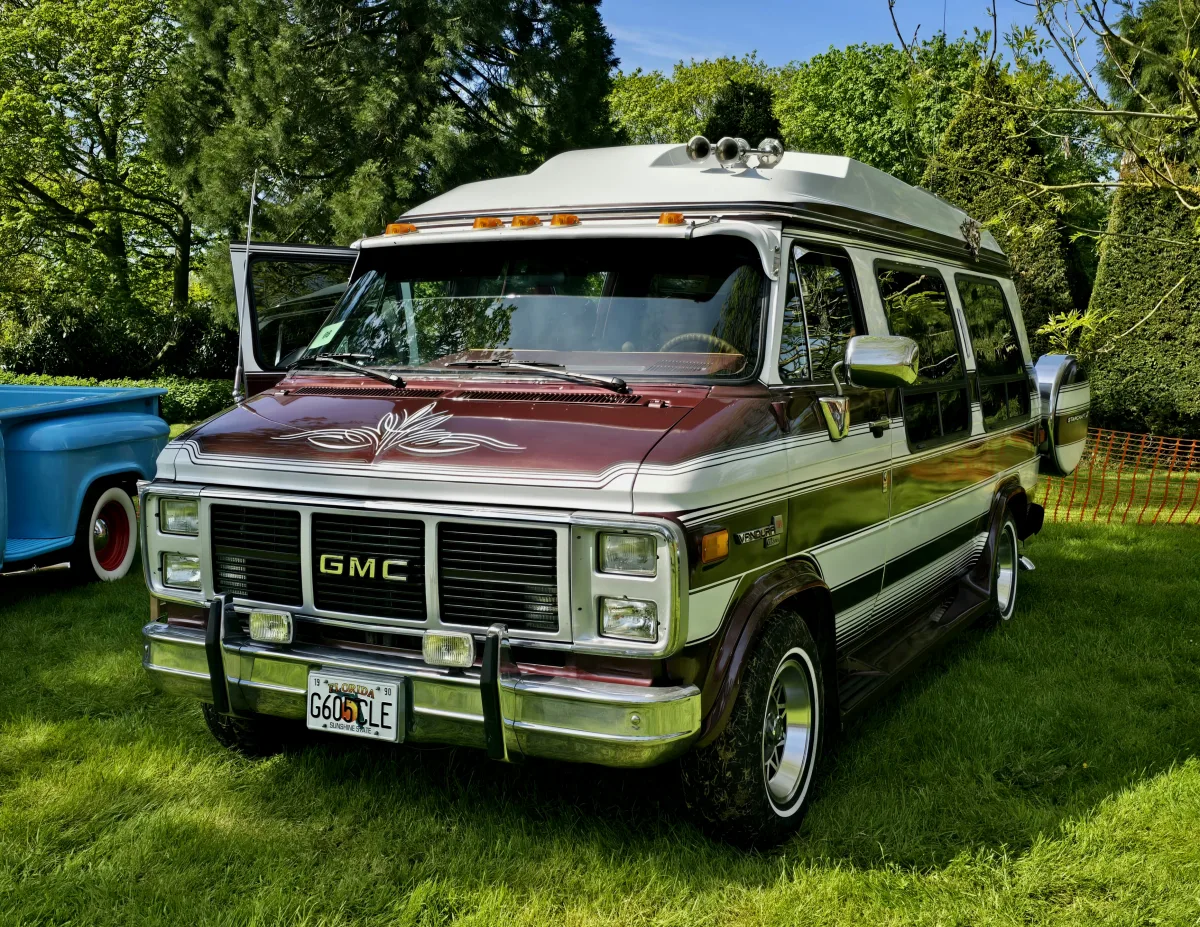
GMC Vandura: the American van, generations and what to know when buying
The GMC Vandura is an American full-size van, a cousin of the Chevrolet Van, which was popular for many years as both a cargo van and a camper or conversion van. We look at the generations, engines, and what to check when buying such a vehicle.






Vandura in brief
Vandura is the GMC name for its full-size van, which was essentially a twin of the Chevrolet Van. The vehicle had a fairly large body, a protruding engine hood at the front, and a rear-wheel-drive layout with a frame.
Thanks to its spacious interior, it was produced as a cargo van, a passenger van (Rally), and especially popular as a conversion van with additional seats, a bed, a higher roof, and other accessories.
Which generation and how they differ
The most common second generation, produced from 1978 to 1996: it includes the G1500, G2500, and G3500 series, and over the long production run, the range of engines and transmissions changed.
Earlier models are simpler and mechanically more basic, while later models received improved transmissions and more modern engines. Many of these vehicles in Europe are imported from the USA, so their condition varies greatly.
Engines and transmissions
Offered are petrol V6 and V8 engines (around 4.3, 5.0, and 5.7 litres), and in some years, a diesel V8. All are designed for rear-wheel drive with an automatic or manual transmission.
These engines are simple and easy to service, but they consume a lot of fuel.
What to check when buying a used Vandura
The key thing to look for is rust: check the sills, rear wheel arches, floor, roof and front wings. For converted vans, check the roof and window seals as well as the electrical installation.
Ask if the car is registered in Lithuania and if it has passed its technical inspection. Spare parts are often ordered from the US, so find out in advance where you can get them and how long it will take.


Trim levels
Names and equipment vary by year and conversion manufacturer; below are the most common variants.
Vandura (krovininis)
G SeriesThe main cargo van.
- Spacious cargo area
- Basic interior trim
- Petrol V6 / V8 engines
Rally (keleivinis)
G SeriesPassenger version with windows and seats.
- Often — multiple rows of seats
- More windows and trim
- Petrol V8 is common
Konversijos furgonas
G SeriesVan converted for travel and leisure.
- Often — a higher roof and interior furnishings
- Often — a place to sleep or relax
- Often — extra windows and lighting
Compare car variants
| Krovininis | Rally | Konversijos furgonas | |
|---|---|---|---|
| Who it's for | For work and cargo | For the family or a group | For road trips and camping |
| Interior | Basic cargo area | Passenger cabin | Refitted, with furniture |
| Main risk | Rust and wear | Worn interior elements | Roof and window seals |
| Price in the used market (relatively) | € | €€ | €€ |
Most buyers will be interested in a Rally or a well-maintained conversion van; choose the least rusted example, not based on features.
Pros
- Plenty of space and easily adaptable interior
- Simple and reliable mechanics
- Classic American styling
- Spare parts selection in the US market
Cons
- High fuel consumption
- Rust and issues common to older cars
- Parts and servicing in Lithuania are more challenging
Frequently asked questions
How does the GMC Vandura differ from the Chevrolet Van?
Technically, they are very similar — these are the same construction vans with different badges. Differences are mainly in design and trim.
Is the Vandura suitable for trips as a camper?
Yes, many have been converted into conversion vans for travel. It's important to check the roof condition and quality of the conversion.
What are the Vandura's fuel consumption figures?
Thanks to its size and old-school V8 engines, it's more of a petrolhead's dream than an economical runabout.
Updated 2026-10-21 · Trim levels and equipment vary by market and model year — check the equipment of the specific car. · Translated automatically


