 English
 Lietuvių
 Latviešu
 Eesti
 Polski
 Русский
 Українська
 Deutsch
 Nederlands
 Čeština
 Slovenčina
 Svenska
 Norsk
 Dansk
 Suomi


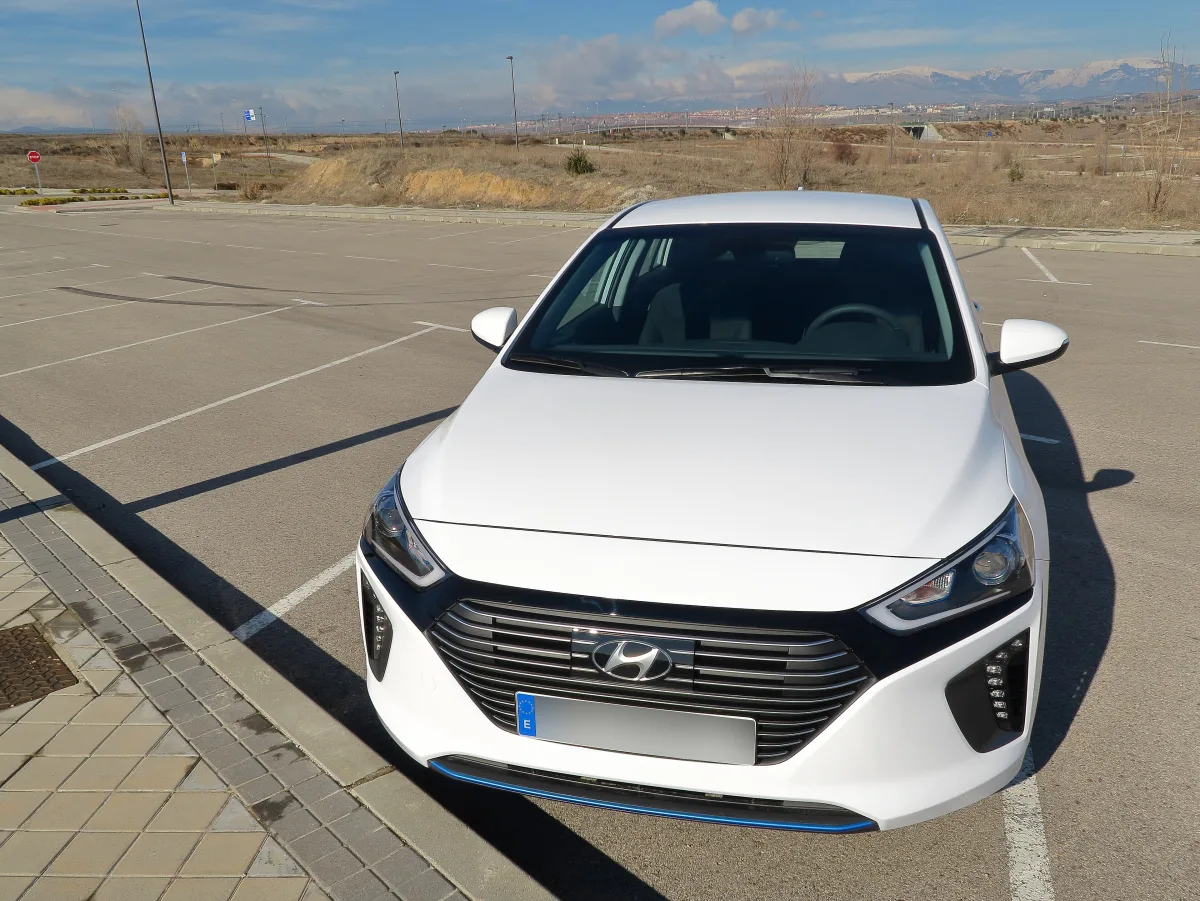
Hyundai Ioniq: 2016–2022 hybrid, plug-in hybrid and electric car
Hyundai Ioniq – a compact class hatchback, offered with three powertrain options: hybrid, plug-in hybrid and electric. Produced from 2016–2022. We review the versions, trims and what to check when buying a used Ioniq.






Ioniq in brief
The Ioniq was the first model Hyundai offered with three electrified powertrains under the same body: Hybrid, Plug-in Hybrid and Electric. The looks are similar, but the differences lie under the hood.
This is an economical, quiet car for daily use. Hybrid versions are great for those who don't need to plug in, while the electric car is ideal for those who can install a charging point.
Which version to choose
Hybrid – the simplest choice without plug-in, features a petrol engine and electric motor. Plug-in Hybrid allows part of the journey to be completed on electric power alone, while the Electric car runs solely on electric power.
The 2019 model was refreshed: the electric car got a larger battery and a newer interior design. The choice depends on how much and how you drive.
Engines and transmissions
The Hybrid and Plug-in Hybrid have a 1.6-litre petrol engine and electric motor, with combined power of around 140 hp. The Electric car's power is around 120–136 hp, depending on the version.
Hybrid versions typically use a 6-speed dual-clutch automatic transmission, while the electric car uses a single-speed gearbox.
What to check when buying a used Ioniq
In electric vehicles and plug-in hybrids, the battery's condition is key. Request a battery health (SoH) report and check if fast charging works.
In the hybrid version, test the dual-clutch transmission: judders or clunks when moving could indicate a need for repair. Check the charging cables and connectors.
Inspect the body and suspension, and check the operation of multimedia and assist systems.


Trim levels
Names and equipment vary by market and year; we list the most common trims found in Europe.
Comfort
All versionsBase trim.
- Often includes — air conditioning
- Often includes — alloy wheels
- Standard safety equipment
Style
All versionsMid-range trim.
- Often includes — navigation
- Often includes — LED headlights
- More comfortable interior
Premium
All versionsTop-of-the-range trim.
- Often — leather upholstery
- Often — heated seats
- Often — advanced safety systems
Transmission comparison
| Hybrid | Plug-in Hybrid | Electric | |
|---|---|---|---|
| Who it's for | Economical driving without towing | Short trips on electric | Daily driving on electric |
| Transmission | Petrol + electric | Petrol + electric, plug-in | Pure electric |
| Charging | No need | Required | Required |
| Price in the used market (relatively) | €€ | €€ | €€ |
For most buyers, Hybrid is the simplest and most economical alternative. Go electric if you have a charging spot, or Plug-in if you want flexibility.
Pros
- Economical driving
- Quiet, smooth ride
- Spacious enough interior
- Wide range of gears in one body style
Cons
- Electric range is shorter than newer competitors
- Two-pedal driving can be costly
- Battery condition is the main risk
Frequently asked questions
What’s the difference between Ioniq Hybrid, Plug-in, and Electric?
Hybrid runs on petrol and electric without charging, Plug-in can run on electric and is rechargeable, while Electric is purely electric.
Is it worth buying an Ioniq Electric?
If you have a charging spot and drive short distances, yes. Before buying, check the battery’s health.
Which trim to choose?
Most will opt for the Style – plenty of kit for a sensible price. Go Premium for the leather trim and extra systems.
Updated 2026-10-17 · Trim levels and equipment vary by market and model year — check the equipment of the specific car. · Translated automatically


