 English
 Lietuvių
 Latviešu
 Eesti
 Polski
 Русский
 Українська
 Deutsch
 Nederlands
 Čeština
 Slovenčina
 Svenska
 Norsk
 Dansk
 Suomi


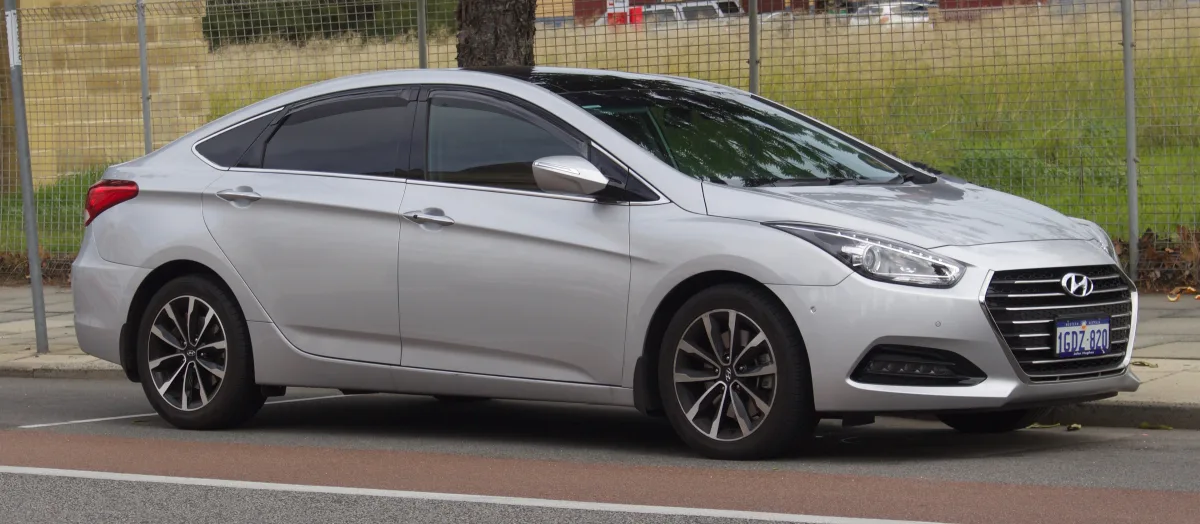
Hyundai i40: sedan and estate, engines and what to check
Hyundai i40 — a mid-size family car, produced from 2011 to 2019 as an estate and a sedan. We look at the engines, trims, facelift, and what to check before buying a used i40.






i40 in brief
The i40 was Hyundai's answer to the Volkswagen Passat and Ford Mondeo class of cars. It was offered as an estate (wagon) and a sedan, both solidly built with a practical interior and spacious boot.
The estate was more popular in Europe and is more commonly found in the used market. It's a cost-effective alternative to German rivals, and the equipment levels were usually generous.
Which version to choose
The car was made in one generation, but it was facelifted — around 2015, the front end, headlights, and new engines and gearboxes were introduced. Facelifted cars are more modern but also more expensive.
If you're after a cheaper option, earlier versions can still be a good buy if they've been well-maintained. The key is not the year, but the service history.
Engines and gearboxes
Petrol engine options include the 1.6 GDI (around 135 hp) and 2.0 GDI (around 177 hp). Diesels are the 1.7 CRDi, with varying power outputs (around 115–141 hp).
Gearboxes include a 6-speed manual, 6-speed automatic, and after the facelift, a 7-speed dual-clutch unit. The diesel 1.7 CRDi is considered a fairly economical option.
What to check when buying a used i40
In diesel cars, check the diesel particulate filter (DPF), EGR valve, and overall engine performance. A cold engine shouldn't misfire badly.
Test the automatic transmission and dual-clutch gearbox — they should operate smoothly. Inspect the suspension and brakes.
Check the bodywork and request the service history. In the case of an estate car, verify it wasn't used as a commercial vehicle.


Trims
Names and equipment vary by market and year; we list the trims most commonly found in Europe.
Classic
all yearsBase trim with essential equipment.
- Often — steel or alloy wheels
- Standard multimedia system
- Often — air conditioning
Comfort
all yearsPopular trim with added comfort.
- Often — 16–17-inch wheels
- Often — climate control
- Often — additional comfort features
Style
all yearsHigher trim with a more premium look.
- Often — 17-inch alloy wheels
- Often — heated seats
- Often — additional accents
Premium
all yearsTop-spec with all the bells and whistles.
- Often — leather upholstery
- Often — heated front seats
- Often — navigation and parking camera
Trim comparison
| Classic | Comfort | Style | Premium | |
|---|---|---|---|---|
| Who's it for | Budget-friendly option | Everyday use | For comfort | For maximum equipment |
| Alloy wheels (most often) | 16-inch | 16–17 model year | 17 model year | 17 model year |
| Interior | Base | More Comfortable | Better trim | Top trim |
| Engine | 1.6 GDI or 1.7 CRDi | 1.6 GDI or 1.7 CRDi | 1.7 CRDi or 2.0 GDI | 1.7 CRDi or 2.0 GDI |
| Price in the used market (relatively) | € | € | €€ | €€ |
For most buyers, the best choice is the Comfort or Style with the 1.7 CRDi or 1.6 GDI. Premium is worth considering if you want all the bells and whistles.
Pros
- Spacious interior and large boot
- Luxurious kit for a modest price
- Affordable maintenance
- Comfortable for long journeys
Cons
- Less popular in the used market than German rivals
- Weaker reputation for holding value
- Some parts may be pricier than those of mass-market models
Frequently asked questions
Is the i40 reliable?
Most cars run well if properly maintained. For diesels, it's crucial to check the DPF and EGR.
Which i40 engine is the best?
The 1.7 CRDi diesel is often chosen for its economy, but if you don't do many miles, the 1.6 GDI petrol might be more sensible.
Does the i40 have an estate version?
Yes, the estate (wagon) was more popular in Europe than the saloon. It offers a larger boot and is more practical for families.
Updated 2026-10-17 · Trim levels and equipment vary by market and model year — check the equipment of the specific car. · Translated automatically


