 English
 Lietuvių
 Latviešu
 Eesti
 Polski
 Русский
 Українська
 Deutsch
 Nederlands
 Čeština
 Slovenčina
 Svenska
 Norsk
 Dansk
 Suomi


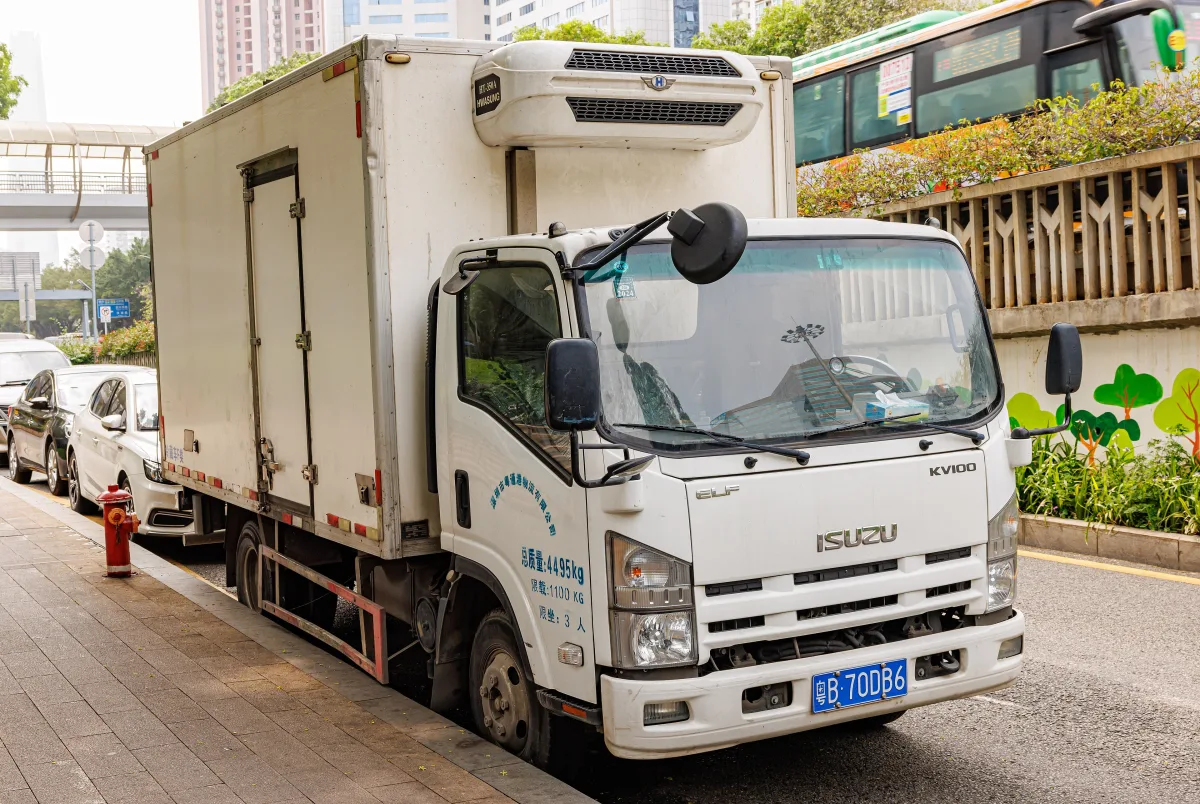
Isuzu N-Series: light commercial vehicles, generations and engines
The Isuzu N-Series (known as the Elf in Japan) is a range of light and medium-duty trucks that have been in production since 1959. We look at the generations, engines, and what to check when buying a used N-Series.






N-Series at a glance
The Isuzu N-Series is a family of light and medium-duty trucks known in many countries. In Japan, it's called the Elf, while in Europe, it's sold as the N-Series. The series is known for its simple, reliable construction and a wide range of body styles.
The N-Series is commonly found as a van, refrigerated truck, flatbed, box truck, or municipal vehicle. In Lithuania, used models are less common than European-made competitors, so the selection is limited.
Generations — what's the difference
N-Series models sold in Europe are designated by codes, such as N35.125 or N75.190: the first part indicates the approximate gross vehicle weight rating, and the second part indicates the engine power. There are lighter versions (around 3.5 tonnes), heavier versions (around 7.5 tonnes), and intermediate ones.
Cabs come in single and double configurations (with an additional row of seats), and bodies vary widely: from flatbed platforms to vans, box trucks, or municipal equipment. There's also an electric version for urban deliveries.
Engines and transmissions
N-Series engines are Isuzu diesels, with capacities of around 3 litres and around 5.2 litres, and varying power outputs. Euro 5 and Euro 6 versions often use AdBlue (SCR) systems and particulate filters.
Transmissions come in manual, automated, or automatic, depending on the version. For city deliveries, an automated or automatic gearbox is often chosen as it's more convenient for frequent stopping.
What to check when buying a used N-Series
First, assess the condition of the body and chassis: check for corrosion on the van, flatbed, or camper, chassis deformities, and axle mounts. In refrigerated units, check the aggregate operating hours and functionality.
Check the engine, clutch, gearbox, and brakes. The engine should start without prolonged cranking, and the clutch should operate smoothly, especially if the vehicle has done a lot of city driving.
In Euro 5 and Euro 6 vehicles, check the AdBlue system, particulate filter, and error memory. Ensure parts availability, mileage according to service records, permissible weight, and driver category.


Trims and versions
Trims and versions vary by market and year; below are the most commonly found versions.
N35 (apie 3,5 t)
All generationsThe easiest version for city deliveries.
- Often suitable for B category drivers
- Van or flatbed
- Ideal for local hauls
Tarpinės versijos (apie 4,5–6 t)
All generationsMid-range version for general use.
- Higher permissible weight
- Often a flatbed or van
- Ideal for city and regional transportation
N75 (apie 7,5 t)
All generationsHeavier version for larger loads
- Higher permissible weight
- Often a van or pickup
- Wider range of body styles
Su dvigubos eilės kabina
All generationsWith an extra row of seats for the crew
- Double-cab configuration
- Often municipal equipment
- Suitable for work crews
Elektrinė versija
Latest editionsCity deliveries with zero emissions
- Battery in place of a diesel engine
- Quiet driving experience
- Still rare in the used market
Comparing the versions
| N35 | Tarpinė versija | N75 | |
|---|---|---|---|
| Who it's for | For city deliveries | General-purpose use | For heavier loads |
| Approximate permissible weight | Around 3.5 tonnes | Around 6 tonnes | Around 7.5 tonnes |
| What to check in particular | Body and chassis | Suspension and brakes | Chassis and body |
| Driver's license category | Often B | Often C1 | Often C1 |
| Price in the used market (relatively) | € | €€ | €€ |
The N-Series is ideal for those who need a simple, economical light or medium-duty truck. Choose a version based on the permitted weight and check the availability of parts and service.
Pros
- A simple and reliable construction
- A wide range of cab options
- Engines are usually economical
- Competitive pricing in the used market
Cons
- A smaller service network than European competitors
- Limited supply of used models
- Euro 5/6 system maintenance is specific
Frequently asked questions
How does the N-Series differ from the F-Series?
The N-Series is a lighter series, while the F-Series is heavier and designed for larger loads.
Is the N-Series the same as the Elf?
Yes, in Japan this model is called the Elf, while in Europe and some other countries it is known as the N-Series.
What type of driver's license is required?
It depends on the permitted weight: up to 3.5t is covered by a B category licence, up to 7.5t requires a C1, and anything heavier needs a C. Check the exact weight in the documentation.
Updated 2026-10-21 · Trim levels and equipment vary by market and model year — check the equipment of the specific car. · Translated automatically


