 English
 Lietuvių
 Latviešu
 Eesti
 Polski
 Русский
 Українська
 Deutsch
 Nederlands
 Čeština
 Slovenčina
 Svenska
 Norsk
 Dansk
 Suomi


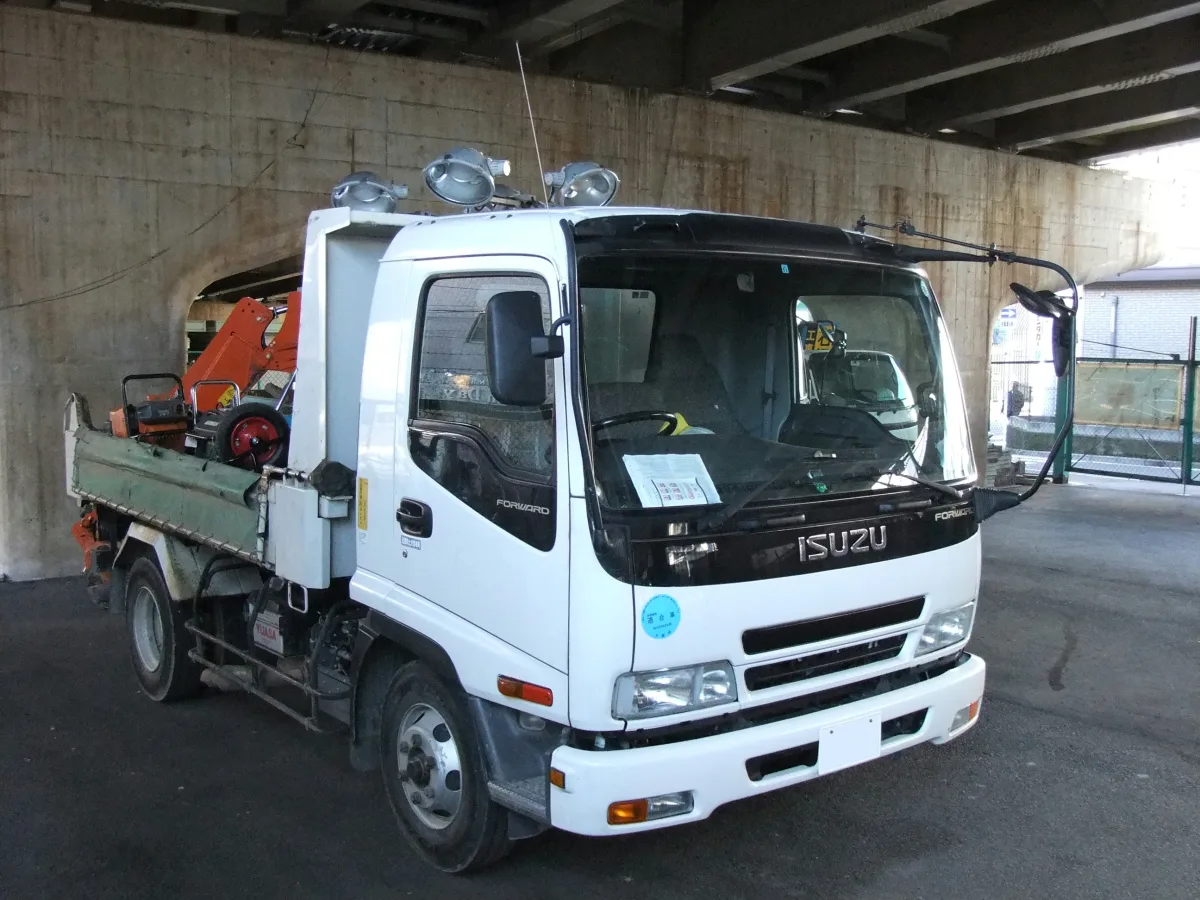
Isuzu Forward: generations, engines, and what to check
The Isuzu Forward is a medium and heavy-duty truck made in Japan since 1970. We look at its versions, cabs, engines, and what to check if you're hunting for a used Forward in Lithuania or elsewhere in Europe.






Forward in brief
The Forward is a popular series of Isuzu trucks used for freight distribution, construction, municipal services, and special bodies. It's widely used in Japan and other Asian markets, and enters Europe mostly as used imports.
The factory codes FRR, FSR, FTR, FVR, and FVZ indicate the weight class and load capacity: from lighter to heavier variants. So, always check the vehicle's gross weight and axle configuration before buying.
Generations — what's the difference
Earlier Forward generations are simpler, with mechanics that are easier to repair, but they're quite old, so corrosion and wear are common. Many of these trucks are imported from Japan with bodies designed for local needs, so assess them before adapting them for use in Lithuania.
Newer Forward generations feature a more modern cab, more economical engines, and more safety equipment. Due to stricter emission standards in Japan, some have particulate filters and NOx reduction systems.
When buying an imported Forward, ensure the vehicle can be registered and meets technical requirements; Japanese market vehicles often have right-hand drive.
Engines and transmissions
Forward engines — four and six-cylinder diesels, well-known 4HK1 (around 5.2 litres) and 6HK1 (around 7.8 litres). Power ranges from about 150 to 300 HP, depending on the version.
Transmissions — manual or automated ('Smoother'); some versions may have an automatic. The automated box is more convenient in the city, but maintenance can be pricier.
Before buying, ask for the specific engine code and Euro or Japanese emission class of the car, as this determines the availability of spare parts and permitted operating zones.
What to check when buying a used Forward
Inspect the frame, cabin mounts, and body attachments — corrosion is particularly common in cars imported from wet or salt-affected areas. Check if the frame hasn't been repaired or extended.
Start the engine cold and pay attention to smoke, oil, or coolant leaks. In newer cars, assess the condition of the DPF and SCR systems, and test the transmission by driving.
Check the operation of additional equipment — hydraulic lift, body, or cranes — separately. Verify the mileage and service history in documents, and for imported cars, also check auction or service reports.


Versions and cabs
Markings and equipment vary by market and year; we list the most commonly encountered Forward versions.
FRR
Lighter versionA lighter Forward version for urban delivery.
- More compact cab
- Lower overall weight
- Often — flatbed or van
FSR
Mid-range versionMid-range for distribution and construction.
- Often — wider cab
- Heavier load capacity than FRR
- Popular with box bodies
FTR
Heavier versionHeavier variant for larger loads.
- Reinforced chassis
- Often — flatbed with hydraulic crane
- Suitable for construction
FVR
Heavy-duty versionHeavy-duty version for longer trips and tougher jobs.
- More powerful engine
- Often — 6x2 or 6x4
- Higher gross vehicle weight
Specialios paskirties važiuoklė
All generationsEmergency, municipal or other special versions.
- Often — double cab
- Additional equipment
- Condition varies greatly
Forward versions comparison
| FRR | FSR | FTR | FVR | |
|---|---|---|---|---|
| Who it's for | For urban deliveries | For distribution and construction | For heavier tasks | For heavy-duty runs |
| Weight class | Lighter | Medium | Heavier | Heaviest |
| Most common body type | Van, flatbed | Flatbed, drop-side | Drop-side, crane | Special, tanker |
| Price in the used market (relatively) | € | €€ | €€ | €€€ |
Often the best choice is the version that suits your required payload and body type, rather than the badge. It's especially important to check the documents, chassis condition, and registration approval for imported vehicles.
Pros
- Reliable Isuzu engines
- Simple and robust construction
- Wide range of versions to suit weight and purpose
- Often good condition imported vehicles
Cons
- Parts availability in Europe is lower than for domestic manufacturers
- Right-hand drive imports are common
- Corrosion and body condition can vary greatly
Frequently asked questions
What do FRR, FSR, FTR, and FVR mean?
These are factory designations indicating the Forward mass class and weight: from the lighter FRR to the heavier FVR. Always check the exact total mass and axle formula in the documents.
Can a Forward be registered in Lithuania?
Usually yes, if the car meets the technical requirements and has the proper documents, but it depends on the specific vehicle. Before buying, it's worth checking the registration requirements and consulting with specialists.
Are parts hard to find?
Popular engine and other drivetrain parts are usually available, but you might need to order them longer than from local manufacturers. Before purchasing, check if you have a reliable mechanic and parts supplier.
Updated 2026-10-21 · Trim levels and equipment vary by market and model year — check the equipment of the specific car. · Translated automatically


