 English
 Lietuvių
 Latviešu
 Eesti
 Polski
 Русский
 Українська
 Deutsch
 Nederlands
 Čeština
 Slovenčina
 Svenska
 Norsk
 Dansk
 Suomi


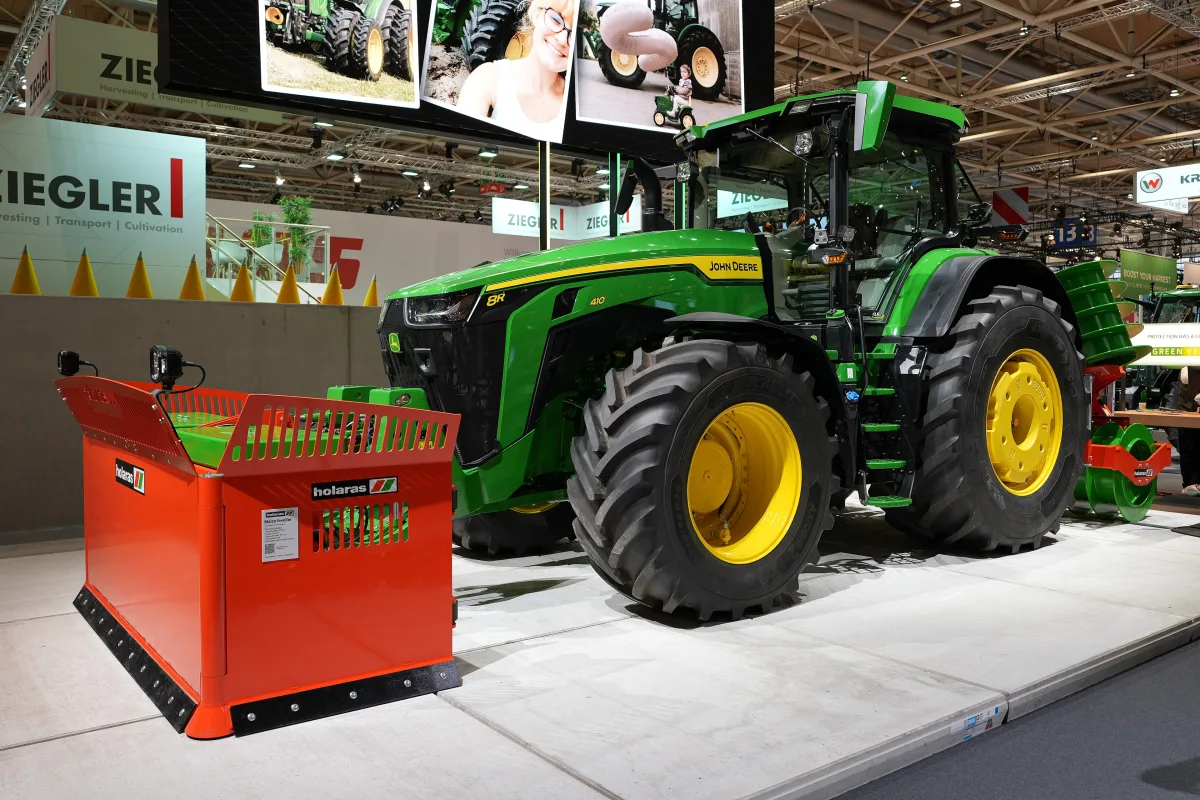
John Deere 8R: powerful tractors, engines, transmissions, and what to check
John Deere 8R — high-horsepower utility tractors, produced since 2009. We look at power classes, engines, transmissions, 8RT and 8RX versions, and what to check when buying a used 8R.






8R in brief
John Deere 8R — high-horsepower tractors designed for large farms, fieldwork, planting, and transport. Nominal power ranges from around 230 to over 500 HP.
This series is praised for its comfortable cab, powerful hydraulics, and high residual value. Used 8Rs are pricey but hold their value well.
Versions and names
In addition to the standard 8R with wheels, there are also 8RT (with two rubber tracks) and 8RX (with four tracks). Tracked versions exert less pressure on the soil and are better suited for heavy-duty work.
This series has been updated several times: engine standards (Stage IIIB, IV, V), cab, and transmission choices have changed. When buying used, it's crucial to know the year of manufacture and the Stage standard.
Engines and transmissions
Engines — John Deere PowerTech six-cylinder 9.0L with turbochargers and SCR system in newer models.
Transmissions — semi-automatic e23 PowerShift and stepless AutoPowr. Choice depends on the trim and year.
What to check when buying a used 8R
Check the engine hours, oil and coolant leaks, turbocharger, SCR/AdBlue system, and hydraulic operation. Ask for a full service history.
Check the gearbox shifts, front and rear axle play, lifting mechanism, and cabin electronics. In belted versions, inspect the belts and pulleys for wear.


Versions and trims
Names and equipment vary by market and production year; we list the versions most commonly found in Europe.
8R su ratais
from 2009Base version with wheels.
- Often — e23 PowerShift or AutoPowr
- Often — comfortable cabin
- Often — rear lift system
8RT (dvi juostos)
later yearsVersion with two rubber belts.
- Two rubber belts
- Less soil compaction
- Check belt wear
8RX (keturios juostos)
later yearsVersion with four rubber belts.
- Four rubber belts
- Maximum towing capacity
- Expensive belt servicing
8R su aukštesne įranga
by trim levelWith additional technologies.
- Often — GPS navigation systems
- Often — enhanced electronics
- Often — air suspension in the cabin
Comparison of 8R versions
| 8R | 8RT | 8RX | |
|---|---|---|---|
| Who it suits | For general-purpose work | For heavy-duty work and less soil compaction | For the largest farms |
| Tractor | Wheels | Two belts | Four-wheel drive |
| Towing capacity | Good | High | Top |
| Price in the used market (relatively) | €€ | €€€ | €€€ |
The 8R with tyres is great for general work, while the 8RT or 8RX are better for heavy-duty tasks and protecting the soil.
Pros
- High residual value
- Comfortable cabin
- Powerful hydraulics
- Wide service network
Cons
- Expensive in the used market
- Complex electronics
- Maintaining belted versions can be pricey
Frequently asked questions
How does the 8R differ from the 7R?
The 8R offers more power and a larger frame, designed for big farms, while the 7R is more versatile.
What do 8RT and 8RX mean?
The 8RT has two rubber tracks, the 8RX has four. They exert less pressure on the soil than wheels.
Is the 8R suitable for a small farm?
Generally, no: it's a powerful tractor best used on large plots.
Updated 2026-10-21 · Trim levels and equipment vary by market and model year — check the equipment of the specific car. · Translated automatically


