 English
 Lietuvių
 Latviešu
 Eesti
 Polski
 Русский
 Українська
 Deutsch
 Nederlands
 Čeština
 Slovenčina
 Svenska
 Norsk
 Dansk
 Suomi


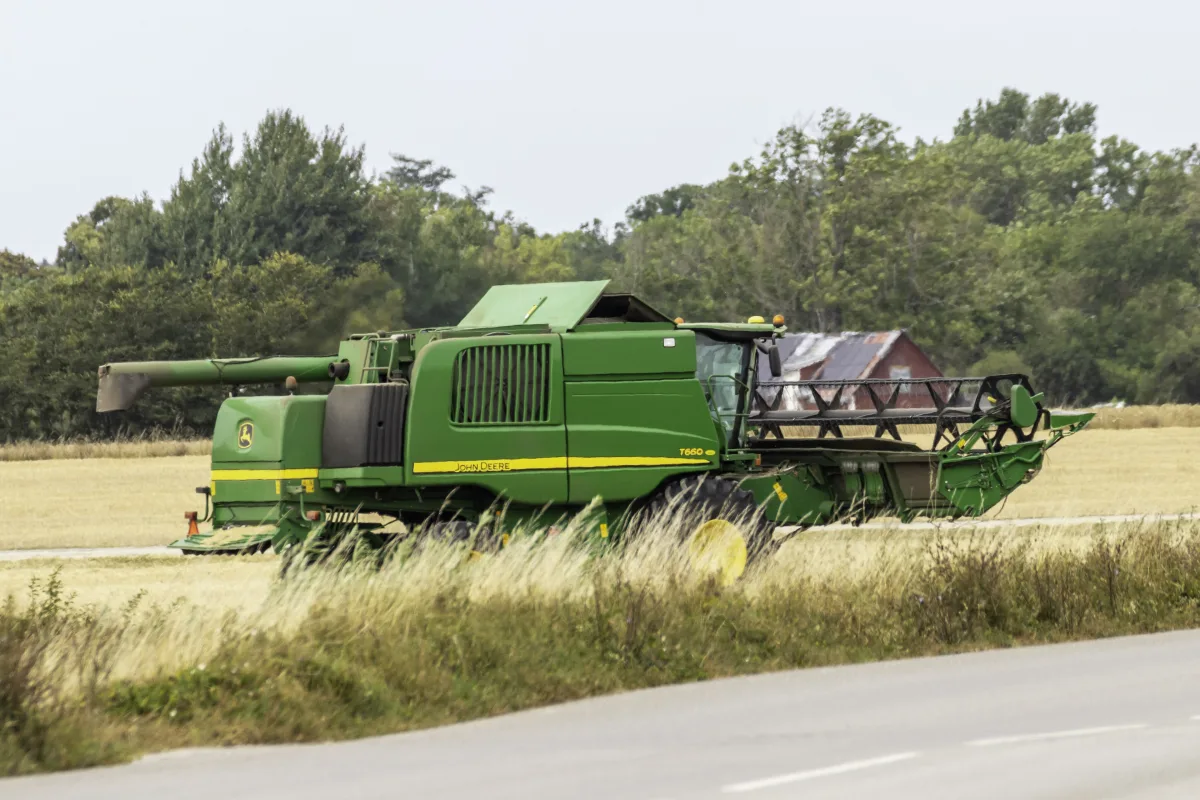
John Deere T Series: Combines, Engines, and What to Check
The John Deere T Series — combines with straw walkers (classic threshing system), widely used in European farms. We look at the series' purpose, models, and what to check when buying a used combine.






The T Series in Brief
The John Deere T Series combines with straw walkers were introduced around 2008. They separate grain from straw using a threshing cylinder and walkers, making them ideal for grain crops and others that aren't overly wet.
The series is suited to medium and large-sized farms and contractors. They're fairly common in the used market, but their condition heavily depends on how many hectares they've cut and how well they've been maintained.
Models and Choices
Models in the series differ in power, number of walkers, and hopper capacity. Smaller models suit medium-sized farms, while larger ones are better for big acres and higher output.
When shopping, consider not just the model but also the threshing unit's hours, as this is a more accurate condition indicator than engine hours alone.
Engines and Key Components
T Series combines use John Deere PowerTech 6-cylinder diesel engines. Power ranges from around 250 to over 350 hp, depending on the model.
Key components include the threshing cylinder and concave, straw walkers, cleaning system with sieves and fan, hopper, and unloading auger. The combines are wheeled, with rear wheels being driven.
What to check when buying a used T Series combine
Ask to see the engine and threshing unit hour meters and service history. Inspect the threshing cylinder and concave — wear and damage significantly affect performance.
Check the condition of the straw walkers, cleaning sieves, fan, elevators, and grain transfer augers. Look for oil leaks and worn belts or chains.
Test the hydraulics, header lift, unloading auger, and cab equipment (air conditioning, lights). If possible, watch the combine working in the field.


Configurations
Specific models and equipment vary by market and year; we list the most common configurations.
Mažesni T modeliai
2008–Smaller combines for medium-sized farms.
- Less power and hopper capacity
- Suitable for medium-sized fields
- Simpler maintenance
Vidutiniai T modeliai
2008–Versatile configuration for most farms.
- Good balance of power and efficiency
- Often includes air conditioning and electronic controls
- Suitable for various crops
Didesni T modeliai
2008–Larger tractors for farmers and big estates.
- Powerful engine
- Larger fuel tank
- More expensive maintenance
Su standartinėmis padangomis
2008–Standard configuration with wheels.
- Easier to operate
- Suitable for most fields
- Higher ground clearance in wet soil
Su platesnėmis padangomis
Custom orderConfiguration with additional equipment for wet conditions.
- Lower ground clearance
- Often — wider tyres
- Check if it's genuinely factory-fitted
Size comparison
| Mažesni | Vidutiniai | Didesni | |
|---|---|---|---|
| Who it's for | For average households | For most households | For enthusiasts, large households |
| Power (approx.) | ~250 HP | ~300 HP | 350+ HP |
| Refinement | Average | Good | High |
| Service cost | Lower | Average | Higher |
| Price in the used market (relatively) | Mid-range | Mid-range | High-end |
Most farms will find a mid-sized model suitable. For larger operations and expansive fields, opting for a bigger combine is worthwhile, though maintenance costs will be higher.
Pros
- Wide availability of John Deere service centres and parts
- Reliable PowerTech engines
- Good ergonomics and cabin
- Wide range of models available
Cons
- Expensive original parts
- The threshing unit may show significant wear
- Difficult to assess condition without a working test
Frequently asked questions
How does the John Deere T series differ from other combines?
The T series features a conventional threshing system — a classic method that's widely used and suits most grain crops.
What is the power output of the T series combines?
Depending on the model, roughly from 250 to over 350 HP. Check the exact power for the specific combine.
What to look out for when buying a used estate car?
Check the engine and transmission hours, condition of the transmission and clutch, suspension, steering and service history.
Updated 2026-10-21 · Trim levels and equipment vary by market and model year — check the equipment of the specific car. · Translated automatically


