 English
 Lietuvių
 Latviešu
 Eesti
 Polski
 Русский
 Українська
 Deutsch
 Nederlands
 Čeština
 Slovenčina
 Svenska
 Norsk
 Dansk
 Suomi


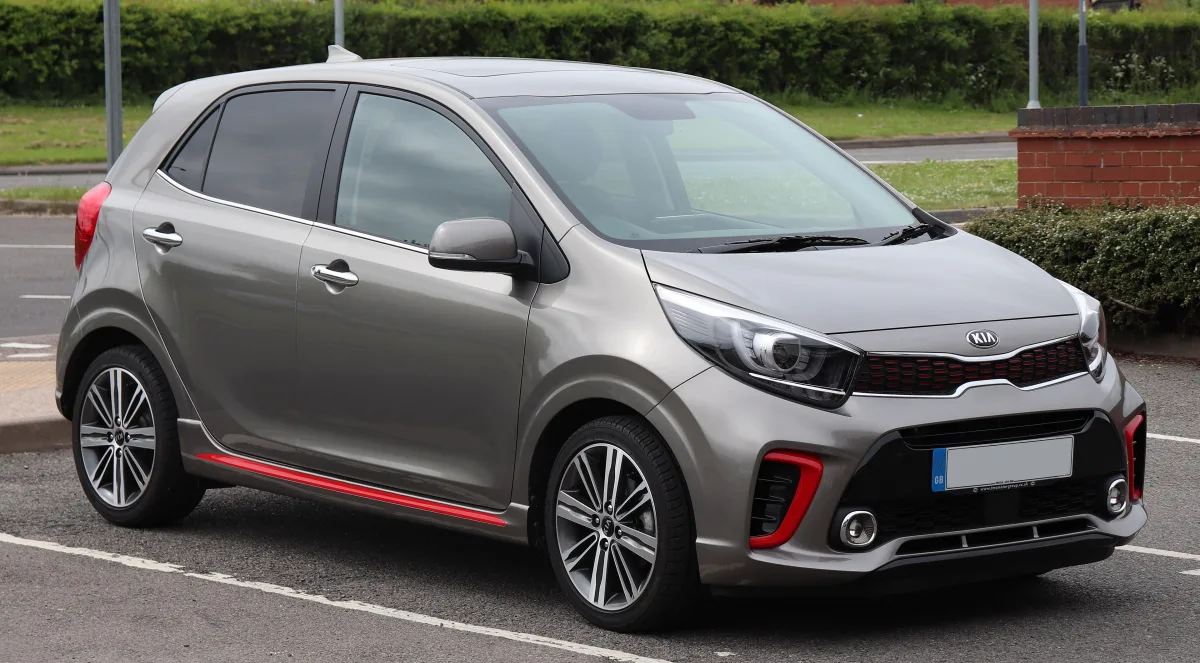
Kia Picanto: SA, TA and JA generations, engines and trims
Kia Picanto — the smallest Kia model and one of the most popular city cars, produced since 2004. We look at how the three generations differ, which engines and trims are most commonly found, and what to look out for when buying a used Picanto.






Picanto in brief
Picanto — a compact hatchback designed primarily for the city. Most commonly found with a 5-door body, and a 3-door version was available in the second generation. The car is easy to park, economical, and cheap to run, making it a popular choice as a first or second family car.
Main rivals include the Hyundai i10, Toyota Aygo, Volkswagen up!, and Fiat Panda. The Picanto is technically close to the Hyundai i10, so there's a wide choice of spare parts. New Kia cars in Europe come with a 7-year (or 150,000 km) manufacturer's warranty, which transfers to the next owner if service requirements are met — when buying a younger car, it's worth checking if the warranty is still valid.
Which generation to choose
First generation (SA, 2004–2011) — basic and affordable, but already quite old: most cars have high mileage, and safety features are minimal. It's worth choosing only if you're after the cheapest city car and in good mechanical condition.
Second generation (TA, 2011–2017) — much more modern, spacious, and better equipped. There were 3 and 5-door versions with 1.0 and 1.25-litre petrol engines, and the car was updated in 2015. This is one of the most common generations on the used market.
Third generation (JA, from 2017) built on a new platform: longer wheelbase, larger boot and modern multimedia. The sporty GT-Line and rugged X-Line versions appeared, along with the 1.0 T-GDi turbo engine. The car was refreshed in 2020, and in 2023 it received a facelift.
Engines and transmissions
In the first generation, 1.0 and 1.1-litre petrol engines are most commonly found, with the 1.1 CRDi diesel being rarer.
In the second generation, there are three-cylinder 1.0 (around 69 hp) and four-cylinder 1.25 (around 85 hp) petrol engines. In some markets, there was also a factory LPG version.
In the third generation, there are naturally aspirated 1.0 (around 67 hp) and 1.2 (around 84 hp) engines, as well as the 1.0 T-GDi turbo (around 100 hp). Transmissions include a 5-speed manual, 4-speed automatic, and after the 2020 refresh, a robotised manual (AMT).
What to check when buying a used Picanto
Small city cars often cover short distances, so the clutch, brakes, and suspension wear out faster than you might expect. Test the clutch: a slipping or very high-clutching clutch will soon need replacing.
A 4-speed automatic transmission is usually reliable, but it makes the car slower and more fuel-hungry. The AMT gearbox shifts with pauses — that's normal, but strong juddering when moving off should not be.
For older cars, check for rust on the sills, wheel arches, and underbody. Ensure the air conditioning works, and verify the service and MOT history. If the manufacturer's warranty is still valid, check if the car has been serviced on time.


Trim levels
Names vary by market: In Lithuania, you often encounter German-imported cars with German trim names, while the UK uses numbers (1, 2, 3).
Attract
Second to third generationBase trim with essential equipment.
- Often comes with steel wheels
- Often features a manual air conditioning
- Basic sound system
Vision
Third generationMid-range trim — a good balance of price and comfort.
- Often comes with alloy wheels
- Often features a multimedia screen with phone connectivity
- Often includes heated seats and steering wheel
Spirit
Second to third generationTop standard trim with more comfort features.
- Alloy wheels
- Often — automatic climate control
- Often — keyless entry and rear-view camera
GT-Line
Third generationSporty-looking version.
- Sporty bumpers and 16-inch alloy wheels
- Red decorative accents
- Often — 1.2 or 1.0 T-GDi engine
X-Line
Third generationOff-road style version with a slightly higher ground clearance.
- Plastic cladding on wheel arches and sills
- Slightly higher ride height
- Often — 1.0 T-GDi engine
Third-generation (JA) trim comparison
| Attract | Vision | GT-Line | X-Line | |
|---|---|---|---|---|
| Who it's for | Cheapest to run around town | For everyday convenience | Sporty looks | Distinctive styling |
| Wheels (usually) | 14 inch, steel | 14–15 inch, light alloy | 16 inch, light alloy | Light alloy |
| Interior | Basic trim | More comfort features | Sporty trim, red accents | Unique X-Line trim |
| Engine | 1.0-litre | 1.0 or 1.2-litre | 1.2 or 1.0 T-GDi | 1.2 or 1.0 T-GDi |
| Price in the used market (relatively) | € | €€ | €€ | €€ |
For most buyers, the best choice is the mid-range trim with the 1.2-litre engine: it's plenty for out-of-town drives. The GT-Line and X-Line are worth considering for their looks or the more powerful 1.0 T-GDi engine.
Pros
- Low running costs and minimal fuel consumption
- Easy to park in the city
- Long manufacturer's warranty for newer cars
- Modern third-generation interior and infotainment
Cons
- Weak atmospheric engines out of town
- Slow four-speed automatic and jerky automated manual gearbox
- Cramped rear seats and small boot
Frequently asked questions
Which Picanto generation is best to buy used?
If the budget allows — the third generation (from 2017 onwards): it's roomier, safer and has more modern infotainment. A cheaper but still good option is the second generation, best after the 2015 refresh.
Is the Picanto suitable for out-of-town driving?
It is, but with the 1.0-litre atmospheric engine, overtaking on the motorway requires patience. If you often drive out of town, opt for the 1.2 or 1.0 T-GDi engine.
Is the 7-year Kia warranty valid when buying a used Picanto?
The warranty is calculated from the first registration and is transferable to the new owner if the car has been serviced according to the manufacturer's requirements. Check the first registration date and service records with your Kia dealer.
Updated 2026-10-09 · Trim levels and equipment vary by market and model year — check the equipment of the specific car. · Translated automatically


