 English
 Lietuvių
 Latviešu
 Eesti
 Polski
 Русский
 Українська
 Deutsch
 Nederlands
 Čeština
 Slovenčina
 Svenska
 Norsk
 Dansk
 Suomi


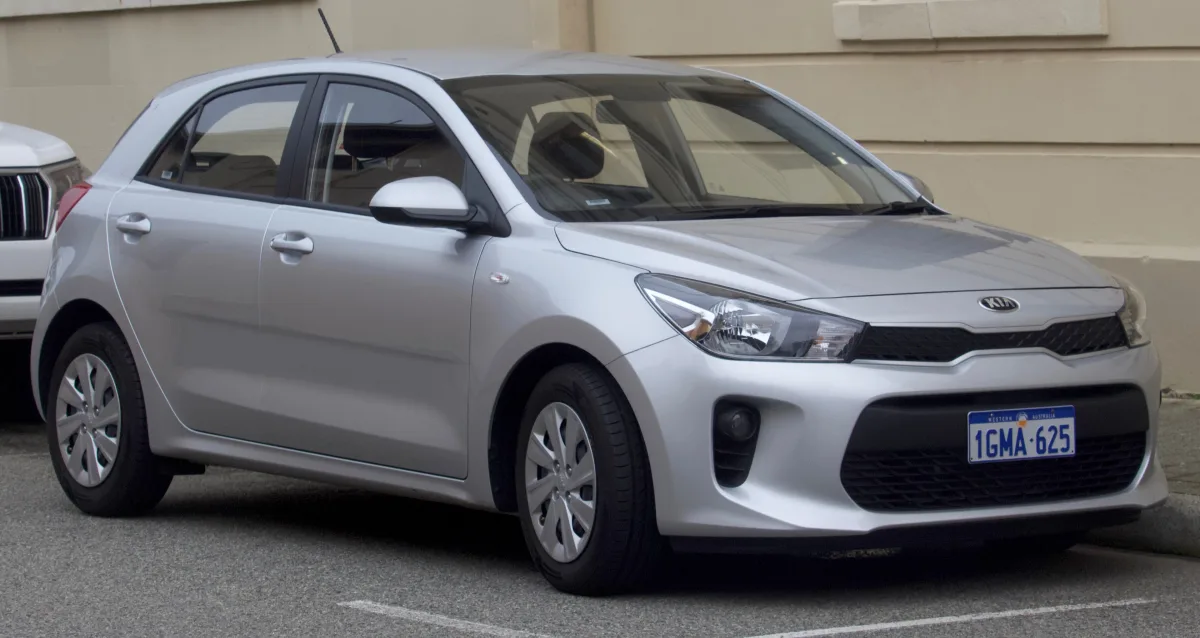
Kia Rio: UB and YB generations, engines and trims
The Kia Rio is a compact car, most commonly found in Europe as a 5-door hatchback. It's valued in the used market for its straightforward technology, low running costs and often a lower price than competitors. We're looking at the two most recent generations — UB and YB, engines, trims and what to check before buying.






Rio in brief
The two most popular Rio generations in Europe: UB (2011–2017) and YB (2017–2023). The YB generation was the last in Europe — production for the European market ended in 2023, so there won't be any new Rios, but the supply of used ones will remain large for a long time.
The Rio is technically close to the Hyundai i20 — they share many engines and gearboxes, so spare parts and mechanics are plentiful. It's a sensible choice as an economical city car or a first car for a young driver.
UB and YB generations — what's the difference
The UB generation (2011–2023) was offered as a 3 and 5-door hatchback, with a mid-cycle refresh: bumpers, headlights and interior details were changed. Today, it's the cheapest way to get a still fairly modern Rio, but most cars already have high mileage.
The YB generation (2017–2023) was sold in Europe only as a 5-door hatchback. It's slightly longer and roomier, with more modern multimedia, more safety systems and a turbocharged 1.0 T-GDi engine. Cars refreshed in 2020 got a revised front end, 48V mild hybrid versions and newer gearboxes.
For many buyers, the best choice is the YB generation, especially the updated version post-2020. The UB is worth considering only if you find a well-maintained car with a reliable history.
Engines and transmissions
In the UB generation, you'll commonly find 1.25 (around 85 hp) and 1.4 (around 109 hp) petrol engines, as well as 1.1 and 1.4 CRDi diesel engines. Naturally aspirated petrol engines are simple and known for their reliability.
The YB generation features naturally aspirated 1.25 or 1.2 (around 84 hp) and 1.4 (around 100 hp) petrol engines, a turbocharged 1.0 T-GDi (100 or 120 hp), and in earlier models, a 1.4 CRDi diesel. Post-2020 update, the 1.0 T-GDi often comes with a 48V mild hybrid system.
Transmissions include 5 or 6-speed manuals, a conventional automatic (often paired with the 1.4 petrol engine), and in later YB models, a 7-speed dual-clutch DCT with the 1.0 T-GDi. Some mild hybrid versions feature an iMT manual transmission with an electronically controlled clutch.
What to check when buying a used Rio
If the car has a DCT transmission, test the initial movement and slow driving in traffic: juddering or vibration could indicate a clutch repair is needed. A conventional automatic should shift gears smoothly without hesitation.
For the turbocharged 1.0 T-GDi engine, regular oil changes are crucial — check the service records. For diesel cars that have done a lot of city driving, inspect the diesel particulate filter (DPF) and EGR valve.
The Rio is often used in rental fleets or company car parks and by learner drivers, so check the bodywork, brakes, suspension, and wheel arches for minor dents.


Trim levels
Trim names vary by country; we list common names found in the German market, as many used Rios are imported from there.
Attract
UB and YB generationsBase trim with essential equipment.
- Steel wheels
- Often — no air conditioning or basic air conditioning
- Basic audio system
Edition 7
UB and YB generationsA popular balance of price and features.
- Air conditioning
- Often — Bluetooth connectivity and steering wheel controls
- Often — heated seats
Vision
UB and YB generationsA more comfortable version with additional convenience features.
- Often — alloy wheels
- Often — multimedia screen and rear-view camera
- Often — heated steering wheel
Spirit
UB and YB generationsMost commonly equipped with the standard trim
- Larger alloy wheels
- Often — automatic climate control and navigation
- Often — keyless entry
GT-Line
YB generationSporty-looking version with standard engines
- Sporty bumpers and wheels
- GT-Line interior details
- Often — 1.0 T-GDi engine
Comparison of YB generation trims
| Edition 7 | Vision | Spirit | GT-Line | |
|---|---|---|---|---|
| Who it's for | For daily city driving | For most buyers | For those wanting more equipment | Sporty looks |
| Wheels (usually) | 15 in., steel | 15–16 in. | 16–17 in. | 17 in. |
| Interior | Base | More comfort features | Mostly loaded | Sporty GT-Line details |
| Price in the used market (relatively) | € | € | €€ | €€ |
For most buyers, the best choice is the Vision or Spirit with a 1.0 T-GDi or naturally aspirated 1.2–1.4 engine. The GT-Line is worth considering for its looks, while the base trim is best for those prioritising the lowest price.
Pros
- Simple and reliable technology
- Low running costs
- Often cheaper than similarly aged competitors
- Shared parts with the Hyundai i20 — easy to find spare parts
Cons
- Base trim is spartanly equipped
- Atmospheric engines are more relaxed in the city
- Often high mileage if the car was used for rental or fleet purposes
Frequently asked questions
Which Rio generation is best to buy used?
For many buyers, the best choice is the YB generation, especially the 2020–2023 facelifted models: they are more modern, safer, and more economical. The UB generation is fine if your budget is tighter and you find a well-maintained car.
Which Rio engine to choose?
For those who drive mostly in the city, the simple 1.25 or 1.2-litre petrol engine is a great fit. If you often drive out of town, the 1.0 T-GDi is more convenient — it's more dynamic, but requires more meticulous maintenance.
How does the Kia Rio differ from the Hyundai i20?
The technology is very similar — many engines and gearboxes are shared. The design, interior, and features differ; in the used market, the Rio is often a bit cheaper than a similarly aged i20.
Updated 2026-10-09 · Trim levels and equipment vary by market and model year — check the equipment of the specific car. · Translated automatically


