 English
 Lietuvių
 Latviešu
 Eesti
 Polski
 Русский
 Українська
 Deutsch
 Nederlands
 Čeština
 Slovenčina
 Svenska
 Norsk
 Dansk
 Suomi


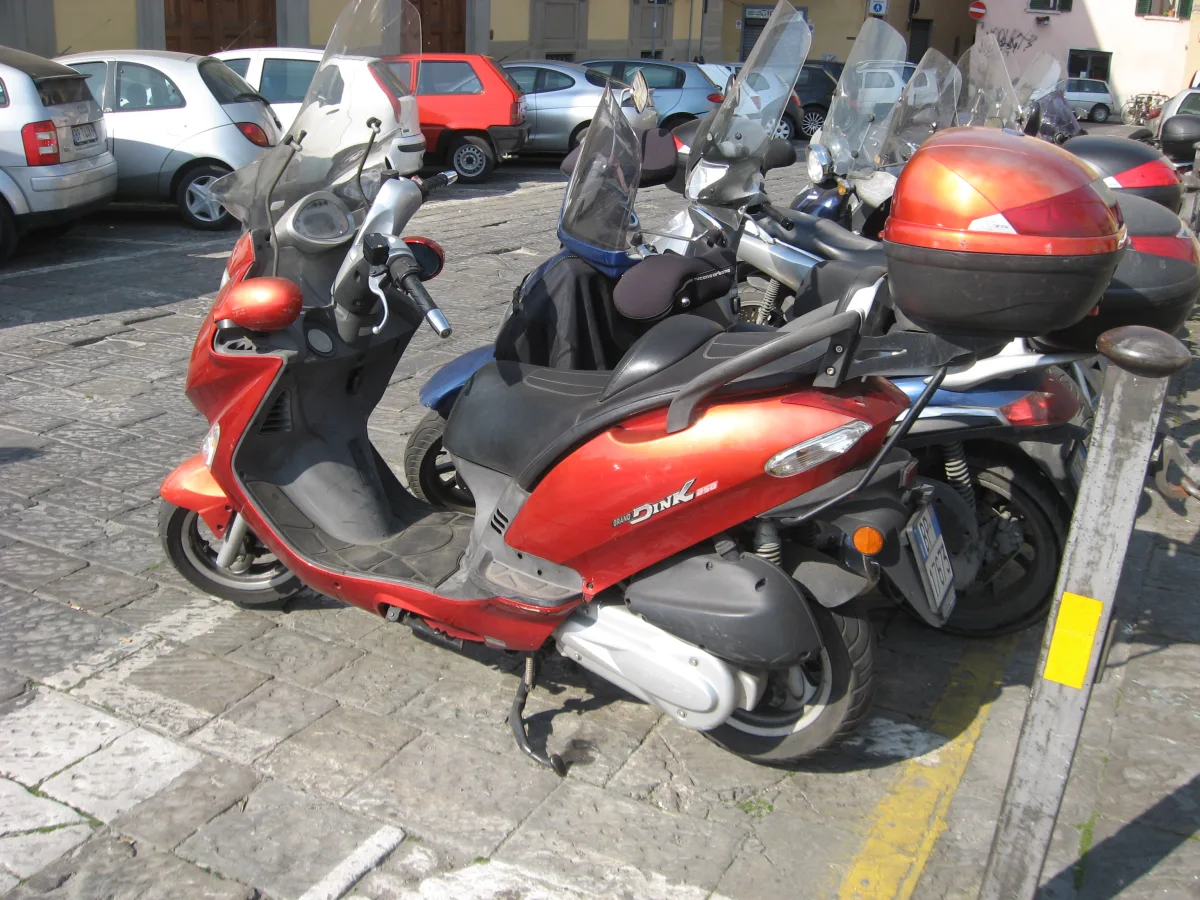
Kymco Grand Dink: mid-sized 125–250 cm³ scooter — buying guide
Kymco Grand Dink — bigger than the Dink scooter, produced since 2001 and suited not just to the city, but longer distances too. We look at the versions, engines and what to check when buying used.






Grand Dink in brief
Grand Dink — a mid-sized, comfortable scooter with larger wheels, a roomier seat and under-seat storage. It's suitable for both city and suburban riding, as it's more stable than smaller scooters.
Most commonly found are the 125 and 250 cm³ examples. This is a practical choice for those who want more comfort than the simplest city scooter offers.
Versions — what's the difference
The first generation (from 2001) has a classic look and simpler equipment. Later came updated models with a more modern design and improved features, as well as the Grand Dink S and other variants of this model.
When choosing, it's important to know the engine size: 125 cm³ is great for the city, while 250 cm³ has enough power for the suburbs and two-up riding. Always check the exact version via the documents.
Engines and transmission
Grand Dink engines are single-cylinder four-strokes, liquid-cooled, 125 and 250 cm³ (in some markets also 150 cm³). All come with an automatic transmission (CVT).
The 125 cm³ version is fine for the city and not overly long distances, while the 250 cm³ is livelier and handles better in the suburbs. Regularly change the variator belt, rollers and transmission oil.
What to check when buying a used Grand Dink
Check the plastics and bodywork — scooters often fall over on their side. Look for dents, new paint or uneven gaps and check that all lights and the instrument cluster work.
Start the engine cold and test the movement from a standstill — juddering, vibration or lack of power indicates wear in the variator or clutch. Check the brakes, tyres and battery.
Ask for the service history and compare it with the mileage. If the scooter has been standing for a long time, assess the fuel system and coolant.


Trim levels
Specific trim levels vary by year and market, so we provide a general overview based on engine size.
Grand Dink 125 / 250
From 2001Most common versions with automatic transmission.
- Spacious underseat storage
- Comfortable seating for two
- Often — ABS is not available on older models
Grand Dink by engine size
| 125 cm³ | 250 cm³ | |
|---|---|---|
| Who it suits | City and suburbs | In the city and outskirts |
| Licence | B (with age) or A1 | A2 (depending on the version) |
| Highway | Limited | Suitable for the laid-back |
| Price in the used market (relatively) | € | €€ |
If you'll mostly be riding in the city, 125 cm³ is enough. If you need more power for the suburbs and two-up trips, go for 250 cm³.
Pros
- Comfortable seating and a large under-seat storage
- More stable than smaller scooters
- Simple automatic controls
- Practical for daily use and trips
Cons
- Heavier and larger than the Dink
- Older models have a lot of miles on the clock
- Requires regular variator maintenance
Frequently asked questions
How does the Grand Dink differ from the Dink?
The Grand Dink is larger, heavier, and more stable, making it better suited for suburban areas, while the Dink is a compact city scooter.
Is the Grand Dink suitable for two-up riding?
Yes, the seating is roomier than on smaller scooters, and the 250 cm³ version has enough power for comfortable two-up riding.
What category of license do you need?
For the 125 cm³ version, an A1 or B license with a certain amount of experience usually suffices, while the 250 cm³ requires an A2 or A license. Check your documents for precise information.
Updated 2026-10-21 · Trim levels and equipment vary by market and model year — check the equipment of the specific car. · Translated automatically


