 English
 Lietuvių
 Latviešu
 Eesti
 Polski
 Русский
 Українська
 Deutsch
 Nederlands
 Čeština
 Slovenčina
 Svenska
 Norsk
 Dansk
 Suomi


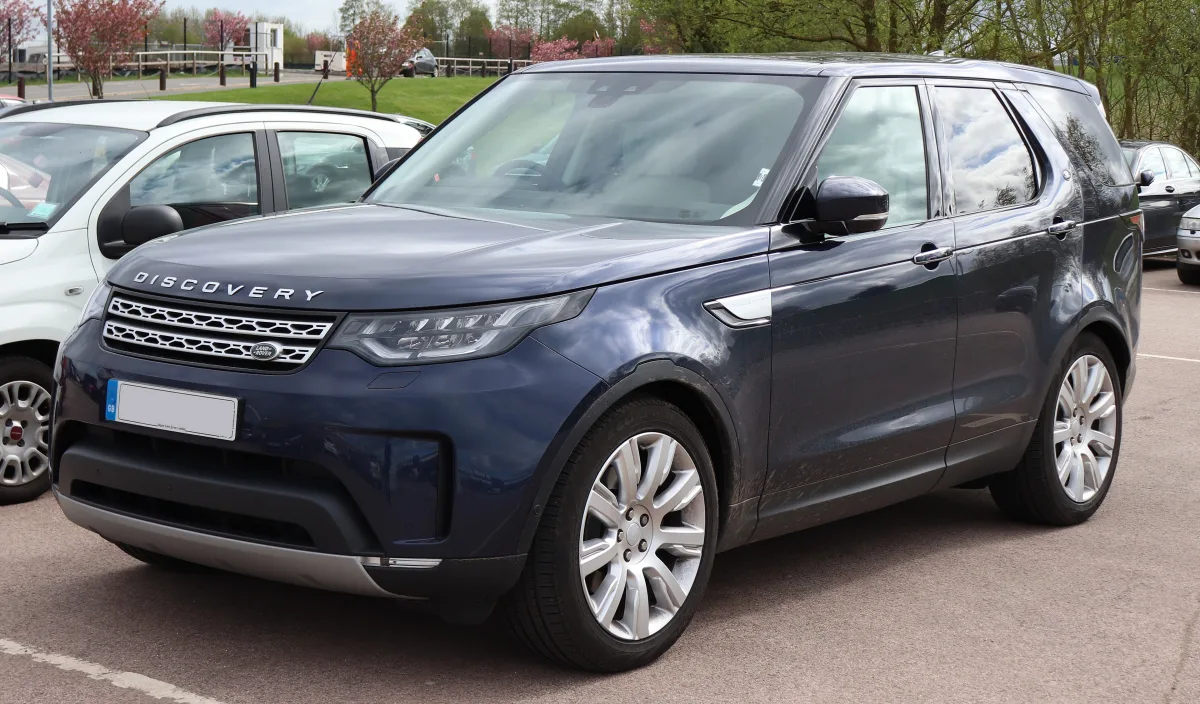
Land Rover Discovery: 4th and 5th generations, engines and trims
The Land Rover Discovery is a large seven-seater SUV that combines a spacious family car with genuine off-road capability. We look at how the Discovery 4 and Discovery 5 differ, which engines are most common, how the trims vary, and what to check before buying a used one.






Discovery at a glance
The Discovery has been in production since 1989 and has seen five generations. In the used market, you'll most often encounter the Discovery 3 (2004–2009), Discovery 4 (2009–2016), and Discovery 5 (from 2017). All come with permanent four-wheel drive, and most feature air suspension and the Terrain Response system, which adapts the car to different terrains.
The Discovery is for those who need plenty of space, seven seats, substantial towing capacity, and a vehicle that won't falter on rough roads. The trade-off is higher fuel consumption and more expensive upkeep than a typical family SUV.
Discovery 4 vs Discovery 5
The Discovery 4 (2009–2016) is a technically updated Discovery 3: angular body, body-on-frame construction, a very spacious interior, and excellent off-road capabilities. It's heavy but robust, and 2014-on models got an eight-speed automatic gearbox and a slightly refreshed look.
Discovery 5 (from 2017): redesigned with an aluminium monocoque, significantly reduced weight, smoother lines and a rear end with the number plate moved to the side. It's more comfortable and quieter on the road, with more storage and a more modern infotainment system in the cabin, while the third row of seats is often electrically adjustable.
The 2021 Discovery 5 has been refreshed: new headlights and bumpers, a new Pivi Pro infotainment system, and new 3.0-litre six-cylinder mild hybrids replacing the previous engines. Older Discovery 4 models are cheaper and simpler, but often have higher mileage.
Engines and gearboxes
The Discovery 4 is most commonly found in Europe with the 3.0-litre V6 diesel engine (TDV6 and more powerful SDV6, around 211–256 hp). The less common 5.0-litre V8 petrol engine (around 375 hp), while the earliest models had the 2.7-litre TDV6. The gearbox is automatic: up to 6-speed until 2014, then 8-speed.
The Discovery 5, up until 2021, offered 2.0-litre four-cylinder diesels Td4 (around 180 hp) and Sd4 (around 240 hp), 3.0-litre V6 diesel Td6 (around 258 hp) and 3.0-litre V6 petrol Si6 (around 340 hp). After the refresh, the range is anchored by the D250 and D300 six-cylinder diesels and P300 and P360 petrol engines.
All Discovery 5 models come with an 8-speed automatic gearbox and all-wheel drive. The most towing capacity — up to 3.5 tonnes — is found in the more powerful engine variants, so if you plan to tow a heavy trailer, check the specific vehicle's details.
What to check when buying a used Discovery
Suspension is the most common source of issues: check if the car doesn't sit lopsided after a night's rest, if the compressor doesn't work without stopping, and if there are no suspension faults in the instrument cluster. During the test drive, try out all suspension height modes.
The 2.7 and 3.0-litre TDV6 diesels in the Discovery 3 and 4 are known for timing chain issues, especially if the oil isn't changed regularly. Ask about the oil change history and listen for any unusual noises from the engine. Some early Discovery 5 2.0-litre Ingenium diesels had timing chain tensioner problems, so the cold engine shouldn't rattle after starting.
Check all the electronics: the infotainment screen, cameras, seat and third-row adjustments, and the tailgate. For diesels that have been driven mostly on short trips, inspect the particulate filter (DPF) and EGR system, and for off-road use, check the underbody, half-shaft boots, and suspension components.


Trim levels
Names and equipment vary by market and year; Land Rovers often come with a lot of extra kit, so the same trim level can vary significantly.
HSE
Discovery 4The most common Discovery 4 trim in the used market.
- Leather interior and seven seats
- Often — xenon headlights and navigation
- Often — heated seats and parking cameras
S
Discovery 5Base Discovery 5 trim.
- All-wheel drive and Terrain Response
- Simpler interior trim
- Often — coil springs instead of air suspension with 4-cylinder engines
SE
Discovery 5A sensible choice with added comfort.
- Leather seats
- Often — LED headlights
- Often — navigation and parking sensors
HSE
Discovery 5A well-equipped version for families and long journeys.
- Larger alloy wheels and better leather trim
- Often — panoramic roof
- Often — electrically adjustable third row of seats
HSE Luxury
Discovery 5The top standard specification.
- The most luxurious leather trim
- Often — a more powerful sound system
- Often — heated and ventilated seats
Comparison of Discovery 5 trims
| S | SE | HSE | HSE Luxury | |
|---|---|---|---|---|
| Who it's for | For work and the smallest budget | For the sensible buyer | For families and road trips | For comfort lovers |
| Most common wheels | 19-inch | 19–20-inch | 20-inch | 20–21-inch |
| Interior | Simpler trim | Leather | Better leather, more kit | Luxury trim |
| Price in the used market (relatively) | € | €€ | €€ | €€€ |
Most buyers' best bet is the Discovery 5 SE or HSE with the 3.0-litre Td6 or six-cylinder D250/D300 engine. The HSE Luxury is worth considering if luxury features are your top priority.
Pros
- Very spacious interior with seven seats
- Excellent off-road capabilities
- High towing capacity
- Comfortable air suspension for long journeys
Cons
- High fuel consumption
- Expensive maintenance and air suspension repairs
- Electronic issues occur more frequently than with competitors
Frequently asked questions
Which Discovery is more reliable — the 4 or 5?
Both have known weaknesses: the Discovery 4 has air suspension and the TDV6 camshaft pulley, while the Discovery 5 has electronic issues and some early 2.0-litre diesels. The key is not the generation but the specific car's service history and technical condition.
How does the Discovery differ from the Discovery Sport?
The Discovery Sport is a smaller, compact SUV with a transversely mounted engine and simpler technology. The Discovery is a large seven-seater SUV, far more capable off-road and when towing a trailer.
Isn't the Discovery 5 with the 2.0-litre engine too underpowered?
The SD4 (around 240 hp) is plenty for most daily needs, as the Discovery 5 is significantly lighter than its predecessor. If you often drive fully loaded or tow a heavy trailer, a smoother and more suitable choice is the six-cylinder diesel.
How much space is there in the third row of seats?
The third row in the Discovery isn't just for kids—adults can sit comfortably in it for shorter journeys. However, with all seven seats in use, the boot becomes quite small.
Updated 2026-10-09 · Trim levels and equipment vary by market and model year — check the equipment of the specific car. · Translated automatically


