 English
 Lietuvių
 Latviešu
 Eesti
 Polski
 Русский
 Українська
 Deutsch
 Nederlands
 Čeština
 Slovenčina
 Svenska
 Norsk
 Dansk
 Suomi


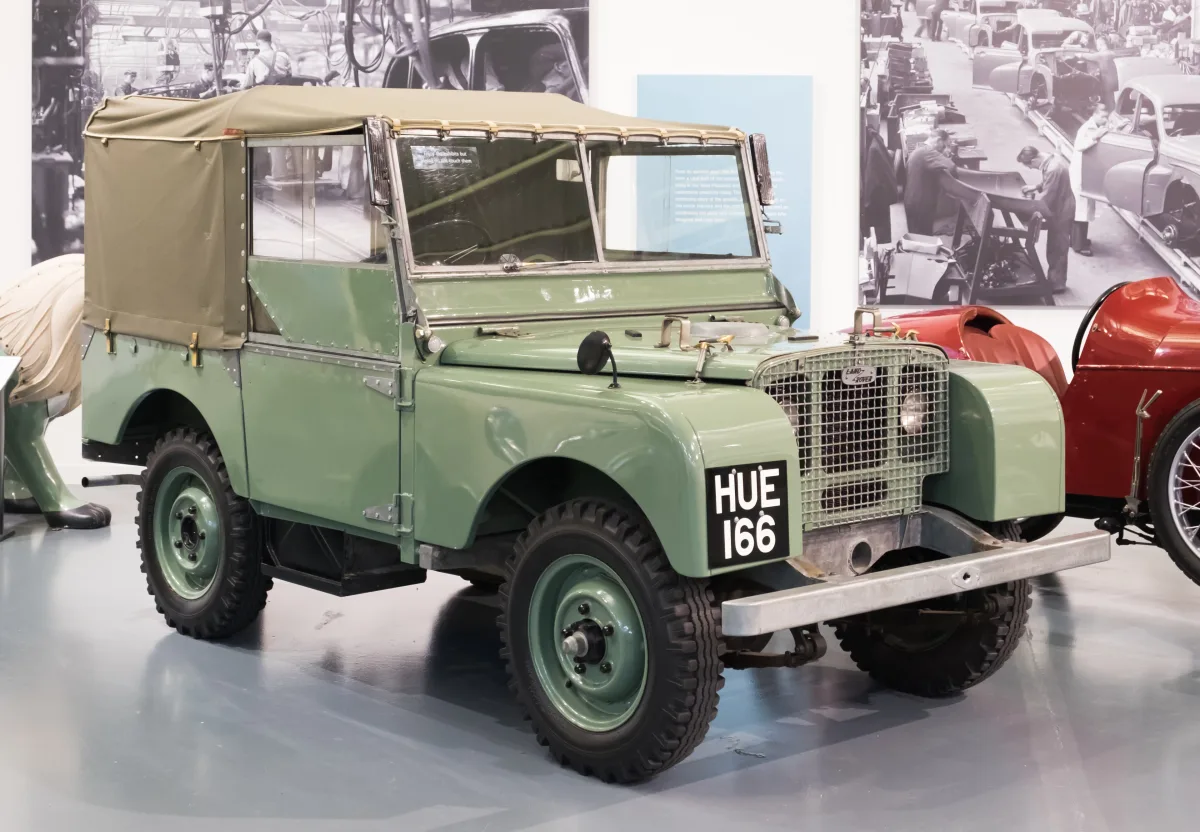
Land Rover Series: I, II, IIA and III generations, engines and trims
Land Rover Series — the family of 4x4s produced from 1948 to 1985, from which the later Defender evolved. In this article, we look at the Series I, II/IIA and III, their engines, body styles and what to check when buying a classic Land Rover.






Series in brief
The first Land Rover appeared in 1948 and was designed as a simple, versatile farm and off-road vehicle. It later became known as the Series I, with its evolution — the Series II, IIA and III — produced until 1985. The name 'Series' is a modern term referring to this family of vehicles.
These cars are renowned for their simple, robust construction: a ladder frame, aluminium body panels and uncomplicated mechanics. It's a classic 4x4, with a parts market still thriving, although its comfort and speed are very much of a bygone era.
Which one to choose
Series I (1948–1958) — the earliest and most valuable, but also the most expensive. Series II (from 1958) and IIA (from 1961) received more curved body panels and more powerful engines, so many consider them the best for daily use.
Series III (1971–1985) features a more modern dashboard and is generally easier to use, with the 109-inch version from 1979 getting a V8 engine. It's often chosen by those who prioritise practicality over the authenticity of earlier models.
Engines and gearboxes
The Series I initially came with a 1.6-litre petrol engine (around 50 hp), later followed by 2.0-litre petrol and diesel engines. The Series II / IIA and III most often featured a 2.25-litre petrol (around 70 hp) or diesel engine, while longer versions had a 2.6-litre six-cylinder engine.
The Series III 109-inch wheelbase version also offered a 3.5-litre V8 (around 90 hp). The gearbox was manual, with an additional transfer case for four-wheel drive, and wheelbases were 88 and 109 inches (Series I also had 80 and 86-inch wheelbases).
What to check when buying a used Series
The most important thing is the chassis and body construction. Rust often appears on the chassis, the rear crossmember, door sills, and the front bulkhead area, while aluminium panels can be damaged due to galvanic corrosion with steel.
Check the gearbox, transfer case, steering mechanism, and brakes—they are old and simple, but if neglected, they can pose a danger. Also, test the electrical equipment, as wiring is often aged.
Pay particular attention to documents and identification numbers—due to the numerous rebuilt cars and mixed parts, it's crucial to ensure that the body and chassis numbers match the documents.


Trim levels
Version names vary by market; we list the main body styles.
Soft Top
All generationsOpen, with a canvas roof.
- Canvas roof
- The simplest and lightest version
- Often—removable doors or side panels
Hard Top
All generationsEnclosed body with a solid roof.
- Solid roof
- A touch more comfort than the soft top
- Often — more boot space
Station Wagon
Mostly Series II / IIA and IIIPassenger estate with more seating
- More room for passengers
- Often — extra sunroofs
- Often — a longer wheelbase
Pick-up
All generationsOpen pickup body
- Load bed
- Often — a longer wheelbase
- Simple, practical design
Comparing the Series generations
| Series I | Series II / IIA | Series III | |
|---|---|---|---|
| Who it suits | For collectors and authenticity enthusiasts | For classic and daily driver enthusiasts | For practical use |
| Years of production | 1948–1958 | Around 1958–1971 | 1971–1985 |
| Engine | 1.6 l and 2.0 l | 2.25 l petrol or diesel, 2.6 l inline-six | 2.25 l, 2.6 l and 3.5 l V8 |
| Styling | Simple, early design | Curved fenders and a sturdier look | More modern front end and dashboard |
| Price in the used market (relatively) | €€€ | €€ | €€ |
Most buyers will be best suited to a Series IIA or Series III — they're still authentic, but easier to use. The Series I is for collectors, and whichever car you choose, first check the chassis.
Pros
- Simple, sturdy construction
- A lively market for parts and specialists
- Historical and collectible value
- Excellent off-road capability
Cons
- Noisy and spartan comfort
- Rust and corrosion — the main issue
- A slow car with limited safety features
Frequently asked questions
Are the Series and Defender the same?
The Defender is the direct successor to the Series, but it's a separate model. The name appeared in 1990, while the Series ended in 1985.
Which Series generation is the best?
It depends on your goal. For collectors, the Series I; for daily use, usually the Series IIA or III, as they're simpler and parts are more plentiful.
Is the Series suitable for daily use?
It can be, if you value robustness and simplicity, but you'll need to accept that it's slow, noisy, and requires meticulous maintenance.
Updated 2026-10-21 · Trim levels and equipment vary by market and model year — check the equipment of the specific car. · Translated automatically


