 English
 Lietuvių
 Latviešu
 Eesti
 Polski
 Русский
 Українська
 Deutsch
 Nederlands
 Čeština
 Slovenčina
 Svenska
 Norsk
 Dansk
 Suomi


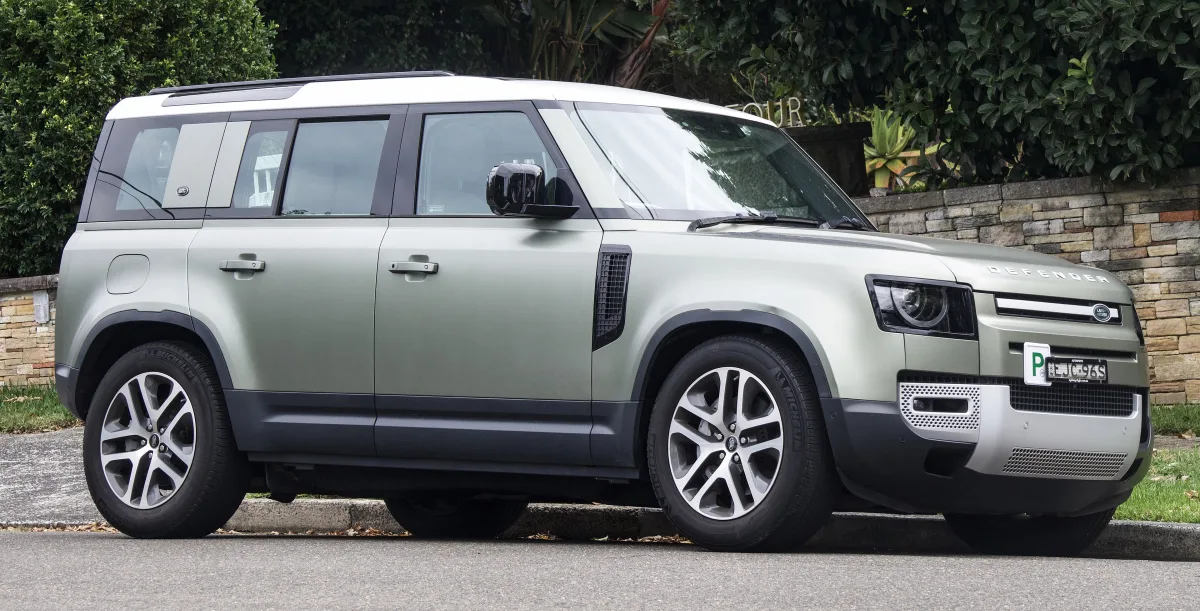
Land Rover Defender: classic and L663 generations, engines, trims
Land Rover Defender is one of the world's most famous 4x4s, available today as both a classic body-on-frame vehicle and a modern L663 generation 4x4. We look at how they differ, which engines are most popular, how the trims vary and what to check when buying a used Defender.






Defender in brief
The classic Defender (known as the Defender from 1990 until production ended in 2016) is a simple body-on-frame 4x4 designed for work and off-roading. It was offered in 90, 110 and 130 versions with various body styles, from three-door to pickup.
The all-new L663 generation Defender, introduced in 2020, features an aluminium monocoque body, independent suspension and a modern interior, yet retains excellent off-road capabilities. It is available in 90 (three-door), 110 (five-door) and, from 2022, 130 (longest, up to eight-seater) versions.
Classic Defender vs L663: what's the difference
The classic Defender is a collector's item and off-roading enthusiast's dream. It rides firmly, is noisy inside, lacks modern safety features, but is easy to maintain and modify. Well-kept examples often hold or even increase in value.
The L663 generation Defender is a luxurious 4x4 for daily use: quiet, comfortable, packed with electronics and driver aids. Often features air suspension with adjustable ride height, and all-wheel drive and off-road modes to tackle tough terrain.
Many buyers looking for a daily driver will find the L663 more suitable. The classic Defender should only be chosen when character, simplicity, and off-road capability are more important than comfort.
Engines and transmissions
The classic Defender used the 200Tdi and 300Tdi engines, later the Td5 (1998–2007), 2.4 (2007–2011) and 2.2 (2012–2016) diesel engines. Most cars have a manual transmission and a permanent four-wheel drive system with a low range.
The most popular diesels in the L663 range are initially the 2.0 four-cylinder (D200, D240), later the 3.0 six-cylinder mild hybrids D200, D250 and D300. Petrol engines include the 2.0 P300, 3.0 six-cylinder P400, plug-in hybrid P400e and powerful V8 engines (V8 and Octa versions).
All L663 generation cars come with an eight-speed automatic transmission and permanent four-wheel drive; most also have a low range and terrain response systems.
What to check when buying a used Defender
In an L663 generation Defender, check all the electronics: the infotainment system, cameras, sensors and driver assistance systems. Early models received numerous software updates and manufacturer recall campaigns — ask if these have been carried out at an official service centre.
If the car has air suspension, make sure it raises and lowers evenly, and that the car isn't leaning after an overnight stand. Check underneath — there shouldn't be any signs of off-road impact.
The classic Defender's main issues are rust on the chassis, front bulkhead and body mounts, as well as water leaks into the cabin. The Td5 engines are prone to oil seeping into the camshaft timing chain, so it's worth checking the connections.


Trim levels
Names and equipment vary by market and year; we list the most commonly found L663 generation trims in Europe.
S
L663 generationThe well-equipped base trim.
- Light-alloy wheels
- LED headlights
- Multimedia system with touchscreen
SE
L663 generationThe most popular choice — more comfort features.
- Larger wheels
- Often — matrix LED headlights
- More driver assistance systems
HSE
L663 generationThe most luxurious standard trim.
- Single-tone interior, often — ventilated seats
- Matrix LED headlights
- Often — panoramic roof
X-Dynamic
L663 generation (from 2022)A sharper, coupe-style appearance, available with S, SE, or HSE trim.
- Dark exterior details
- Distinctive interior trim
- Trim depends on the base specification
X
L663 generationThe top-spec model with all the coupe-style kit
- Large alloy wheels and contrasting roof
- Pneumatic suspension and the latest coupe-style systems
- Mostly — the most powerful six-cylinder engines
V8 ir Octa
L663 generationThe most powerful, sporty versions
- V8 petrol engine
- Sportier-tuned chassis
- Distinctive exterior and interior trim
L663 generation trim comparison
| S | SE | HSE | X | |
|---|---|---|---|---|
| Who's it for | Everyday and long-distance driving | Comfort and family | Luxury | Maximum capability |
| Wheels (most common) | 19-inch | 20-inch | 20-inch | 20–22-inch |
| Front headlights | LED | LED, often matrix | Matrix LED | Matrix LED |
| Engine (most common) | D200, D250 | D250, D300, P400 | D300, P400 | D300, P400 |
| Price in the used market (relatively) | Budget-friendly | Mid-range | Mid-range | Premium |
For most buyers, the best choice is the SE with the D250 or D300 diesel: it offers ample power and features. The X is worth considering only if you need all the off-road systems and maximum comfort.
Pros
- Excellent off-road capabilities
- Iconic, instantly recognizable design
- L663 — comfortable and quiet for daily use
- Holds its value well
Cons
- L663 electronics and software glitches
- Expensive maintenance and repairs
- The classic Defender — rugged, noisy, and rust-prone
Frequently asked questions
Which Defender engine to choose?
For most buyers, the best choice is the 3.0 six-cylinder diesel D250 or D300: it's powerful, smooth, and economical enough for a large vehicle. The petrol P400 is better for those who drive less, while the plug-in hybrid suits those who can charge regularly.
What are the differences between the Defender 90, 110, and 130?
The numbers indicate the size of the version: 90 is the short, three-door model, 110 is the five-door and most popular, and 130 is the longest with three rows of seats. Families usually opt for the 110.
Is the classic Defender suitable for daily use?
It might be, but you'll have to put up with a firm ride, noise, and minimal comfort. It's more of an off-roader, workhorse, or hobby car; the new-generation Defender is more practical for everyday use.
Updated 2026-10-09 · Trim levels and equipment vary by market and model year — check the equipment of the specific car. · Translated automatically


