 English
 Lietuvių
 Latviešu
 Eesti
 Polski
 Русский
 Українська
 Deutsch
 Nederlands
 Čeština
 Slovenčina
 Svenska
 Norsk
 Dansk
 Suomi


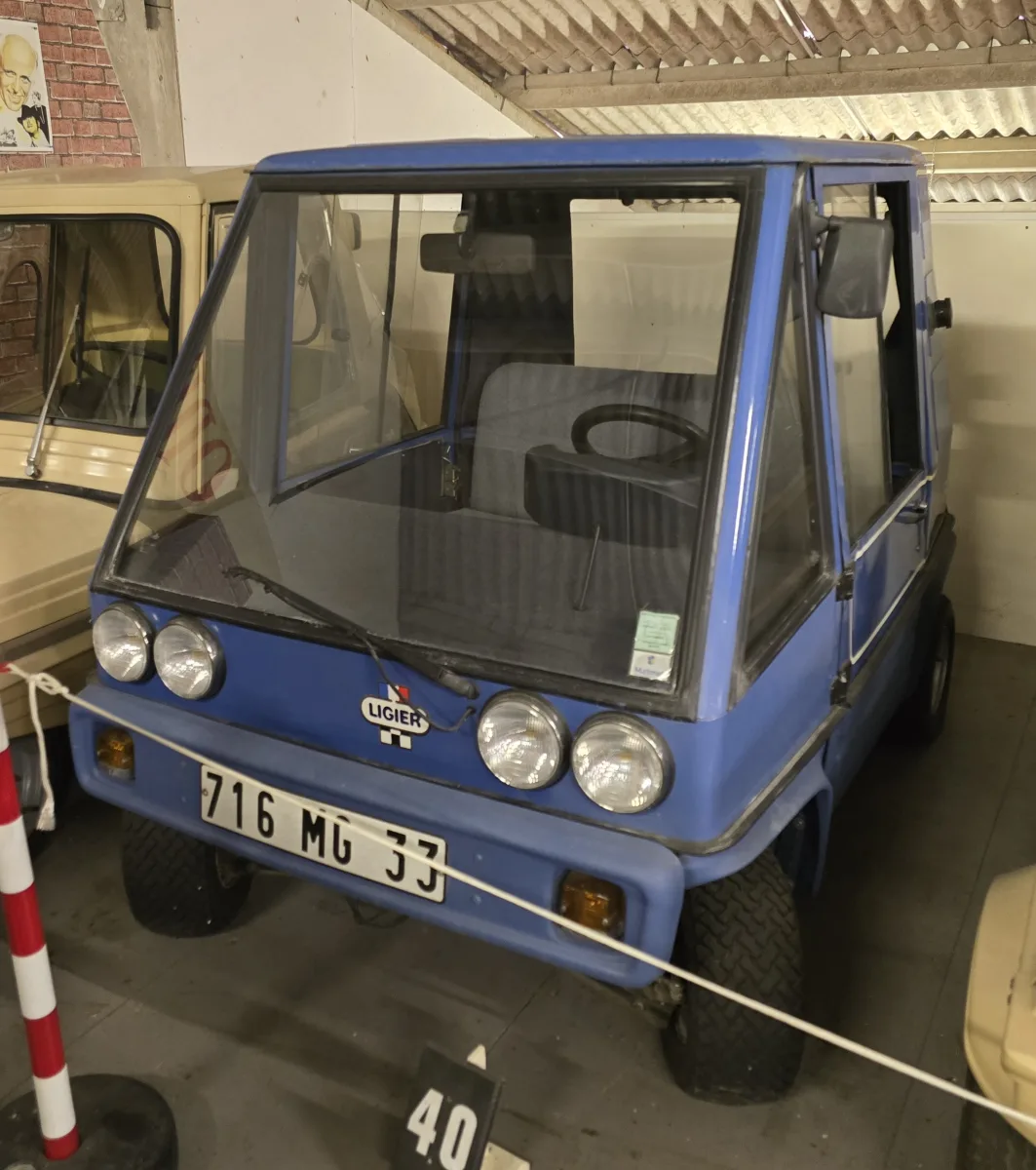
Ligier JS4: a French microcar and what the buyer needs to know
The Ligier JS4 is a two-seater four-wheeled microcar produced between 1980 and 1983. We look at what makes it special, its technology, and what to check if you come across one for sale.






JS4 in brief
The JS4 is a small two-seater microcar produced by the French Ligier, the road car division of the Formula 1 team. It was known as a 'voiture sans permis': a lightweight car that could be driven in France without a standard driver's license, making it popular with older people, young drivers, and those who had lost their driving privileges.
The JS4 was first introduced on July 25, 1980. It was designed using the cab structure of the Renault V.I. trucks, giving it an angular, flat-glass body with glass rear doors.
What sets it apart
The JS4 features a steel monocoque body with a short wheelbase and relatively wide track. Independent suspension on all four wheels, drum brakes, and a recirculating ball steering system were unusual for a car of this size.
By the end of 1981, the range was split into Standard, Luxe, and Grand Luxe versions. In its first full year of production — 1981 — around 6,900 units were sold, making it a highly successful model in its class.
Engine and technology
A single-cylinder engine mounted at the rear under the boot delivered around 3.2 hp and drove the rear wheels via a continuously variable transmission (CVT). Top speed was around 45 km/h.
In 1982, the pricier JS8 version debuted with a 125 cm³ engine, offering around 7.5 HP, while in 1984, the 50 cm³ JS4 was replaced by the JS6 with a rounder front and square headlights.
What to check when buying such a car
The manufacturer's issues were well-known: a heavy steel body stressed the rear half-shafts and weak transmission, and the steel rusted. Check the condition of the half-shafts and gearbox, as well as the body floor, sills, and underbody.
Also, find out how such a vehicle is registered in Lithuania, what category of driver's license is required, and if the documentation is in order. Parts can be sourced through Ligier and microcar clubs.


Trim levels
During JS4 production, three trim levels were offered, so we describe them below.
JS4 Standard
From the end of 1981Base version.
- Basic trim
- Steel body
- 50 cm³ single-cylinder engine
JS4 Luxe
From the end of 1981Mid-range version with better equipment.
- Often — additional trim details
- Often — better interior trim
- 50 cm³ single-cylinder engine
JS4 Grand Luxe
From the end of 1981Top-spec version.
- Often — the most luxurious trim
- Often — extra equipment
- 50 cm³ single-cylinder engine
Ligier JS4 comparison of versions
| Standard | Luxe | Grand Luxe | |
|---|---|---|---|
| Who it suits | For everyday use | For comfort | For maximum equipment |
| Engine | 50 cm³, around 3.2 hp | 50 cm³, around 3.2 hp | 50 cm³, around 3.2 hp |
| Interior | More basic | Better trim | Best trim |
| Price in the used market (relatively) | €€ | €€ | €€ |
This is a collectible microcar, better suited to city driving and events. Choose based on condition and history.
Pros
- Small and easy to park
- Original French design
- Independent all-wheel suspension
- Formula 1 team heritage
Cons
- Very weak engine and low speed
- Steel body rusts
- Rare, parts need to be sourced through clubs
Frequently asked questions
Does the JS4 require a driver's license?
In France, it was intended to be driven without a standard license, but rules vary by country, so check local requirements before buying.
How does the JS4 differ from the JS8?
The JS8 has a more powerful 125 cm³ engine, around 7.5 hp, and required a different category license than the JS4.
Is the JS4 suitable for daily use?
It may be suitable for short city trips, but due to its low speed and poor safety, it's better for events and leisure.
Updated 2026-10-21 · Trim levels and equipment vary by market and model year — check the equipment of the specific car. · Translated automatically


