 English
 Lietuvių
 Latviešu
 Eesti
 Polski
 Русский
 Українська
 Deutsch
 Nederlands
 Čeština
 Slovenčina
 Svenska
 Norsk
 Dansk
 Suomi


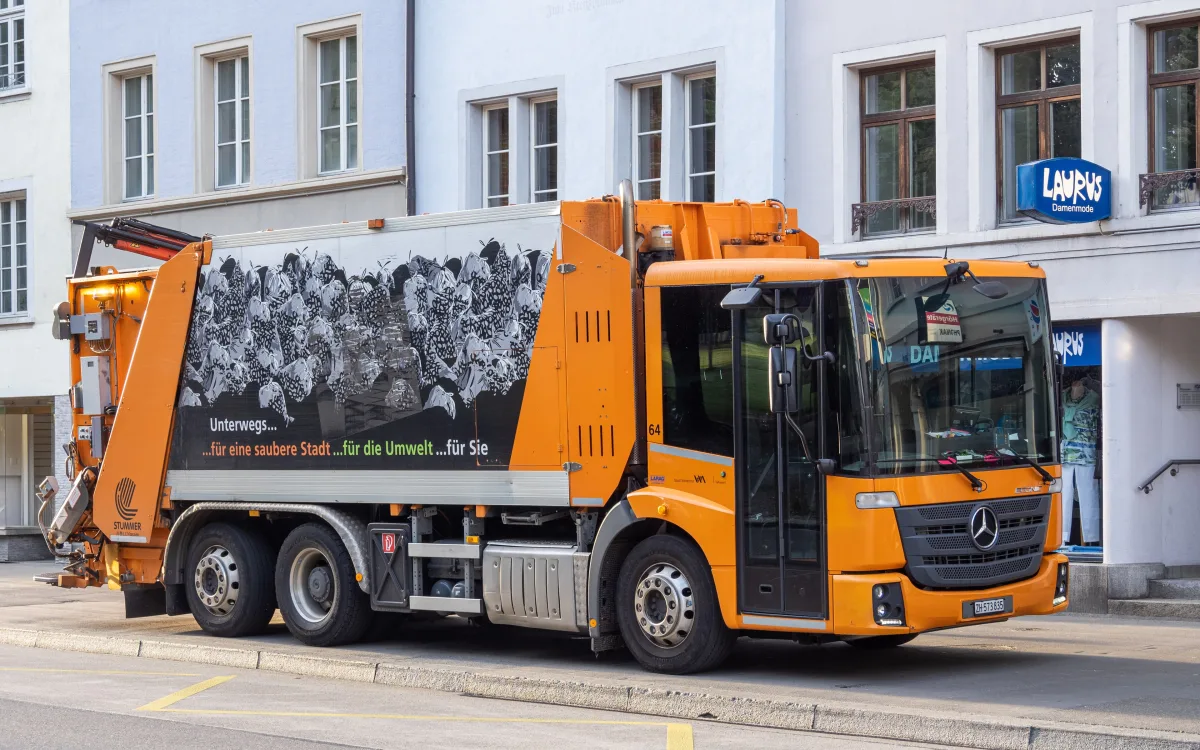
Mercedes-Benz Econic: municipal truck, generations and what to check
Mercedes-Benz Econic (from 1998) — a low-entry municipal truck, most often used for waste collection. We look at the generations, engines, and what's important to check when buying used.






Econic in brief
Econic — the Mercedes-Benz truck with a low driver's cab designed for municipal work: frequent entry and exit from the cab, city driving, and waste collection routes. Low entry and a wide field of vision are its main advantages.
The Econic debuted in 1998 and has since been updated several times. It can be found with waste compaction equipment, water and sewage systems, snowplow bodies, and other specialty bodies.
Generations
Designations indicate the permissible weight and power, for example, 1835 means roughly 18 tonnes and 350 hp. The Econic is offered with two, three, or more axles, depending on the body's purpose.
There's also a natural gas version (NGT) designed to reduce emissions in the city, and in recent years, the electric eEconic.
Engines and transmissions
Different generations of the Econic used Mercedes-Benz six-cylinder diesel engines — older models, for example, OM 906 and OM 457, later Euro VI engines. The natural gas version uses a gas engine.
The transmission is often automatic (e.g., Allison) or automated — this is very suitable for municipal work with frequent stopping and starting.
What to check when buying a used Econic
A municipal truck works constantly, stopping and starting, so brakes, transmission, and suspension take a real beating. Check the brakes, auto box, and suspension if present.
Inspect the body: the refuse press, lifting mechanism, hydraulics, and chassis. Check for oil leaks and corrosion, especially on the frame and body mounts. See how the cab doors and steps operate.
Start the cold engine yourself and check for smoke or leaks. In Euro VI trucks, pay attention to the AdBlue and DPF condition. Match the mileage with operating hours—the refuse truck body works even when stationary.


Generations
Names and equipment vary by market and year; we list generally described versions, but check the exact specification in the truck's documents.
Econic su atliekų presu
various yearsMostly used for municipal waste collection.
- Refuse press and lifting mechanism
- Low cab
- Heavy use
Econic su kita specialia įranga
various yearsSnow clearing, water and sewage equipment, or tanker.
- Special bodies
- Additional hydraulics
- Check the condition of extra equipment
Econic NGT (dujinė)
later yearsLower emission version for city use.
- Petrol engine
- Special gas tanks
- Check the condition of the gas system
eEconic (elektrinė)
latest yearsElectric utility version.
- Electric transmission
- Battery system
- Used offerings are still limited
Comparison of versions
| Dyzelinis | Dujinis (NGT) | Elektrinis | |
|---|---|---|---|
| Who it suits | For everyday utility work | For urban zones with environmental regulations | For zero-emission routes |
| Transmission | Diesel engine | Petrol engine | Electric transmission |
| Specific check | DPF and AdBlue | Exhaust system | Battery condition |
| Price in the used market (relatively) | €€ | €€ | €€€€ |
When buying a used Econic, the most important thing is the condition of the cab and transmission. Choose a truck with a clear service history.
Pros
- Low cab — easy to climb in and out frequently
- Good visibility in urban areas
- Suitable for municipal work
- Wide range of special body options
Cons
- Municipal work really wears out the brakes and transmission
- Body repairs are expensive
- Uncomfortable for long journeys
Frequently asked questions
What is the Econic for?
Primarily for municipal work — waste collection, cleaning and other city tasks where low entry and good visibility are crucial.
Is the Econic suitable for long-distance trips?
No, it's designed for city work. For long-distance trips, consider other Mercedes-Benz models.
What sets a used waste truck apart?
High wear and tear: frequent braking, body mechanisms, and corrosion. Therefore, it's important to thoroughly inspect the body and service history.
Updated 2026-10-21 · Trim levels and equipment vary by market and model year — check the equipment of the specific car. · Translated automatically


