 English
 Lietuvių
 Latviešu
 Eesti
 Polski
 Русский
 Українська
 Deutsch
 Nederlands
 Čeština
 Slovenčina
 Svenska
 Norsk
 Dansk
 Suomi


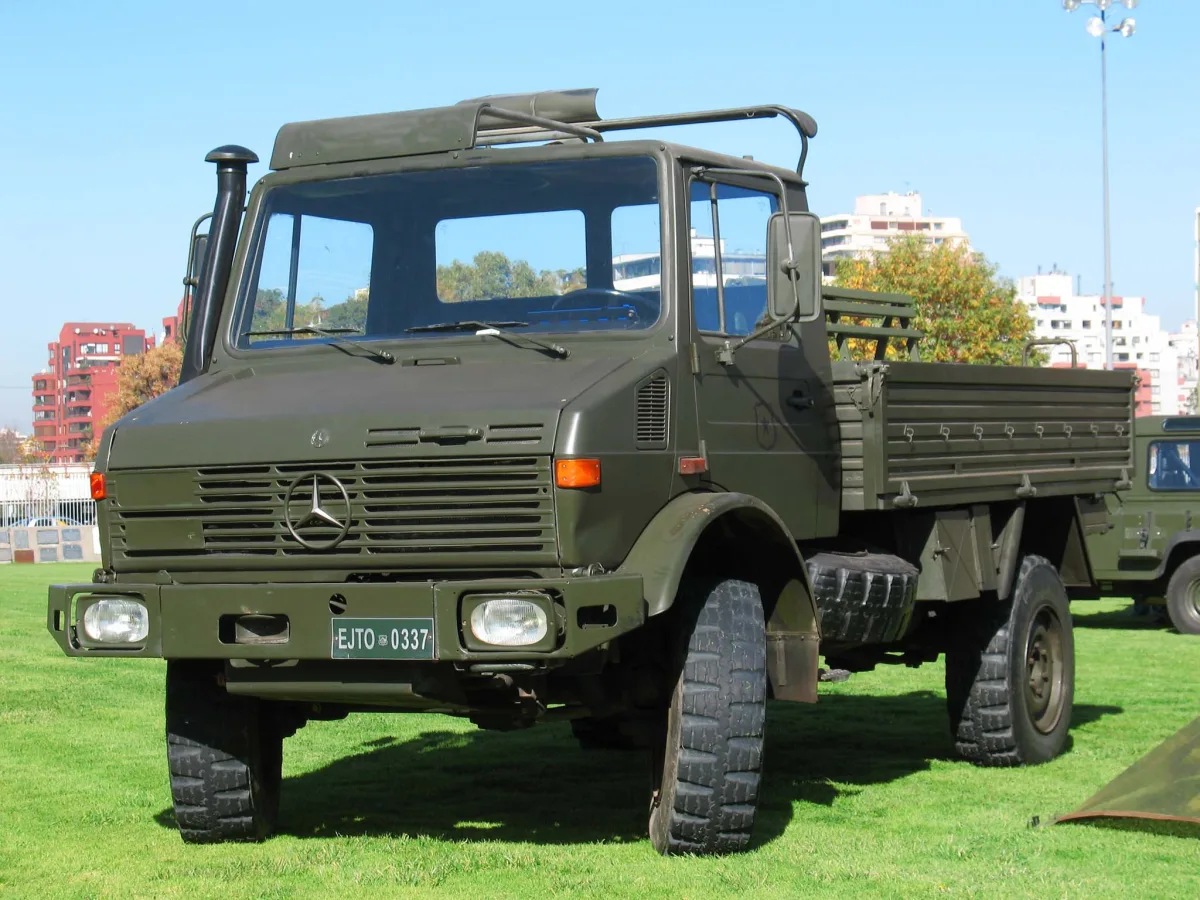
Mercedes-Benz Unimog: generations, purpose and what to check when buying
The Unimog is a versatile all-terrain truck and equipment carrier, produced since 1948. We look at classic and modern series, their purposes, engines, and what's important to check when buying a used Unimog.






Unimog in brief
The Unimog was designed as a versatile agricultural and forestry machine, but it quickly became more than just a tractor: it drives on roads like a truck and off-road where conventional machinery can't go. Typical features include high ground clearance, locking differentials, and the ability to mount attachments both front and rear.
In Lithuania, the Unimog is most commonly used by road and municipal services (snow clearing, grass cutting, road maintenance), foresters, farmers, rescue services, and the military. Due to its longevity and specific purpose, prices for used Unimogs often exceed those of similarly aged conventional trucks.
Series — what's the difference
Classic Unimogs (such as the U 1300 L and earlier series) are simple, mechanical, with a narrow cab and sturdy frame. They are valued for their reliable construction and straightforward maintenance, but driving comfort and speed no longer meet modern expectations, and parts can sometimes be hard to find.
Since around 2000, more modern Unimogs have been produced with more comfortable cabs, better ergonomics, and engines meeting several Euro emission standards. They are divided into lighter utility carriers (for municipal and agricultural use) and heavier models that resemble all-terrain trucks.
Latest-generation Unimogs meet the highest emission standards, feature more electronics and assist systems. When buying a newer used Unimog, it's crucial to determine its Euro emission standard and ensure all its systems are operational.
Engines and transmissions
Unimog engines are Mercedes-Benz diesels, varying in displacement and power depending on the series and year. Older versions often feature simple naturally aspirated or turbocharged engines, while newer ones come with modern turbocharged engines and emission control systems (AdBlue, particulate filters).
Transmissions are usually manual, with many gears that allow for very slow driving with attachments. In newer versions, you might also find automated transmissions and hydrostatic drives. Be sure to check which specific transmission is installed—this affects both comfort and repair costs.
What to check when buying a used Unimog
Since Unimogs often work under harsh conditions, first assess the frame, axle mounts, and portal axles: issues like cracks, oil leaks, corrosion, and deformations indicate heavy use. Check if the differential lock works and if there are no damaged cardan shafts.
If you plan to work with attachments, check the power take-off shafts (PTO) and hydraulics: ensure there's no oil leakage and that the lifting mechanisms operate smoothly. Vehicles used with snowplows or mowing equipment often show more wear on the front end.
Inspect the mileage and engine hours via service records: both kilometres and engine hours are crucial. In newer cars, check the condition of the AdBlue and particulate filter, and for all vehicles, verify the permitted weight and driver's license category.


Trim levels and versions
Trim levels and versions vary by market and year; below are the most commonly encountered versions.
Klasikinis Unimog
Previous seriesA basic mechanical 4x4 truck with an open or standard cab.
- Often a flatbed or military version
- Simple mechanics and a sturdy frame
- Minimal comfort, limited speed
Įrankių nešiklis
From around 2000 onwardsDesigned for municipal and agricultural tasks with bodies and attachments.
- Often with front and rear attachment points
- Power take-off shafts
- A more comfortable cab than in classic models
Sunkesnis Unimog
From around 2000 onwardsA version more akin to a truck for loads and special bodies.
- Increased permissible weight
- Often — a side-loading platform, crane or winch
- Mostly — manual transmission
Naujausios kartos Unimog
Latest versionsModern version with newer engines and electronics
- Meets newer Euro standards
- Often — AdBlue and particulate filter
- More assistance systems and comfort features
Comparison of versions
| Klasikinis | Įrankių nešiklis | Sunkesnis | Naujausias | |
|---|---|---|---|---|
| Who it's for | For collectors and light-duty tasks | For municipal and agricultural tasks | For loads and bodies | For heavy-duty daily work |
| Cab | Basic | More Comfortable | Comfort | Modern |
| Engine Installation | Limited | Wide Selection | By Body Type | Wide Selection |
| Emission Systems | Simple | By Year | By Year | Often AdBlue and DPF |
| Price in the Used Market (Relatively) | € | €€ | €€€ | €€€ |
If you need a versatile tool for municipal or agricultural tasks, consider a 2000 or newer Unimog with documented condition. The classic Unimog is better suited for enthusiasts and light-duty work.
Pros
- Distinctive off-road capability and high ground clearance
- Versatile — compatible with a variety of attachments and bodies
- Robust construction and longevity
- Holds its value well in the used market
Cons
- High price for a used vehicle
- Slower speed and less comfort on the road compared to conventional trucks
- Special parts and service not available everywhere
Frequently asked questions
Just how versatile is the Unimog?
It's suitable for both hauling loads and working with attachments — mowers, snow ploughs, hydraulic equipment. The key is choosing the right version for your needs: a lighter flatbed differs from a heavier truck-type model.
What category of license do you need to drive it?
This depends on the permitted weight: lighter versions may require a lower category, while heavier ones need a C category. Check the exact weight in your registration documents.
Is the Unimog worth buying for private use?
If you have a large plot of land, forest, or farm and will genuinely use its capabilities — yes. However, purchase and maintenance are more expensive than a typical SUV, so realistically assess your needs before buying.
Updated 2026-10-21 · Trim levels and equipment vary by market and model year — check the equipment of the specific car. · Translated automatically


