 English
 Lietuvių
 Latviešu
 Eesti
 Polski
 Русский
 Українська
 Deutsch
 Nederlands
 Čeština
 Slovenčina
 Svenska
 Norsk
 Dansk
 Suomi


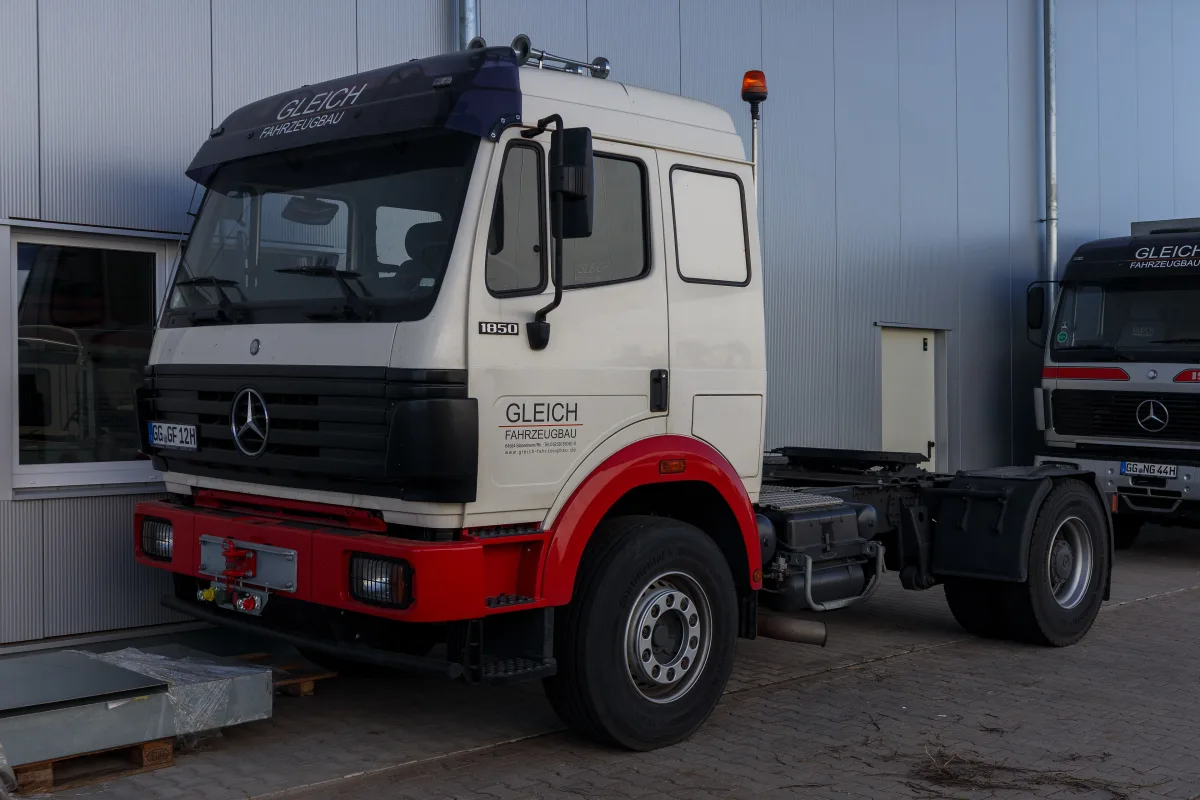
Mercedes-Benz SK: generations, engines, and what to check
Mercedes-Benz SK ("Schwere Klasse") — the heavy-duty truck series produced from 1988 to 1998, replacing the NG and once serving as the backbone of Mercedes' heavy-duty tractors. We look at its versions, engines, and what to check when buying a used SK.






SK in brief
SK ("Schwere Klasse", Ger. heavy class) was Mercedes-Benz's heavy-duty truck series, encompassing tractors, rigid trucks, and cargo vehicles. It was known for its robust construction and was widely used across Europe.
Today, the SK is a classic truck: it's sought after by collectors, heavy-duty operators, and those who appreciate straightforward, reliable mechanics.
Generations — what sets them apart
The SK designation reflects the gross weight and power: for instance, 1850 indicates roughly 18 tonnes gross weight and around 500 hp. The letters after the number denote the purpose and cab type.
Over its long production run, the SK was updated several times, so early and late models differ in equipment, engines, and cab comfort. With the introduction of the Actros in 1996, SK production gradually ceased.
By the end of production in 1998, all SKs are now vintage. Their Euro class is usually Euro 1 or Euro 2, making them incompatible with modern emissions zones.
Engines and transmissions
SK engines are diesel V6 and V8 units, with power ranging from around 250 to over 500 hp. Commonly encountered are the OM 441 (V6) and OM 442 (V8) families.
Gearboxes are usually manual, often with an overdrive. It's worth test-driving them: the condition of the synchromesh and synchronizers is particularly important due to the heavy loads.
Engines are considered robust if they've been properly maintained. Before buying, ask about the oil change history, the condition of the cooling system, and whether the engine has been overheated.
What to check when buying a used SK
First and foremost — the frame and cab. Older trucks often have corrosion at the cab corners, seams, fenders, and crossmembers, and the cab lift system should operate smoothly.
Start the engine cold and assess the exhaust, oil pressure, and noises. Check the pneumatic system, brakes, and hydraulic units — such as the steering or hoist mechanism.
Check the odometer against the records, and ensure the vehicle meets the technical inspection requirements in the documents. If you're buying it for a collection, originality is also important.


Versions
The SK was produced in several versions; we list the most commonly encountered.
SK vilkikas
Full productionHeavy-duty tractor with a semi-trailer.
- Often — a sleeper cab
- High power output
- Convenient for long hauls
SK savivartis
Common build versionFor construction and quarry work.
- Hydraulic cab lift
- Reinforced chassis
- High-mileage vehicles
SK su kranu
Common build versionWith hydraulic crane for loading cargo.
- Additional hydraulic units
- The condition of the crane determines the value
- Often — flatbed
SK krovininė važiuoklė
All versionsWith flatbed, van, or tanker body.
- Simple cab construction
- The condition of the cab determines the value
- Often — drop-side body
Originali klasikinė būklė
Any versionCars that have retained their factory appearance.
- Original components
- Often — collector's value
- Pricier than practical
Comparison of SK versions
| Vilkikas | Savivartis | Su kranu | Krovininė važiuoklė | |
|---|---|---|---|---|
| Who it's for | For long-distance drives | For towing | For towing and hauling | For distribution |
| Cab | Often a sleeper | Day cab | Day cab | Depends on the version |
| Most important to check | Engine and gearbox | Frame and hydraulics | Steering and hydraulics | Body and chassis |
| Price in the used market (relatively) | €€ | €€ | €€ | €€ |
For work, it's usually best to choose a SK with a sound chassis and checked engine, considering the body. For collectors, originality and condition are key.
Pros
- Reliable, well-known design
- Powerful V6 and V8 engines
- Classic, sought-after truck
- Parts and used assemblies supply is better than for rarer models
Cons
- An old car means corrosion and wear are common
- High fuel consumption
- Euro class restricts work in low-emission zones
Frequently asked questions
What do the numbers in the SK name mean?
The first digits indicate the approximate total weight in tonnes, and the last two are the power divided by ten. For example, 1850 means roughly an 18-tonne truck with around 500 HP.
Is the SK still usable?
Yes, but due to its age, its Euro standard does not meet the requirements of modern emissions zones. Check where it can be operated and whether it meets the technical inspection requirements.
How does the SK differ from the NG?
The SK is the successor to the NG, introduced in 1988: it has a more modern cab, newer engines, and more equipment. The NG is simpler and older, so it is often purchased as a classic or a cheap workhorse.
Updated 2026-10-21 · Trim levels and equipment vary by market and model year — check the equipment of the specific car. · Translated automatically


