 English
 Lietuvių
 Latviešu
 Eesti
 Polski
 Русский
 Українська
 Deutsch
 Nederlands
 Čeština
 Slovenčina
 Svenska
 Norsk
 Dansk
 Suomi


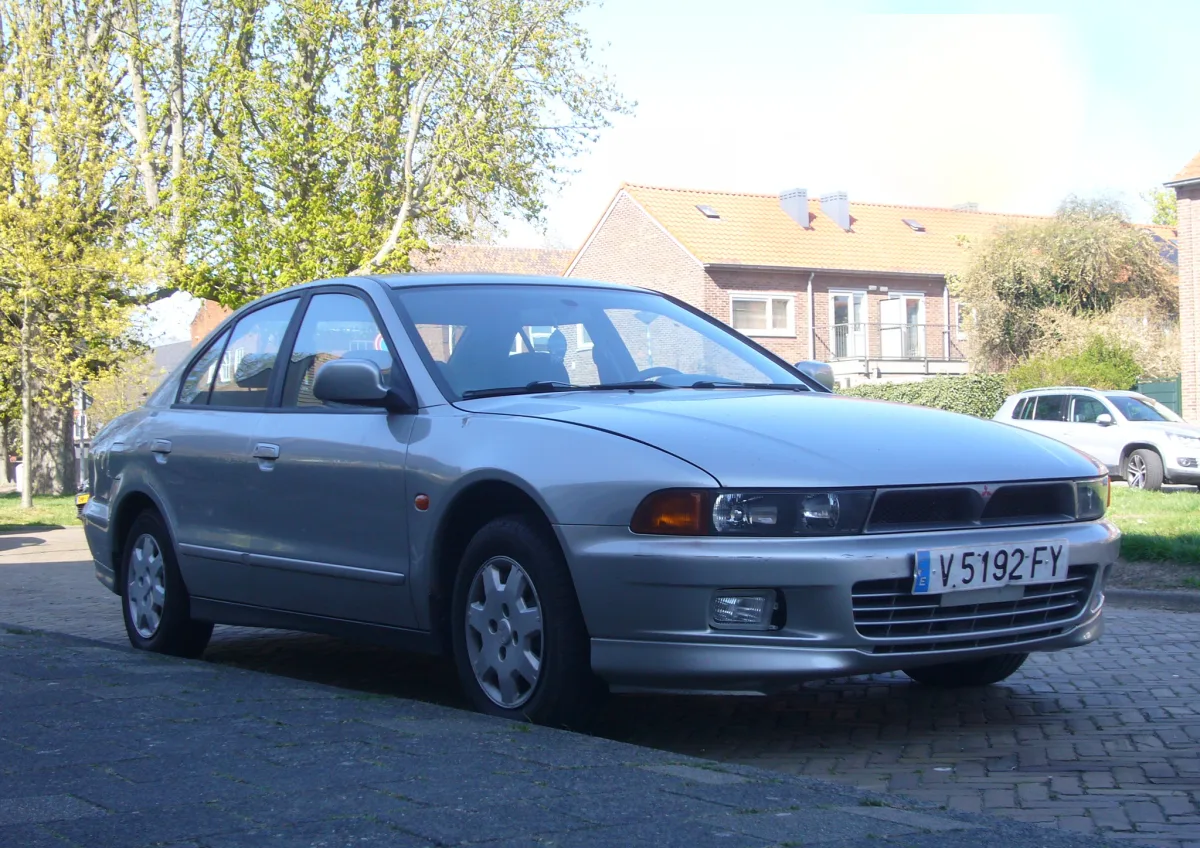
Mitsubishi Galant: generations, engines and trims
The Mitsubishi Galant is a mid-size sedan produced from 1969 to 2012 in several generations. In Lithuania, models from the 1990s are most commonly encountered, along with later models imported from the USA. We'll look at the generations, engines, and buying tips.






The Galant in brief
The Galant was a reliable, spacious, and well-equipped mid-size car offered as a sedan, hatchback, and estate. It was known for its robust engineering and reasonably modern features.
Today, these are generally older cars, so it's important to assess the condition of the specific example rather than relying on the model's reputation.
Which generation to choose
The 1992–1996 and 1996–2003 generations of the Galant were the most widespread in Europe. The later (1996–2003) model is more modern and often comes with more safety features.
From 2003 to 2012, the Galant was primarily aimed at the US market, so such cars in Lithuania are usually imported from there; their specifications, equipment, and service history differ from European models.
Engines and transmissions
In Europe, the most common petrol engines are the 1.8 and 2.0-litre units, along with the 2.5-litre V6. Some versions featured a gasoline direct injection (GDI) engine, which is more sensitive to fuel quality.
Transmissions come in manual or automatic. The condition of automatics should be tested while driving.
What to check when buying a used Galant
Check the body for corrosion (dents, wheel arches, boot floor), verify the timing belt change history and cooling system. Timing belt maintenance is especially crucial for the V6 engine.
Test the automatic gearbox (jerks, slippage), check the suspension and electrical equipment. Imported cars need a clear history and mileage.


Trim levels
Names and equipment vary by market and year; we list the trims most commonly found in Europe.
Bazinė
1992–2003The most basic version with a smaller engine.
- Often a 1.8-litre engine
- More basic interior trim
- Often basic alloy wheels
GLS
1992–2003Common mid-range trim for daily use.
- Often a 2.0-litre engine
- Often electric windows
- Often air conditioning
V6
1996–2003More powerful version with a 2.5-litre V6 engine.
- 2.5-litre V6 engine
- Often — automatic transmission
- Often — more luxurious interior
Importuotos versijos
2003–2012Later models imported from the USA.
- Often — larger engines
- Different equipment to European models
- A thorough history check is essential
Comparing versions
| Bazinė | GLS | V6 | |
|---|---|---|---|
| Who it suits | Budget-friendly sedan | For daily use | Comfort and power |
| Engine | Mostly 1.8-litre | Often 2.0 l | 2.5 l V6 |
| Interior | Basic | More Comfortable | Luxurious |
| Price in the used market (relatively) | Budget-friendly | Budget-friendly | Mid-range |
For most buyers, the best choice is a well-maintained car with a 2.0 l engine. If you want more power, go for the V6, but thoroughly check its condition.
Pros
- Spacious and comfortable interior
- Often robust engineering
- Good standard equipment
- Not expensive in the used market
Cons
- Many cars are old and may have rust
- The history of imported cars is harder to verify
- Spare parts are rarer for some versions
Frequently asked questions
Is the Galant a reliable car?
It's often considered sturdy, but the key is the specific car's maintenance and condition.
How do the European and US Galant differ?
Cars destined for the US market (especially from 2003 onwards) have different equipment and engines, so the specifications don't match those in Europe.
Is the V6 engine better?
It's more powerful and quieter, but it's more expensive to maintain, and the timing belt must be replaced on time.
Updated 2026-10-09 · Trim levels and equipment vary by market and model year — check the equipment of the specific car. · Translated automatically


