 English
 Lietuvių
 Latviešu
 Eesti
 Polski
 Русский
 Українська
 Deutsch
 Nederlands
 Čeština
 Slovenčina
 Svenska
 Norsk
 Dansk
 Suomi


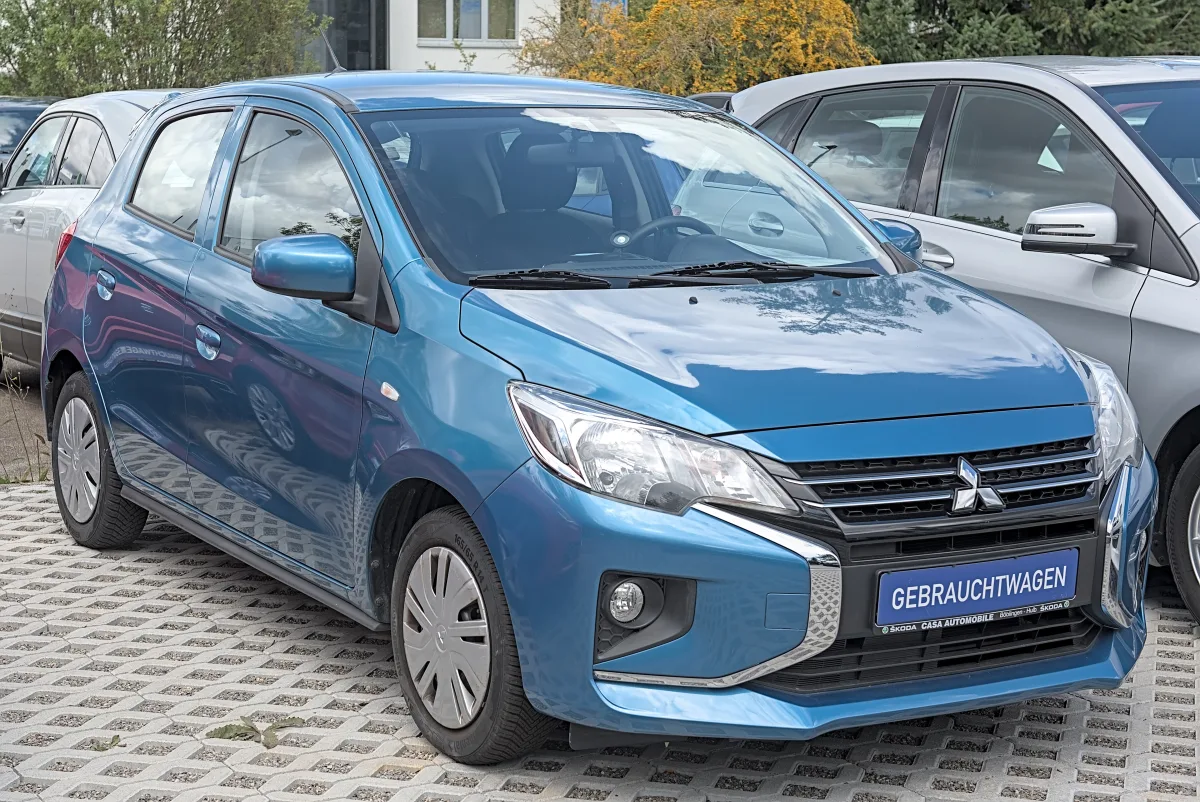
Mitsubishi Space Star: two generations, engines and trims
Mitsubishi Space Star — a name that two different cars have worn in Europe: a compact MPV (1998–2005) and a small city hatchback (from 2012 onwards). We look at both, their engines, trims and what to check when buying a used Space Star.






Space Star in brief
The first-generation Space Star was a compact MPV with a high roof and plenty of space for passengers. It was taller than a typical hatchback and designed for families and daily use.
The second-generation Space Star (from 2012) is a small, economical city hatchback focused on affordability and low running costs. It's a completely different car, despite sharing the same name.
Which one to choose
The first generation is quite old now, so choosing it is a matter of price and practicality. The key thing is the body condition, as cars of this age are at high risk of corrosion.
The second generation is the more modern choice. It's light, economical and suits city drivers who don't need a lot of power. After updates, it got a new front end, improved multimedia and a bit more kit.
Engines and gearboxes
First-generation cars had petrol engines (around 1.3–1.8 litres) and a diesel option. A manual gearbox was most common, although automatics were available.
The second-generation Space Star comes with compact three-cylinder petrol engines — 1.0 and 1.2 litres (around 70–80 hp). The gearbox is either a 5-speed manual or a continuously variable transmission (CVT). These are economical engines, but they lack dynamism at urban speeds.
What to check when buying a used Space Star
First, inspect the body for rust: sills, wheel arches, and the floor. In the case of an older car, it's important to check the engine condition and suspension as well.
For the newer generation, check the CVT gearbox: it should operate smoothly, without juddering or unusual noise. Review the service history and whether any manufacturer recall work has been done.
Test the electronics: air conditioning, multimedia, cameras, and sensors. Before buying, check the car's history via its service records.


Trim levels
Names and equipment vary by market and year; we list the most common second-generation trims found in Europe.
Inform
second generationBase trim with essential equipment.
- Steel wheels
- Basic multimedia system
- Often — manual air conditioning
Invite
second generationTrim with more comfort features.
- Often — alloy wheels
- Often — automatic air conditioning
- Often — a larger infotainment screen
Intense
second generationA higher trim level with more kit.
- Often — xenon headlights and lightweight alloy wheels
- Often — a rear-view camera
- Often — a colour infotainment screen
Instyle
second generationThe fully-loaded version.
- Often — a more premium interior finish
- Often — LED headlights or extra exterior details
- Often — more driver assistance systems
Comparing second-generation trims
| Inform | Invite | Intense | Instyle | |
|---|---|---|---|---|
| Who it's for | For budget-conscious buyers | For daily driving | For comfort | For maximum kit |
| Most common searches | 14–15 column | 15 column | 15 column | 15 column |
| Headlights | Halogen | Halogen | Halogen, often with LED details | LED or LED details |
| Engine | 1.0 or 1.2 | 1.0 or 1.2 | 1.2 | 1.2 |
| Price in the used market (relatively) | € | € | €€ | €€ |
For most buyers, the best choice is the Invite or Intense with the 1.2 engine. Go for the Instyle for the most kit, or the Inform if lowest price is key.
Pros
- Very low running costs
- Economical, small-displacement engines
- A convenient city car, easy to park
- Affordable price in the used market
Cons
- Weak performance on out-of-town roads
- Simpler interior trim and less comfort
- First-generation cars are prone to rust
Frequently asked questions
Is the Space Star suitable for daily use?
Yes, especially in the city. The second-generation model is economical and easy to handle, but its performance might feel lacklustre on longer journeys.
What are the differences between the first and second-generation Space Star?
The first is a tall, compact hatchback, while the second is a small city hatchback. They are completely different cars, despite sharing the same name.
Is the Space Star economical?
The second-generation version is economical due to its small engine and light body, but real-world fuel consumption depends on your driving style and routes.
Updated 2026-10-17 · Trim levels and equipment vary by market and model year — check the equipment of the specific car. · Translated automatically


