 English
 Lietuvių
 Latviešu
 Eesti
 Polski
 Русский
 Українська
 Deutsch
 Nederlands
 Čeština
 Slovenčina
 Svenska
 Norsk
 Dansk
 Suomi


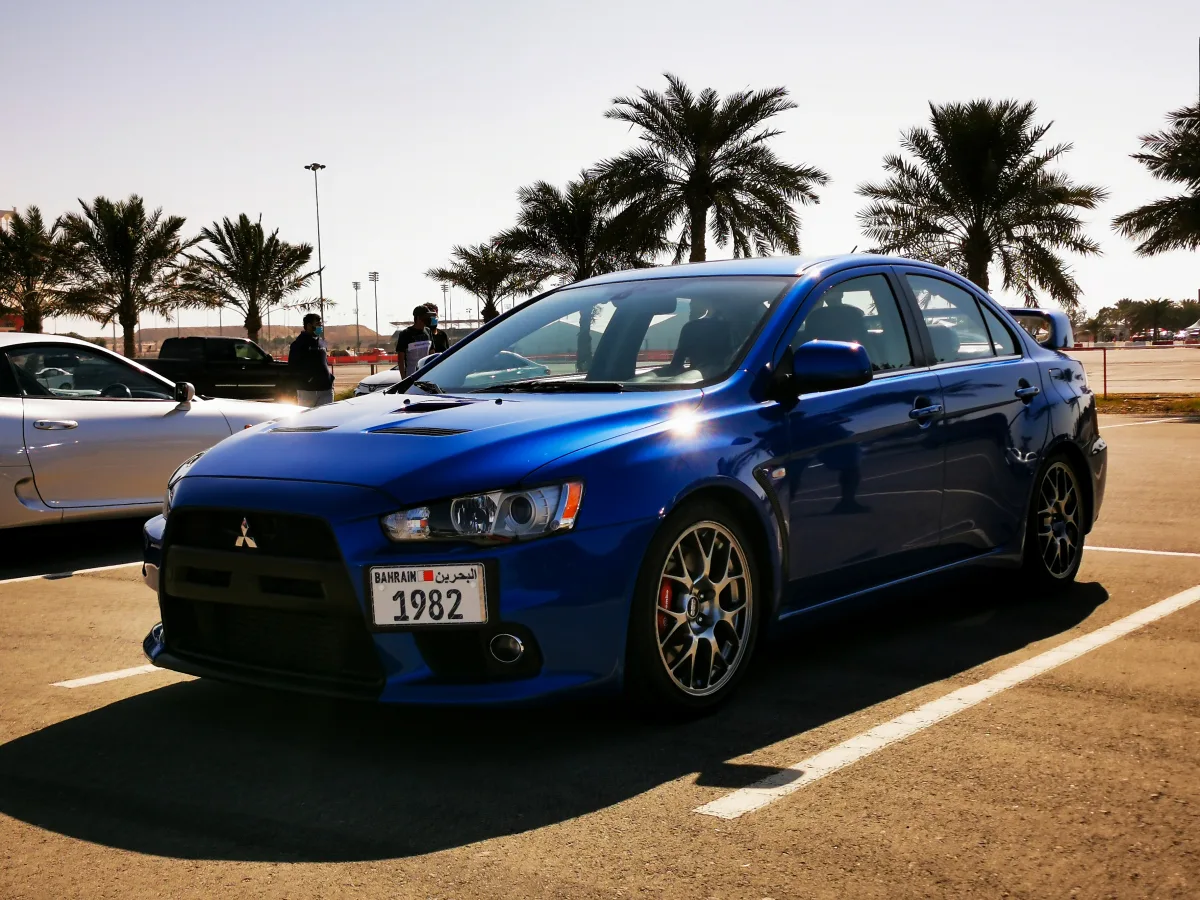
Mitsubishi Lancer Evolution: from I to X generations, engines and trims
Mitsubishi Lancer Evolution — the legendary sports sedan with all-wheel drive and a turbocharged engine, produced from 1992 to 2016. In this article, we review the ten generations of Evo, their differences, engines, and what to check before buying a used Evolution.






Lancer Evolution in brief
Evolution — the sporty Lancer version, created for rallying and adapted for the road. All-wheel drive, a turbocharged 2.0-litre engine, and an aggressive style made it one of the most famous sports sedans in history.
Over nearly a quarter of a century, ten generations of Evo were released, marked with Roman numerals from I to X. Today, it's a car for enthusiasts: finding a good, unmodified example is quite challenging, and prices are high.
Generations — what sets them apart
Generations I–III (1992–1996) are the oldest, simplest, and lightest. Generations IV–VI (1996–2001) received an improved active differential system and a more distinctive appearance. Generations VII–IX (2001–2007) are based on a newer body and have an even more advanced transmission.
Generation X (2007–2016) — the final and most modern: a new engine, improved all-wheel drive (S-AWC), and the option to choose between two twin-clutch TC-SST gearboxes. For most buyers who value comfort, Generation X is the logical choice, while enthusiasts often seek earlier, more 'pure' driving versions.
Engines and gearboxes
Up to the IX generation, the Evo used the 2.0-litre turbocharged 4G63 engine, while the X generation introduced the new 4B11T. Standard versions typically produce around 280–300 hp, with some special editions pushing significantly higher.
Gearboxes are 5 or 6-speed manuals, with the X generation also offering a twin-clutch automatic TC-SST. The manual box is usually the most praised.
What to check when buying a used Evolution
The most important thing is the car's history. Many Evo models have been modified, used for racing, or even in drift competitions. Ask for service documents, check for non-original modifications, signs of accidents, and ensure all maintenance work has been done.
Check the clutch, all-wheel drive system, differentials, turbo operation, and distribution mechanism. Inspect the body for rust, especially on older models.


Versions
Names and equipment vary by market and generation; we list the most commonly encountered versions.
RS
Generations I–IXA lighter, simpler version aimed at sporty driving.
- A more basic interior with less comfort equipment
- A lighter weight
- Often comes with a manual gearbox and less sound insulation
GSR
Generations I–XThe main, better-equipped version for daily use.
- Often includes climate control
- Often — lightweight alloy wheels
- More comfortable interior than the RS
MR
Eighth to Tenth generationsA higher-class version with additional refinements.
- Often — an improved suspension
- Often — lighter wheels
- Often — additional sporty equipment
Final Edition
Tenth generation, 2015The final limited-edition version before production ended.
- Limited run
- Often — distinctive trim
- Often — a more powerful engine
Comparison of versions
| RS | GSR | MR | |
|---|---|---|---|
| Who it's for | For enthusiasts and sports fans | For daily driving | Best all-rounder |
| Interior | Simpler | More comfortable | More comfortable, sportier |
| Gearbox | Often manual | Manual or TC-SST (X) | Often manual |
| Price in the used market (relatively) | €€€ | €€€ | €€€ |
For most enthusiasts, the best choice is a well-maintained, unmodified GSR or MR. The RS is for those who prioritise sportiness over comfort.
Pros
- Legendary all-wheel drive and turbocharger combo
- Precise handling and plenty of grip
- A special, collectible car
- A large enthusiast community
Cons
- Many cars modified or used for sport
- High fuel consumption and expensive maintenance
- High prices in the used market
Frequently asked questions
How many Evolution generations were released?
Ten: from I (1992) to X (2007–2016). Each generation has its own differences, especially in transmission, engine, and body.
Which Evolution generation is the best?
It depends on your goal: the X generation is the most modern and comfortable, while earlier generations are considered more 'pure'. The most important thing is the car's condition and history.
Is the Evolution suitable for daily use?
It can be, but it's a sports car: a firm ride, high running costs, and pricier maintenance. It's crucial to choose an unmodified and well-maintained example.
Updated 2026-10-17 · Trim levels and equipment vary by market and model year — check the equipment of the specific car. · Translated automatically


