 English
 Lietuvių
 Latviešu
 Eesti
 Polski
 Русский
 Українська
 Deutsch
 Nederlands
 Čeština
 Slovenčina
 Svenska
 Norsk
 Dansk
 Suomi


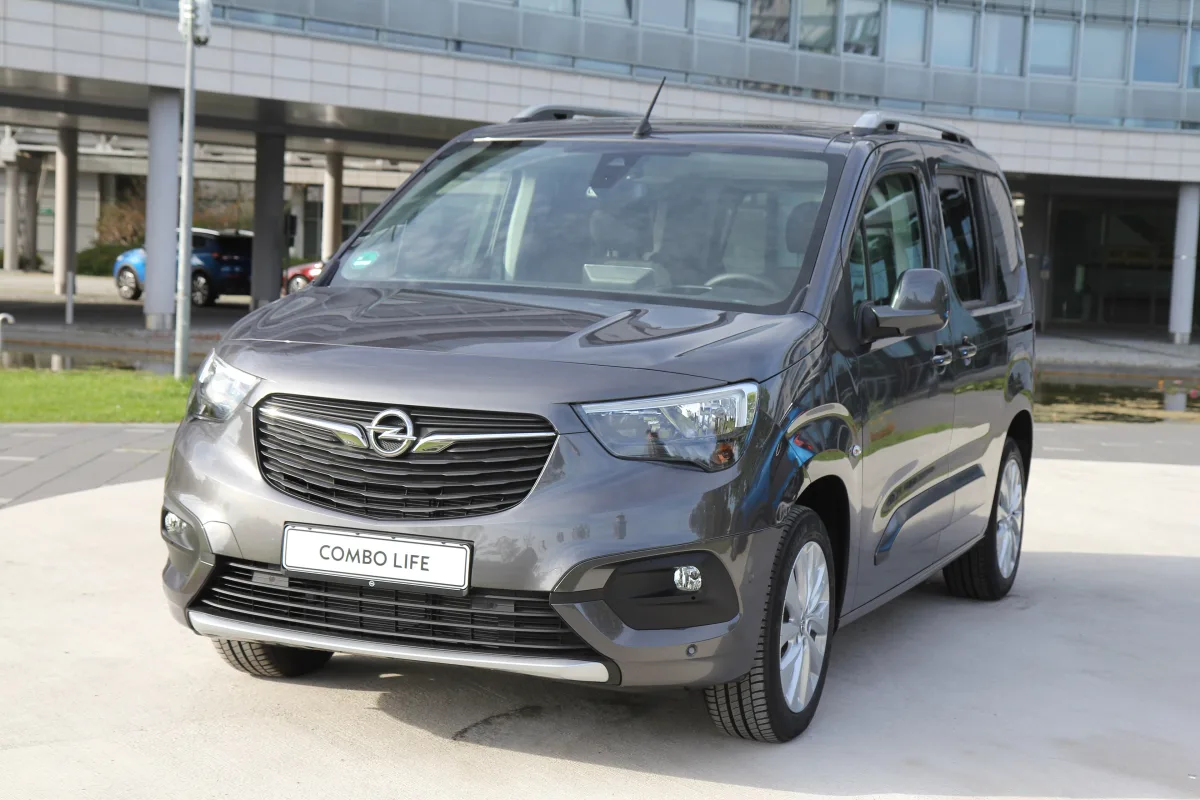
Opel Combo: D and E generations, engines and body styles
Opel Combo — a compact van and family car, often bought in Lithuania for small businesses, services and daily commutes. We look at how the D and E generations differ, which engines are most commonly found, what body styles are available and what to check before buying a used Combo.






Combo at a glance
The Combo has been in production for several decades, but in the used market, you'll mostly find the two most recent generations. The Combo D (2011–2018) was developed with Fiat and is essentially a twin of the Fiat Doblò. The Combo E (from 2018) is built on the PSA group (now Stellantis) platform and is closely related to the Citroën Berlingo, Peugeot Partner and Rifter, Toyota ProAce City, and since 2022, the new Fiat Doblò.
The Combo comes as a cargo van (Cargo), a double-cab van and a passenger car — in the D generation, it was called the Combo Tour, and in the E generation, the Combo Life. Both generations offer shorter and longer body styles, making the model suitable for city couriers and larger families alike.
D and E generations — what's the difference
The Combo D (2011–2018) is a straightforward, spacious and fairly robust workhorse. Its strength lies in its large cargo area and simple technology, which is well-known to both Opel and Fiat mechanics. Its weaker points are a more basic, noisier interior and older equipment.
The Combo E (from 2018) has become more modern: the interior now resembles a light car, there are more driver-assistance systems, and the cargo version often features a fold-flat passenger seat with a hatch for long items. The standard-length version is around 4.4 m, while the XL is around 4.75 m long.
Since 2021, the E generation has also been produced as an electric Combo-e, and the 2024 model has been refreshed: the front, interior, and equipment have all been updated. Used E generation cars are pricier, but they usually have fewer miles on the clock and are more economical.
Engines and transmissions
The Combo D is most commonly found with 1.3 CDTI, 1.6 CDTI, and 2.0 CDTI diesel engines (around 90–135 hp). The 1.4 petrol engine, 1.4 Turbo, and compressed natural gas (CNG) version are less common. Transmissions are usually manual, occasionally automated.
The Combo E initially had a 1.6 diesel, but soon the 1.5 diesel engine (around 75–130 hp) became the mainstay. The 1.2 Turbo petrol engine is around 110–130 hp. The most powerful engines are often paired with an 8-speed automatic transmission.
The electric Combo-e has around a 50 kWh battery and a 136 hp electric motor. It's suitable for city runs, but before buying, consider the real-world range with a load and in winter.
What to check when buying a used Combo
Workhorse Combo vans often have high mileage, so check the service history and maintenance records. In diesel models, inspect the sump and dual-mass flywheel, diesel particulate filter (DPF) and EGR valve — especially if the van has mostly been driven in the city.
In E-series 1.5 diesel engines, ask if the AdBlue system has been problematic — these PSA engines are known for AdBlue pump and tank issues. The timing chain of the 1.2 Turbo petrol engine runs in oil and can wear out prematurely due to poor maintenance, so it's crucial to change the oil on time and check the timing chain replacement history.
Inspect the sliding door runners, tailgate hinges, load compartment floor, and side panel protection. In passenger versions, check the rear seat mounts and, if present, the third row of seats.


Cab styles
Trim names vary by market and year, so we list the most commonly found cab styles.
Combo Cargo
D and E seriesThe most popular cargo version with two or three seats in the cab.
- Standard or long body
- Often — one or two sliding side doors
- In the E series, often — a folding passenger seat with a long-item hatch
Combo Cargo XL
E seriesLonger, approximately 4.75 m, cargo version for larger loads.
- Longer load compartment
- Suitable for longer materials and pallets
- Often — rear double doors
Dvigubos kabinos furgonas
D and E seriesVan with a second row of seats — perfect for work with a crew.
- Second row of seats
- Smaller cargo area behind the partition
- Often — longer body
Combo Tour
D seriesPassenger version of the D series, popular with families and transport services.
- 5 or 7 seats
- Spacious boot
- Simple, easy-to-clean interior
Combo Life
E seriesPassenger version of the E series, close to a family hatchback.
- Often — 5 or 7 seats
- Standard or XL body
- Often — more driver assistance systems
Combo-e
E series (from 2021)Electric version, available as both a cargo van and a passenger van.
- About a 50 kWh battery
- Silent city driving
- Often — fast charging capability
Comparison of E generation versions
| Combo Cargo | Combo Cargo XL | Combo Life | Combo-e | |
|---|---|---|---|---|
| Who it's for | For couriers and services | For larger loads | For families and road trips | For urban deliveries |
| Wheel sizes (most often) | Steel | Steel | Steel or light alloy | Steel or light alloy |
| Interior | 2–3 seats in the cab | 2–3 seats in the cab | 5 or 7 seats | Cargo or passenger |
| Engine | 1.5 diesel, 1.2 Turbo | 1.5 diesel | 1.5 diesel, 1.2 Turbo | Electric, around 136 hp |
| Price in the used market (relatively) | Budget | Mid-range | Mid-range | Premium |
For most practical use, the Combo Cargo with the 1.5 diesel is the sensible choice, while for longer loads, the XL version is better. For families, the Combo Life is more suitable, and the Combo-e is worth considering if you mostly drive in the city and need plenty of space.
Pros
- A wide range of affordable spare parts (shared with Fiat and Stellantis models)
- Economical diesel engines
- Spacious cargo area and passenger version with 7 seats
- The E-generation interior is as comfortable as a light car
Cons
- Commercial vehicles are often quite worn out
- AdBlue system issues with the E-generation 1.5 diesel
- The interior of the D series is basic and noisy.
Frequently asked questions
How does the Opel Combo E differ from the Citroën Berlingo and Peugeot Partner?
The Combo E, Berlingo, and Partner (and Rifter) are all built on the same platform and share the same engines and most of the technology. The front end, interior details, and trim levels differ, so it's worth choosing based on the specific condition and equipment of the car.
Which Combo generation is best for work?
If your budget is tight, the Combo D is a basic and affordable workhorse, but it's often heavily used. The Combo E is more comfortable, economical, and modern, making it a better choice for many buyers if the price is right.
Is it worth buying a Combo with the 1.2 Turbo petrol engine?
It is, if you mostly drive in the city and for short distances. Before buying, ask about the oil change history and the condition of the timing belt, as this engine's belt runs in oil and is sensitive to maintenance.
Updated 2026-10-09 · Trim levels and equipment vary by market and model year — check the equipment of the specific car. · Translated automatically


