 English
 Lietuvių
 Latviešu
 Eesti
 Polski
 Русский
 Українська
 Deutsch
 Nederlands
 Čeština
 Slovenčina
 Svenska
 Norsk
 Dansk
 Suomi


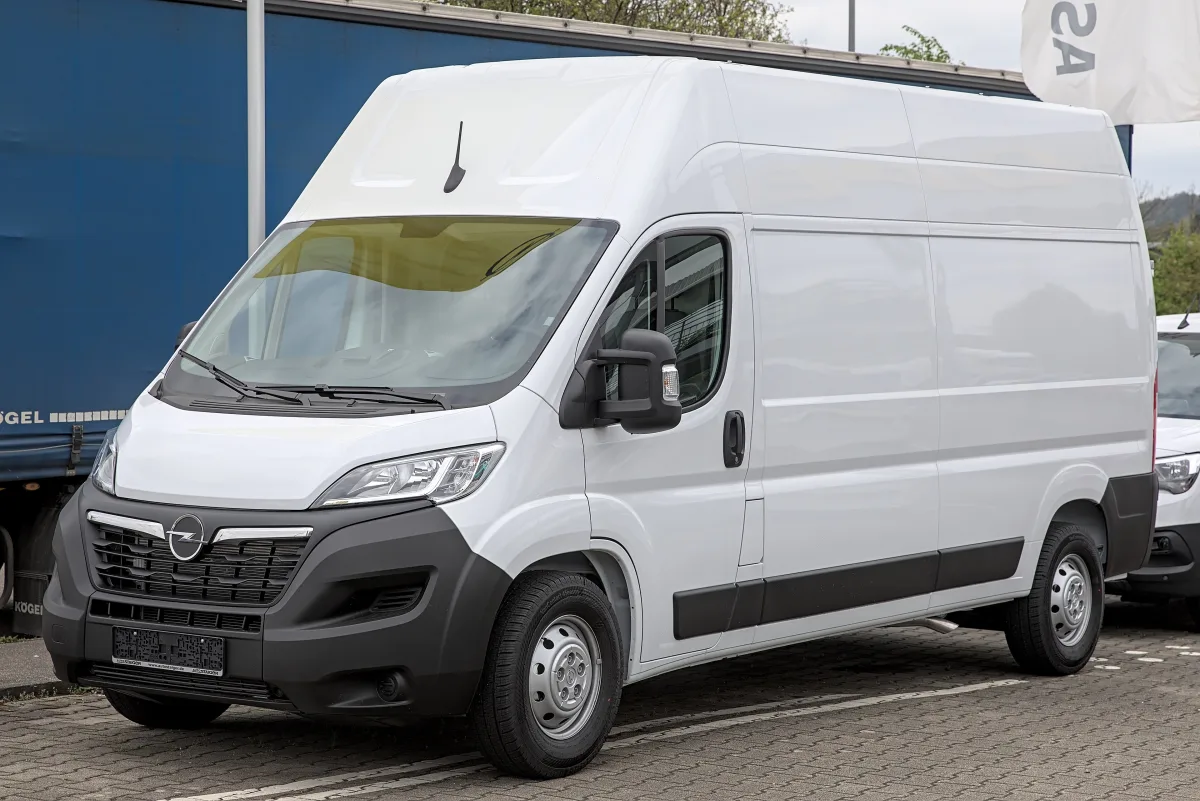
Opel Movano: B and C generations, engines and body versions
Opel Movano — a large van, often found in the Lithuanian used market as a cargo vehicle, flatbed truck, or minibus. We look at how the B and C generations differ, which engines are most common, what body styles are available, and what to check before buying a used Movano.






Movano in brief
The Movano has been in production since 1998. The first two generations — A and B — were developed with Renault and are closely related to the Renault Master (also sold as the Nissan Interstar and NV400). From 2021, the C generation has been produced by the Stellantis group and is closely related to the Fiat Ducato, Peugeot Boxer, and Citroën Jumper. Therefore, while the B and C generations share the same name, they are technically quite different vehicles.
The Movano comes as a cargo van, passenger Combi, or minibus, a cab truck (often with a flatbed, enclosed, or drop-side body) and a double cab. The van is offered in several lengths and roof heights, with a gross vehicle weight rating usually around 3.5 tonnes; there are also heavier versions for larger loads.
B and C generation — what's the difference
B generation (2010–2021) — a robust workhorse, closely related to the Renault Master III. It can be found with front-wheel or rear-wheel drive; rear-wheel drive versions often have dual rear wheels and are designed for heavier loads. This is the most commonly found Movano in the used market.
The C generation (from 2021) is front-wheel drive and features more advanced driver assistance systems and a more modern interior. The electric Movano-e is also available, and the model has since been updated with a revised front end and improved equipment.
The A generation (1998–2010) is now quite rare and often heavily worn, so when looking for an affordable workhorse, its technical condition and body corrosion are crucial.
Engines and gearboxes
In the B generation, the 2.3 CDTI diesel engine (around 100–170 hp) is most commonly found, with more powerful versions featuring twin turbochargers (BiTurbo). Most vehicles come with a 6-speed manual gearbox, with the automated manual being less common.
The C generation offers a 2.2-litre diesel engine (around 120–165 hp), similar to those found in newer Peugeot Boxer and Citroën Jumper models. It is usually paired with a manual gearbox, but an automatic can be found in newer vehicles.
The electric Movano-e is ideal for urban deliveries. Before buying, consider how much you'll realistically be driving with a load and in winter conditions.
What to check when buying a used Movano
Workhorse Movanos often have high mileage, so check the service history and records. Inspect the suspension and driveshaft: vibrations when moving or clunking in neutral often indicate an expensive repair.
Check diesel engines for the turbocharger, injectors, EGR valve, and particulate filter. In the twin-turbo 2.3 CDTI versions, ask if the oil was changed on time, and in Euro 6 engines, check if the AdBlue system is functioning properly. For rear-wheel-drive B-series cars, inspect the rear differential, propshaft, and dual rear wheels.
Inspect the underbody, sills, and wheel arches for rust, test the sliding doors and tailgate struts. The cargo area floor and walls tell a lot about how the vehicle has been used.


Body styles
Trim names vary greatly by market and year, so we list the most commonly encountered body styles.
Furgonas
B and C seriesThe most popular load-lugging version, offered in several lengths and heights.
- Several body lengths and roof heights
- Often — one or two sliding side doors
- Wide-opening rear doors
Furgonas su galiniais varančiaisiais ratais
B seriesVersion for heavier loads and towing.
- Rear-wheel drive
- Often — dual rear wheels
- Mostly — longer bodies
Combi / mikroautobusas
B seriesPassenger version for people-moving and groups.
- Combis usually seat up to 9
- Microbuses offer more space and a high roof
- Often comes with a rear heater
Važiuoklė su kabina
B and C seriesBase model for flatbeds, closed vans, campervans or special bodies
- Often comes with a flatbed or closed body
- Often features a tilting load bed
- Body size depends on the chassis
Dviguba kabina
B and C seriesVehicle with a second row of seats for crew and tools
- Up to 6–7 seats
- Usually comes with a flatbed body
- Shorter cargo platform
Movano-e
C seriesElectric van for urban deliveries
- Quiet, with no exhaust emissions
- Cargo area similar to that of a diesel van
- Often — fast charging capability
Comparing versions
| B karta, priekiniai ratai | B karta, galiniai ratai | C karta, furgonas | Važiuoklė su kabina | |
|---|---|---|---|---|
| Who it's for | For versatile tasks | For heavy loads and towing | For a modern workhorse | For construction and special bodies |
| Alloy wheels (most often) | Steel | Steel, often twin at the rear | Steel | Steel |
| The technical foundation | Renault Master III | Renault Master III | Fiat Ducato / Peugeot Boxer | Depends on the generation |
| Price in the used market (relatively) | € | €€ | €€€ | €€ |
The most cost-effective B-series van with front-wheel drive. The rear-wheel-drive Movano is ideal for heavy loads, while the C-series is better for those prioritising modernity and lower mileage.
Pros
- A wide range of options and plenty of spare parts (B-series with Renault Master, C-series with Fiat Ducato)
- The B-series offers rear-wheel drive
- Plenty of body and chassis options
- Robust and well-known diesel engines
Cons
- B and C-series technology is completely different — most parts are not interchangeable
- Commercial vehicles often have high mileage
- Expensive to repair cabins and two-piece windshields
Frequently asked questions
How does the Opel Movano B differ from the Movano C?
The Movano B was developed with Renault and is similar to the Renault Master, while the Movano C is a Stellantis vehicle, similar to the Fiat Ducato and Peugeot Boxer. Their engines, chassis, and most parts differ, so it's worth knowing which series you're buying.
Are Movano B parts compatible with the Renault Master?
Often yes — the same-series Movano and Master share the same engines, gearboxes, and most chassis parts. The main differences are front-end details and badges, so parts should be checked against the vehicle identification number.
Choose front- or rear-wheel drive?
The front-wheel-drive Movano B is lighter and has a lower load floor, making it suitable for most tasks. The rear-wheel-drive version is better for heavy loads, towing trailers, and box bodies, but it may cost more to maintain.
Updated 2026-10-10 · Trim levels and equipment vary by market and model year — check the equipment of the specific car. · Translated automatically


