 English
 Lietuvių
 Latviešu
 Eesti
 Polski
 Русский
 Українська
 Deutsch
 Nederlands
 Čeština
 Slovenčina
 Svenska
 Norsk
 Dansk
 Suomi


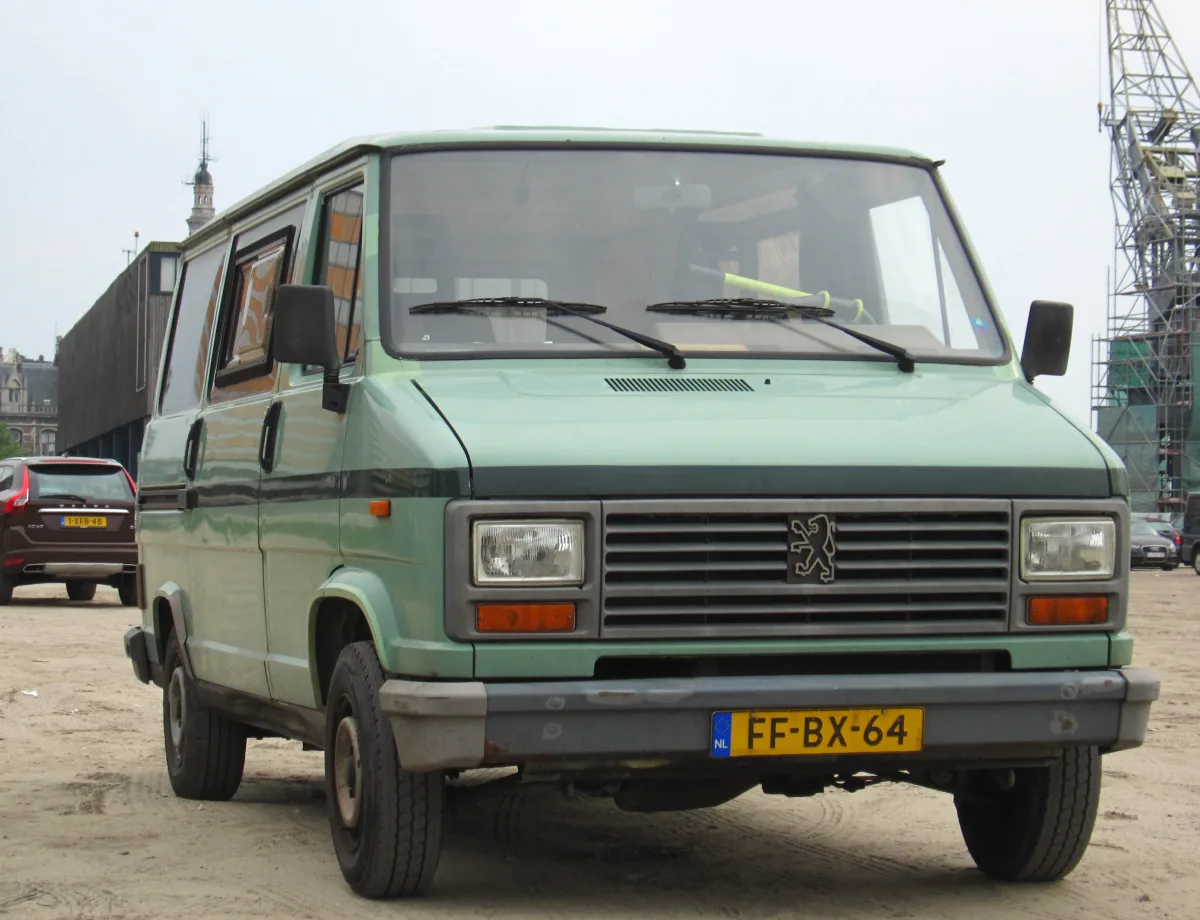
Peugeot J5: generations, engines, and what to check when buying
Peugeot J5 (1981–1994) — a mid-size van and minibus, developed jointly with Fiat Ducato and Citroën C25. In this article, we review the J5 generations, engines, and what to check when buying a used J5, especially if you're looking for a campervan base.






J5 in brief
The J5 was part of a joint Fiat, Peugeot, and Citroën project, so it shares the same platform, sold under different badges. As a result, the J5 shares many components with the Fiat Ducato and Citroën C25.
The most common body styles are the van, minibus, and chassis cab. Today, many J5s are sought after as the basis for camper projects due to their simple mechanics and affordable price.
Which generation to choose
Production covered both the earlier and later, updated series. The later version has an improved front end, interior, and more modern equipment, making it often the better choice for daily use.
When choosing, the most important factors are the body condition and intended use. Vans are suitable for work, while minibuses and campers are ideal for travel. Many J5s have been converted, so find out who and how made the modifications.
Engines and transmissions
The J5 came with petrol and diesel engines. Diesels ranged from about 1.9–2.5 litres, and later versions also featured turbodiesels. Petrol engines are usually chosen for less frequent use.
The transmission is typically manual. Heavier campers drive slowly, so don't expect high power and dynamics.
What to check when buying a used J5
Age is the biggest issue — rust. Check the sills, wheel arches, floor, cabin pillars, rear doors, and front end. In campers, also check the roof, window surrounds, and any signs of damp.
Start the engine cold: there shouldn't be excessive smoke or leaks. Check the gearbox, brakes, suspension, and steering system, as these wear out under load.
Ensure the paperwork is in order and the chassis number matches the recorded one. For rebuilt cars, request the rebuild registration documents.


Body styles
Trims vary by market and year, so we outline the main body styles.
Furgonas
1981–1994Enclosed cargo area for commercial use.
- Practical cargo space
- Often — side and rear doors
- Suitable for small businesses or camper projects
Mikroautobusas
1981–1994Passenger version with seats and windows.
- More seating capacity
- Often — sliding side doors
- Ideal for families and passenger transport
Platforma su kabina
1981–1994Open cargo platform.
- Quick acceleration
- Simple construction
- Suitable for construction and farm work
Kemperis
Often modifiedLiving version, often with a higher roof.
- Sleeping area and kitchenette
- Often — additional windows
- Ideal for travellers
Comparison of J5 versions
| Furgonas | Mikroautobusas | Kemperis | |
|---|---|---|---|
| Who it's for | For cargo | For passengers | For journeys |
| Body | Enclosed | With windows and seats | Living space |
| Usage | Basic | Basic | Check the living area |
| Price in the used market (relatively) | Budget-friendly | Mid-range | High-end |
For most buyers, the simplest choice is a van or microbus with a sound body. Only choose a camper after inspecting the conversion quality and paperwork.
Pros
- Simple construction
- Shares many components with the Fiat Ducato and Citroën C25
- Ideal for camper projects
- Wide range of body options
Cons
- Often shows signs of rust due to age
- Comfort and safety features are sparse
- Modest power with a full load
Frequently asked questions
How does the J5 differ from the Fiat Ducato?
It's the sister model, built on the same base. The badging, some interior details and part of the engine options differ.
Is the J5 suitable as a camper?
Yes, many J5s have been converted into campers due to their simple construction. It's important to check the body condition and whether the conversion is registered.
Is it hard to find parts for the J5?
Some parts are shared with the Fiat Ducato and Citroën C25, so they're easier to find. The selection of body and interior parts might be limited.
Updated 2026-10-21 · Trim levels and equipment vary by market and model year — check the equipment of the specific car. · Translated automatically


