 English
 Lietuvių
 Latviešu
 Eesti
 Polski
 Русский
 Українська
 Deutsch
 Nederlands
 Čeština
 Slovenčina
 Svenska
 Norsk
 Dansk
 Suomi


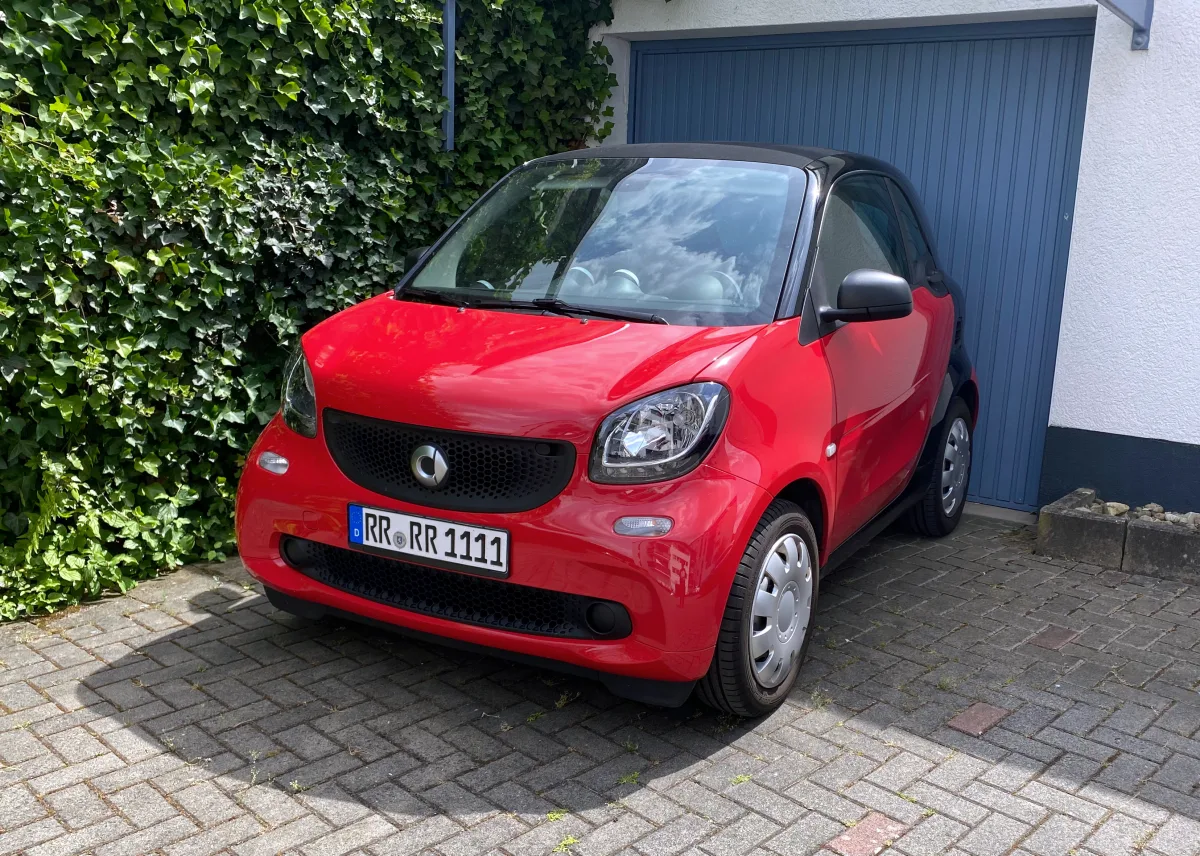
Smart fortwo: 451 and 453 generations, engines and trims
The Smart fortwo is a two-seater city car, roughly 2.7 metres long, produced from 1998 to 2024. In the used market, you'll most often encounter the 451 and 453 generations, including electric models. We look at how the generations differ, which engines are most popular, and what to check before buying.






Smart fortwo in brief
The Smart fortwo was produced in three generations: 450 (1998–2007, known as the City-Coupé until 2004), 451 (2007–2014) and 453 (2014–2024). All generations have a rear-mounted engine driving the rear wheels, with a coupe always available alongside a convertible.
The fortwo's main advantage is its compact size: it can fit where other cars can't, and its turning circle is tiny. Passengers are protected by the sturdy 'Tridion' safety cell, but it's a two-seater with limited boot space.
451 vs 453 — what's the difference
The 451 generation (2007–2014) is slightly longer and more comfortable than the first, with Mitsubishi-derived three-cylinder petrol engines. Its main drawback is the semi-automatic five-speed gearbox, which shifts slowly and hesitantly. From 2012, a series electric version (electric drive) was also produced.
The 453 generation (2014–2024) was developed alongside the Renault Twingo: it's wider, has a more modern interior, and a more comfortable ride. You can choose between a manual or dual-clutch (twinamic) gearbox, making it much more pleasant to drive in the city than the 451. From 2020, the fortwo was produced only as the electric EQ fortwo.
The 453 is the best choice for most buyers. The 450 is very old now, so it's only worth considering as a cheap short-term runaround.
Engines and gearboxes
The 453's petrol engines are 1.0-litre (around 61–71hp) and 0.9-litre turbo (around 90hp), while the Brabus version packs around 109hp. The electric EQ fortwo has an 82hp electric motor and a 17.6kWh battery.
The 451's most common engines are 1.0-litre petrol (around 61–71hp, some with automatic engine stop-start system 'mhd'), turbo 1.0-litre (around 84hp), Brabus (around 98–102hp) and a small 0.8-litre diesel cdi.
The electric fortwo's real-world range is modest — usually around 100–130km, less in winter, so it's best suited to urban use. There's no fast DC charging; some cars have a quicker 22kW AC charger.
What to check when buying a used fortwo
The 451's automated gearbox should shift smoothly without harsh jolts, and the car shouldn't hesitate when moving off — a clutch or gearbox repair isn't cheap. Check that the engine isn't using too much oil and is running smoothly.
Test the 453 with the twinamic gearbox for slow driving in traffic and parking. On the electric EQ fortwo, ask for a battery health check with diagnostic equipment and ensure it charges both from a domestic socket and a charging station.
As the fortwo is mostly driven in the city, carefully check the bumpers and corners for dents, as well as the tyres and suspension. In the cabriolet version, ensure the roof opens smoothly and doesn't leak.


Trim levels
Names and equipment vary by market and year; we list the most commonly found 451 and 453 trim levels in Europe.
pure
451, 453The base trim with the most basic equipment.
- Often comes with steel wheels
- A more basic interior
- Often features a manual air conditioner
passion
451, 453The most popular trim level.
- Light-alloy wheels
- Often features a panoramic roof
- A more colourful interior trim
prime
453The most comfortable 453 series version.
- Often features heated leather seats
- Often features a panoramic roof
- Light-alloy wheels
Brabus
451, 453The sportiest fortwo version.
- More powerful engine (453 — around 109 hp)
- Sporty suspension, exhaust system and buffers
- Larger light-alloy wheels
Comparison of 453 generation trims
| pure | passion | prime | Brabus | |
|---|---|---|---|---|
| Who it's for | For the tightest budget | For daily city driving | For comfort | For sporty driving |
| Wheels (most common) | 15 in. steel | 15 in. | 15–16 in. | 16–17 in. |
| Interior | Basic | More affordable trim | Often — leather | Sporty trim |
| Engine | 1.0 l, around 61–71 hp | 1.0 l, 0.9 turbo or electric | 1.0 l, 0.9 turbo or electric | 0.9 turbo, around 109 hp |
| Price in the used market (relatively) | € | €€ | €€ | €€€ |
For most buyers, the best choice is the passion or prime with the 0.9 turbo engine and twinamic gearbox, or the electric EQ fortwo if you only drive in the city. The Brabus is worth considering only for its sportiness.
Pros
- Very easy to park in the city
- Small turning circle
- The electric version is perfect for city driving
- Robust Tridion safety cell
Cons
- Two seats and a modest boot
- Sluggish 451-series automated gearbox
- Limited range for the electric version
Frequently asked questions
Is the smart fortwo safe?
Quite safe for a small car: passengers are protected by the robust Tridion cell and airbags. However, the laws of physics remain the same when colliding with a much larger vehicle, so the fortwo is primarily suited to the city.
Is it worth buying an electric EQ fortwo?
Yes, if you mostly drive in the city and have somewhere to charge the car at home or work. It's not suitable for long journeys due to its limited range and lack of fast charging.
What's the difference between the 451 and 453 series?
The 453 series is wider, more modern, and more comfortable, and most importantly, it has a manual or dual-clutch gearbox instead of the sluggish automated gearbox of the 451 series. The 451 is cheaper, but less enjoyable to drive in the city.
Updated 2026-10-09 · Trim levels and equipment vary by market and model year — check the equipment of the specific car. · Translated automatically


