 English
 Lietuvių
 Latviešu
 Eesti
 Polski
 Русский
 Українська
 Deutsch
 Nederlands
 Čeština
 Slovenčina
 Svenska
 Norsk
 Dansk
 Suomi


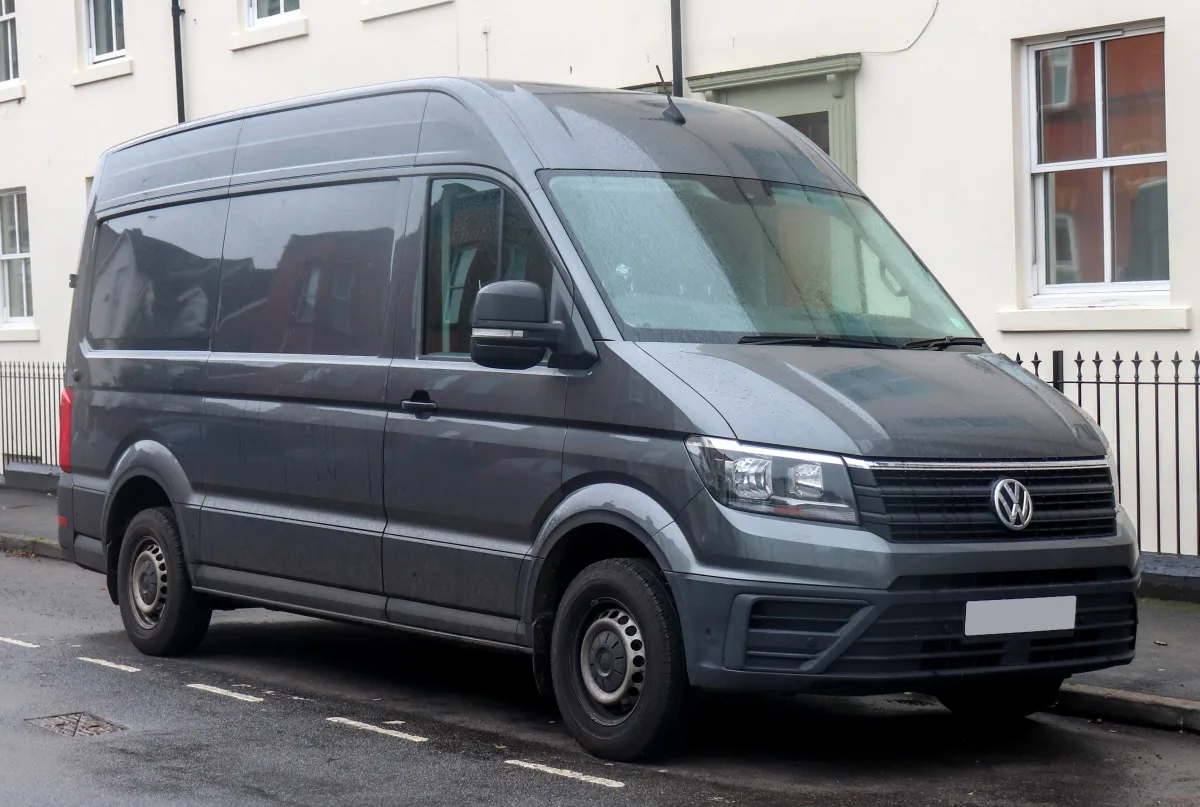
Volkswagen Crafter: First and Second Generations, Engines, and Body Styles
The Volkswagen Crafter is a large van with two distinct generations: the first was developed alongside the Mercedes-Benz Sprinter, while the second is a Volkswagen through and through. We look at how the generations differ, which engines are most commonly found, what body styles are available, and what to check before buying a used Crafter.






The Crafter in brief
The Crafter has been on the market since 2006, replacing the LT model. It comes as a cargo van, passenger van (Kombi), cab chassis, double cab, flatbed, or box van. Buyers typically choose from several lengths and roof heights, as well as several gross vehicle weight ratings, ranging from 3 to 5 tonnes.
The Crafter is praised for its spacious cargo area, comfortable cabin, and the fact that the second generation drives almost like a car. Its twin, the MAN TGE, means parts and mechanics are readily available.
First and Second Generations — What's the Difference
The first generation (2006–2016, refreshed in 2011) shares much of its technology with the Mercedes-Benz Sprinter: the body and chassis are common, while the engines are Volkswagen. It's a rear-wheel-drive vehicle that is the cheapest in the used market but often quite worn and prone to rust.
The second generation (from 2016) is all-new: it comes with front-wheel drive, rear-wheel drive, or all-wheel drive (4MOTION). Common lengths range from about 6 to 7.4 metres, and the electro-mechanical power steering allows for modern driver-assistance systems, such as parking and lane-keeping aids.
Newer second-generation cars received an updated interior, a digital instrument cluster, and more driver-assistance systems. An electric e-Crafter was also offered. In the used market, these are the most expensive but also the least worn-in Crafters.
Engines and transmissions
Initially, up to 2011, a five-cylinder 2.5 TDI diesel (around 109–163 hp) was used, after the update — a four-cylinder 2.0 TDI (also around 109–163 hp, the most powerful version with two turbochargers). Transmissions are usually manual.
In the second generation, only the 2.0 TDI diesel is found, usually around 100–180 hp. Besides the 6-speed manual, you can choose an 8-speed automatic transmission.
The front-wheel-drive second-gen Crafter is lighter and has lower load floors, while the rear-wheel-drive version is better suited for heavy loads, trailers, and the heaviest variants with dual rear wheels.
What to check when buying a used Crafter
Commercial Crafters often have high mileage, so check the service history and records. Inspect the clutch and dual-mass flywheel: vibrations when moving or juddering in neutral often indicate an expensive repair.
Inspect first-generation cars carefully for rust — it often appears in wheel arches, door sills, sills, and rear doors. Check diesel engines for the turbocharger, injectors, EGR valve, and diesel particulate filter.
Check second-generation models to ensure the AdBlue system and auxiliary systems are working without faults. In front-wheel-drive versions that often carried heavy loads, pay attention to front tyre wear and suspension sag.


Body styles and trim levels
Trim names vary by market and year; we list the most commonly encountered versions.
Furgonas
First and second generationsThe most popular cargo version with a large cargo partition.
- Various lengths and roof heights
- Often — one or two sliding side doors
- Large rear doors open wide
Kombi
First and second generationsPassenger version for transporting people or a crew.
- Several rows of seats
- Side windows in the passenger area
- Simple, easy-to-clean interior
Važiuoklė su kabina
First and second generationsBase model for flatbeds, drop-sides and other special bodies.
- Single or double cab
- Often — with a flatbed or drop-side
- Often — rear-wheel drive
Trendline
Second generationA popular workhorse trim with essential equipment.
- Simple, robust cabin trim
- Often — steel wheels
- Often — air conditioning and cruise control
Highline
Second generationBest-equipped version for long distances.
- Higher-spec cabin trim
- Often — larger multimedia screen and navigation
- Often — more driver-assistance systems
Second-gen van comparison
| Priekinių ratų pavara | Galinių ratų pavara | 4MOTION | |
|---|---|---|---|
| Who it's for | For city driving and lighter loads | For heavy loads and towing | For slippery and uneven roads |
| Load floors | Lower | Higher | Higher |
| Useful in winter | Great when the driving wheels are loaded | Less suitable for an empty car | Best |
| Price in the used market (relatively) | € | €€ | €€€ |
For most, front-wheel drive is enough for city and suburban driving in the Crafter. Opt for rear-wheel drive for heavy loads or a trailer, and 4MOTION only if you frequently travel on rough roads.
Pros
- Large cargo area and plenty of body variants
- The second-generation cab is comfortable and drives like a light commercial vehicle
- Wide range of drivetrain options — front, rear, or all-wheel drive
- Many modern driver assistance systems in newer cars
Cons
- Body corrosion from the first generation
- The second generation often costs more than competitors in the used market
- Commercial vehicles are often quite worn out
Frequently asked questions
How does the first-gen Crafter differ from the Mercedes-Benz Sprinter?
The first-gen Crafter and the Sprinter from that era share the same body and chassis, but have different engines: Crafter — Volkswagen TDI, Sprinter — Mercedes-Benz CDI. The second-gen Crafter is now a fully independent Volkswagen model.
Which Crafter drivetrain to choose — front or rear?
If you're hauling medium loads and spend a lot of time in the city, front-wheel drive is sufficient: it's cheaper, lighter, and has a lower loading height. Rear-wheel drive is better suited for heavy loads, trailers, and the heaviest versions.
Is it worth buying a first-gen Crafter?
Only if the price matches the condition and the body isn't rusted. Many first-gen vehicles have already covered a lot of miles, so it's worth having them checked on a lift before buying.
How does the Crafter differ from the MAN TGE?
The MAN TGE is the twin of the second-gen Crafter: the technology, engines, and most parts are shared, but they differ in the front end, interior, and service network.
Updated 2026-10-09 · Trim levels and equipment vary by market and model year — check the equipment of the specific car. · Translated automatically


