 English
 Lietuvių
 Latviešu
 Eesti
 Polski
 Русский
 Українська
 Deutsch
 Nederlands
 Čeština
 Slovenčina
 Svenska
 Norsk
 Dansk
 Suomi


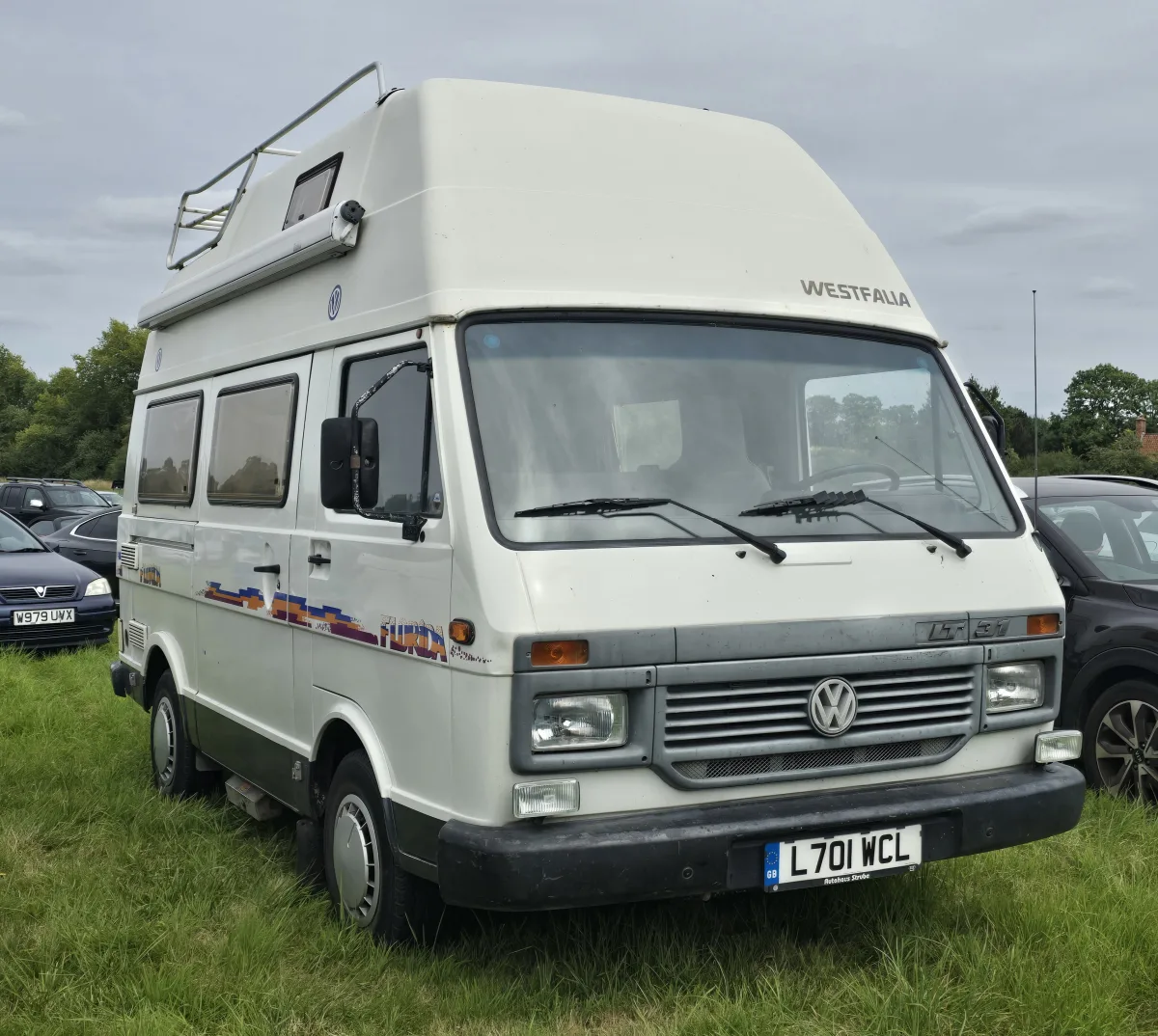
Volkswagen LT: generations, engines and body styles
Volkswagen LT (1975–2006) — a larger-than-Transporter class commercial vehicle, used as a van, minibus, chassis cab, and camper base. We explain the differences between LT I and LT II, which engines were used, and what to check when buying a used LT.






LT in brief
The name LT comes from the German Lastentransporter — cargo transporter. The first generation debuted in 1975 as a larger, more powerful sibling to the Transporter, designed for heavier loads, and the last models were produced until 2006.
The numbers in the designation, such as LT 28, LT 31, or LT 35, indicate the gross vehicle weight rating. A higher weight rating usually means a sturdier chassis and greater payload capacity, and the LT 46 was also offered with dual rear wheels.
Which generation to choose
LT I (1975–1996) — a straightforward, robust classic design vehicle. Today, it's often sought after as a camper project or collector's item, but due to its age, body condition is key.
LT II (from 1996) — a more modern vehicle with a contemporary design, more comfortable cabin, and more powerful diesel engines. Technically, it's close to the Mercedes-Benz Sprinter of the time, so more parts and expertise are available than for the older generation model.
Engines and gearboxes
The LT I came with petrol and diesel engines, while later versions also offered turbodiesels. These cars are simple and straightforward in design, but by today's standards, they are noisy and rather slow.
The LT II is most often powered by a 2.5-litre diesel engine (SDI or TDI), with later versions also offering a 2.8-litre TDI. The gearbox is almost always manual, although there were automatic versions available.
What to check when buying a used LT
First, inspect the body: look for dents, wheel arches, rear doors, floor, and roof. Corrosion often hides under the paint, so it's worth checking the car on a lift.
Start the engine cold: there should be no excessive smoking or unusual noises. Check the sump, turbocharger (if fitted), cooling system, and brakes — a heavy car wears out faster when constantly driven fully loaded.
If you're buying a camper version, ensure the conversion is documented, and the roof and living area are watertight. Ask for all service records and check if the car's numbers match the documents.


Body styles
Trims vary by market and age, so we'll describe the most commonly encountered body styles.
Furgonas
LT I and LT IIEnclosed cargo area for commercial use.
- Practical space for cargo
- Often features rear and side doors
- Suitable for small businesses and services
Keleivinis mikroautobusas
LT I and LT IIPassenger version with windows and seats.
- More seating capacity
- Often — sliding side doors
- Ideal for families and transporting passengers
Platforma su kabina
LT I and LT IIOpen cargo bed with double or single cab.
- Easy loading
- Often — a canopy or side rails
- Suitable for construction and farm work
Kemperis
Mostly LT I and LT IILifestyle version, often rebadged by other manufacturers on the LT chassis.
- Sleeping area and kitchenette
- Often — a high roof or raised roof
- Perfect for adventurers and weekend getaways
Comparison of LT versions
| Furgonas | Mikroautobusas | Kemperis | |
|---|---|---|---|
| Who it's for | For cargo | For passengers | For Journeys |
| Interior | Basic Cargo Area | Seats and Windows | Living Space |
| Running Costs | Simple and Robust | Comfortable for Passengers | Check the living space |
| Price in the used market (relatively) | € | €€ | €€€ |
For most buyers, the simplest choice is a van or minibus with a clean history and a sound body. Inspect the quality of any conversions before choosing a camper.
Pros
- A sturdy build designed for heavier work
- A wide range of body options
- The LT II is similar to the Sprinter, so finding parts is easier
- Ideal for camper projects
Cons
- Due to its age, rust is often found
- Comfort and safety features are basic
- Some vehicles have a very high mileage
Frequently asked questions
Is the LT suitable as a camper?
Yes, many LTs are converted into campers due to their spacious and sturdy body. It's important to check if the conversion is registered and if the body hasn't been modified.
How does the LT differ from the Transporter?
The LT is larger and designed for heavier loads, while the Transporter is lighter and more compact. The LT has a higher gross vehicle weight rating and a more robust chassis.
What do LT 28, 31, 35, or 46 mean?
These are the gross vehicle weight classes: a higher number means a heavier vehicle. Always check the exact gross vehicle weight in the registration document.
Updated 2026-10-21 · Trim levels and equipment vary by market and model year — check the equipment of the specific car. · Translated automatically


